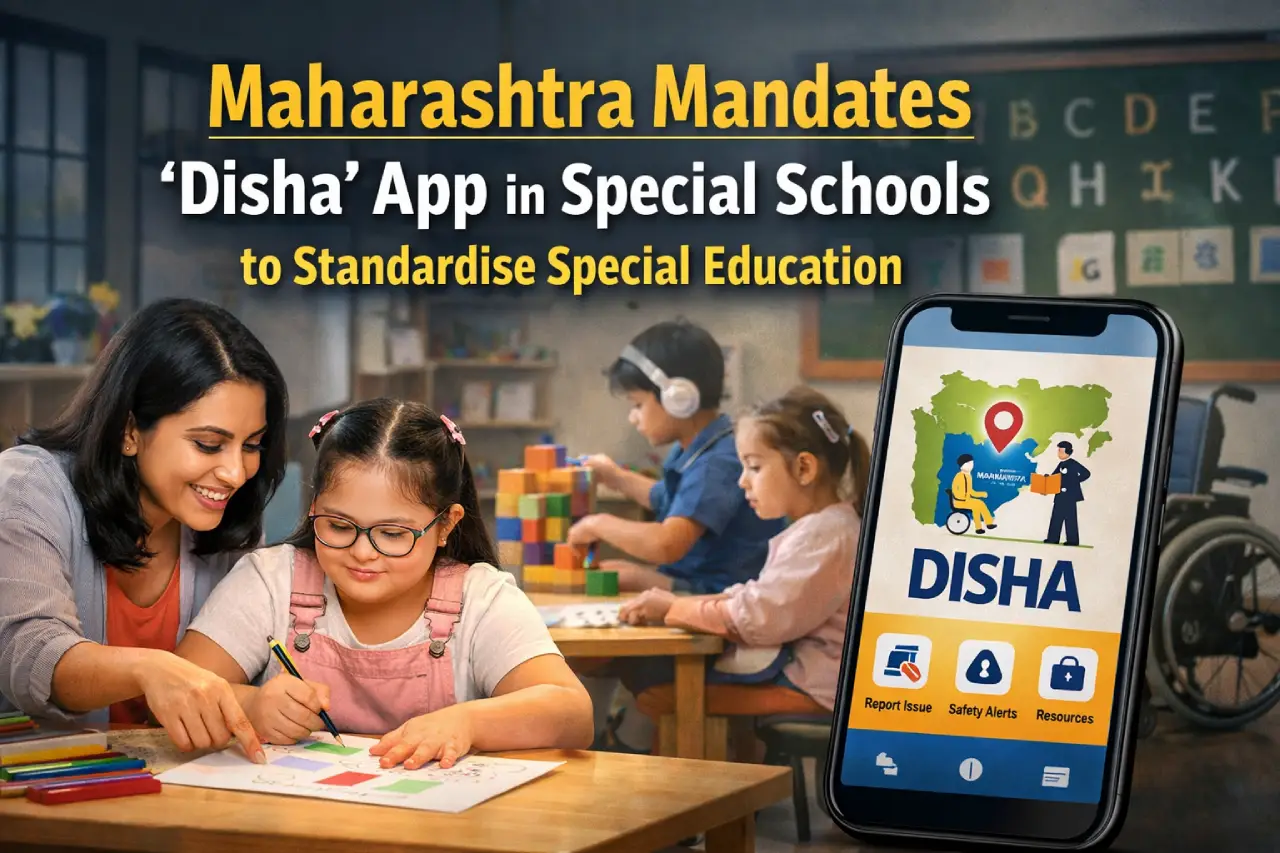
In a significant move to strengthen education for students with intellectual disabilities, the state Department of Disability Welfare has announced that the ‘Disha’ app will now be compulsory in all special schools. The decision mandates the uniform adoption of the Disha special curriculum, digital learning portal, and assessment system across the state.
By making the platform mandatory, the department aims to ensure consistent teaching methods, standardised evaluations, and equal learning opportunities for students in special schools, irrespective of their location or the institution’s management. The move is expected to improve quality, accountability, and continuity in special education services statewide.
I am writing about this development because special education often suffers from uneven implementation and lack of standard benchmarks. When different schools follow different methods, students are the ones who lose out. Making a common digital curriculum and evaluation system mandatory is a significant policy shift. It directly affects students, teachers, parents, and school administrators, and signals the government’s intent to bring structure, accountability, and continuity into special education.
What Is the ‘Disha’ App and Curriculum
The Disha app is a specially designed digital platform developed for students with intellectual disabilities. It includes a structured curriculum, teaching tools, and an evaluation framework aligned with the learning needs of special children.
The platform helps teachers track student progress in a systematic way and ensures that learning goals are clearly defined and measurable.
Why the State Made Disha Mandatory
According to the disability welfare department, the lack of a uniform curriculum across special schools has led to gaps in learning outcomes. Some schools follow advanced methods, while others struggle with outdated practices.
Announcing the decision, Tukaram Mundhe, secretary of the disability welfare department, said the Disha system would help bring “uniformity and continuity into special education while supporting the overall development of students”.
How This Will Help Students
With the Disha system in place, students across the state will now follow a common learning structure suited to their abilities. This ensures smoother academic progression, especially for students who move between schools or districts.
Standardised evaluation will also help identify learning gaps early and provide targeted support.
Impact on Teachers and Special Schools
Teachers will now receive a clear framework for lesson planning, assessment, and reporting. This reduces confusion and improves teaching quality. Schools will also be accountable for following the prescribed curriculum and updating student progress on the portal.
While some schools may need time to adapt, the long-term goal is better coordination and quality control.
Concerns and Challenges on the Ground
Some educators have raised concerns about training, digital access, and infrastructure, especially in smaller or rural special schools. Successful implementation will depend on proper teacher training, technical support, and continuous monitoring by authorities.
Without these, the system risks becoming a formality rather than a meaningful reform.
Why Uniformity Matters in Special Education
Special education requires consistency more than flexibility. Students with intellectual disabilities benefit from structured routines, clear goals, and continuity in teaching methods. A common curriculum helps ensure that every child, irrespective of school, receives comparable support and opportunities.
This move aligns policy with actual learning needs.