JOIN WHATSAPP
STORIES

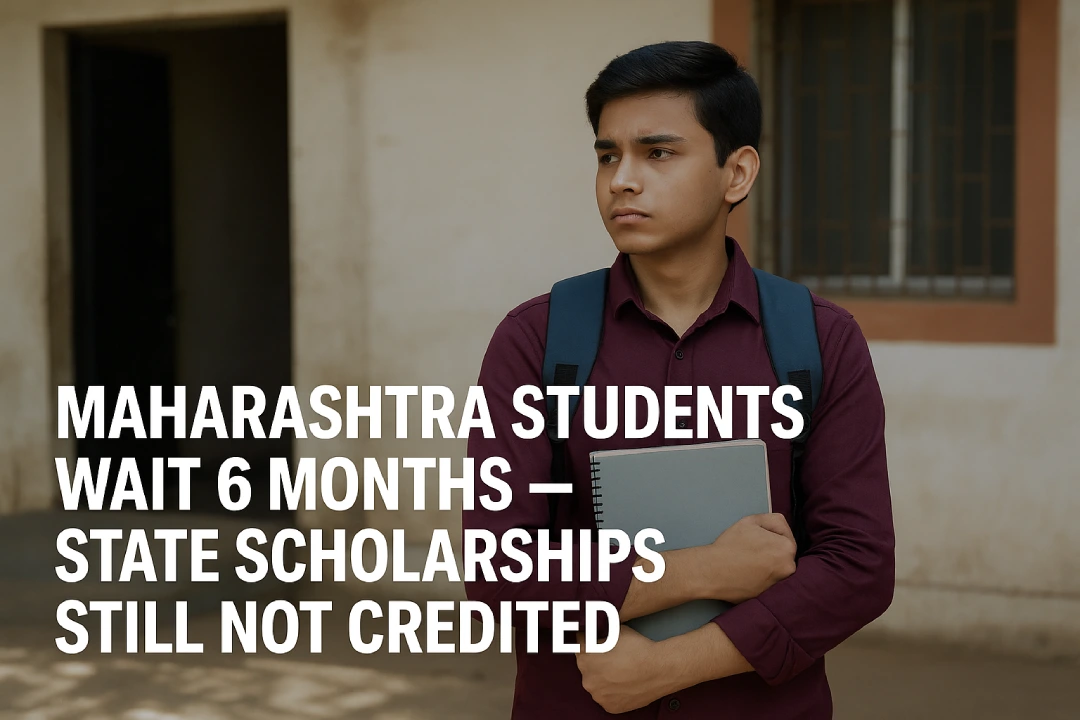
Maharashtra Students Wait 6 Months — State Scholarships Still Not Credited

Maharashtra Students Wait 6 Months — State Scholarships Still Not Credited

Six months after the results were declared in June, many students in Maharashtra are still waiting for their state-school scholarship money to be credited to their bank accounts. Parents say they completed all required steps, submitted documents on time and followed up several times, but the funds have still not been disbursed.

I chose to write on this issue because scholarships are not just a financial benefit. For many students, especially those coming from low-income families, this money helps them continue their education without added pressure. When such assistance is delayed, families end up struggling with basic costs like books, uniforms and transport. The government promises these schemes to support children who deserve encouragement. But delayed payments change the meaning of that support entirely. Drawing attention to this problem matters because every student deserves timely help, not endless follow-ups and uncertainty.

What’s the Situation Now

Reports suggest that thousands of students from primary and secondary schools are affected. Even though the results were announced months ago, the money has not reached their accounts. Parents claim the delay is not due to missing documents, but because the new online disbursement system is still facing technical and administrative hurdles.

Officials have acknowledged the backlog and said the new process for transferring funds is still being streamlined. Instead of making the system faster as promised, the transition has caused bottlenecks. Many parents who visited education offices were told only that the process is “under review” or “will be done soon,” but no clear deadlines have been given.

Which Students Are Affected

The delay impacts:

  • Students from economically weaker families who rely on scholarship funds
  • Children studying in government and government-aided schools
  • Schools that depend on state support for smooth academic planning

The issue is not limited to younger students alone. Even in other state-funded schemes, students in higher education have reported late payments, suggesting this is part of a larger trend of delayed scholarship releases.

What the Delay Means for Students and Families

The consequences are significant:

  • Families cannot plan educational expenses on time
  • Students may struggle to buy books, uniforms or pay school-related fees
  • Anxiety builds around something that should have provided relief
  • Schools may face administration hurdles when state support is uncertain

For some, even a small scholarship amount can make a major difference. Delaying it defeats the purpose of offering such schemes in the first place.

Government’s Response and Challenges

Authorities claim that the shift to a full online disbursement format is the biggest reason for the delay. The system requires proper verification of student data, banking details and school records before funds can be transferred. Officials mention that verifying thousands of entries has taken longer than expected, causing a month-after-month backlog.

While the move to an online system may ultimately improve transparency and prevent misuse, the lack of planning has left students and parents carrying the burden of waiting without a clear timeline.

Leave a Comment

End of Article

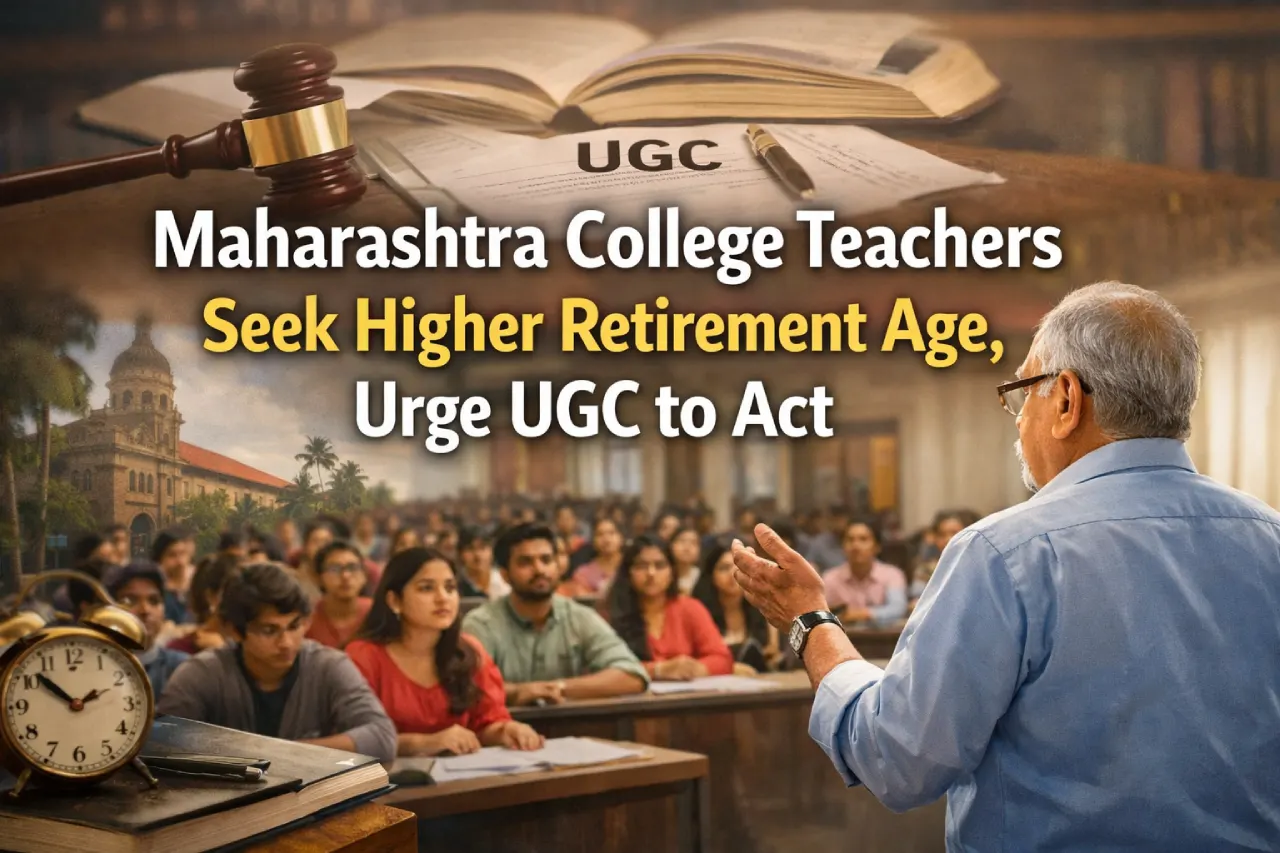
Maharashtra College Teachers Seek Higher Retirement Age, Urge UGC to Act

Maharashtra College Teachers Seek Higher Retirement Age, Urge UGC to Act

Teachers from colleges across Maharashtra have urged the University Grants Commission to raise the retirement age for teaching faculty from the current 60 years to 65 years. The demand has been made by teachers’ associations who argue that experienced educators are being forced to retire too early, even as colleges continue to face staff shortages. They believe extending the retirement age will help retain academic expertise and improve teaching quality in higher education institutions.

I am writing about this issue because it affects not just teachers, but also students and the overall higher education system. At a time when universities are struggling with vacant posts and delayed recruitments, losing senior faculty creates gaps in teaching, research, and mentorship. The demand also raises a larger question about how India values experience in academia and whether policy needs to evolve with changing life expectancy and professional capability.

What Maharashtra Teachers Are Demanding

Teachers’ bodies have formally requested UGC to revise the retirement age for college and university teachers to 65 years, bringing it in line with several central institutions. They argue that many educators remain academically active and physically fit well beyond 60.

According to them, forcing retirement at 60 leads to a loss of institutional memory and teaching continuity.

Why Teachers Want the Age Limit Raised

Teachers say the demand is based on practical realities. Many colleges face:

  • Acute shortage of qualified faculty
  • Delays in permanent recruitment
  • Heavy teaching loads on existing staff

Extending the retirement age would offer immediate relief without additional recruitment costs.

Comparison with Central Institutions

In several central universities and institutions, teachers are allowed to work up to 65 years, and in some cases even longer through re-employment. Maharashtra teachers feel this creates inequality between state and central institutions.

They believe a uniform retirement policy across the country would be fairer and more effective.

Impact on Students and Academic Quality

Senior teachers often play a key role in mentoring young faculty, guiding research scholars, and maintaining academic standards. Their early retirement disrupts this balance and places extra pressure on junior staff.

Students, especially at postgraduate and research levels, are among the biggest losers.

Concerns About Youth Employment

Some critics argue that extending retirement age could limit opportunities for younger aspirants. Teachers’ associations counter this by saying vacant posts already exist and recruitment processes are slow, so extending service will not block new jobs.

They stress that experience and new talent should coexist.

What UGC’s Role Will Be

UGC has the authority to frame regulations related to service conditions in higher education. Any change in retirement age would require policy review and coordination with state governments.

Teachers are hopeful that the commission will consider the request seriously.

Leave a Comment

End of Article

Loading more posts...