JOIN WHATSAPP
STORIES

NCERT Announces Major Changes for Students Next Year

NCERT Announces Major Changes for Students Next Year

The National Council of Educational Research and Training (NCERT) is preparing to roll out significant academic changes in the upcoming academic year. These changes will impact the curriculum, textbooks, exam pattern, and classroom learning methods for students from Classes 1 to 12. With a stronger focus on practical learning, skill development and reduced academic burden, the new reforms aim to make education more meaningful and less stressful for students across India.

Students continue preparing with old methods simply because they are unaware of new policies. A lack of clarity creates confusion during exams, textbook selection, and even subject planning. Understanding NCERT’s proposed changes ahead of time helps families adapt smoothly, avoids last-minute panic and ensures that learning becomes aligned with the latest national education standards. When the system changes, preparation must change too. That is why it is important for students to know exactly what’s new and how it will impact their studies next year.

Key Changes Expected from NCERT Next Year

Reduction in Textbook Load

NCERT is planning to revise textbooks so that students do not feel unnecessary pressure from heavy content.

  • Some chapters will be shortened
  • Repetitive topics may be removed
  • More illustrations and real-life examples will be added

Focus on Skill-Based Learning

Learning will not remain limited to theory. Students will learn skills that prepare them for everyday challenges.

  • Practical activities inside classrooms
  • Project-based assessments
  • Introduction of vocational skills from middle classes

New Exam Pattern with Competency-Based Questions

Instead of memorisation, students will face questions that test understanding.

  • More analytical and application-based questions
  • Less weightage to rote learning
  • Questions encouraging logical thinking and reasoning

Multiple Languages in Classroom

To make learning inclusive, NCERT will encourage teaching in regional languages along with English or Hindi wherever possible.

  • Students may choose a language they are comfortable with
  • Teachers will use mother-tongue-friendly explanation in early classes

Integration of Technology and Digital Learning

Digital tools will be actively used in both teaching and homework.

  • Audio-visual content for lessons
  • Online assignments and quizzes
  • Topic-wise digital resources for revision

New NCERT Rules Students Must Remember

  • Textbooks may change for many classes; do not buy old editions without checking
  • Board exam students must follow the revised exam pattern carefully
  • Projects and activities will carry more marks, so participation is essential
  • Language choices may differ based on school policy, so students should confirm with their institution
  • Skill-based subjects may be compulsory for some grades
Leave a Comment

End of Article

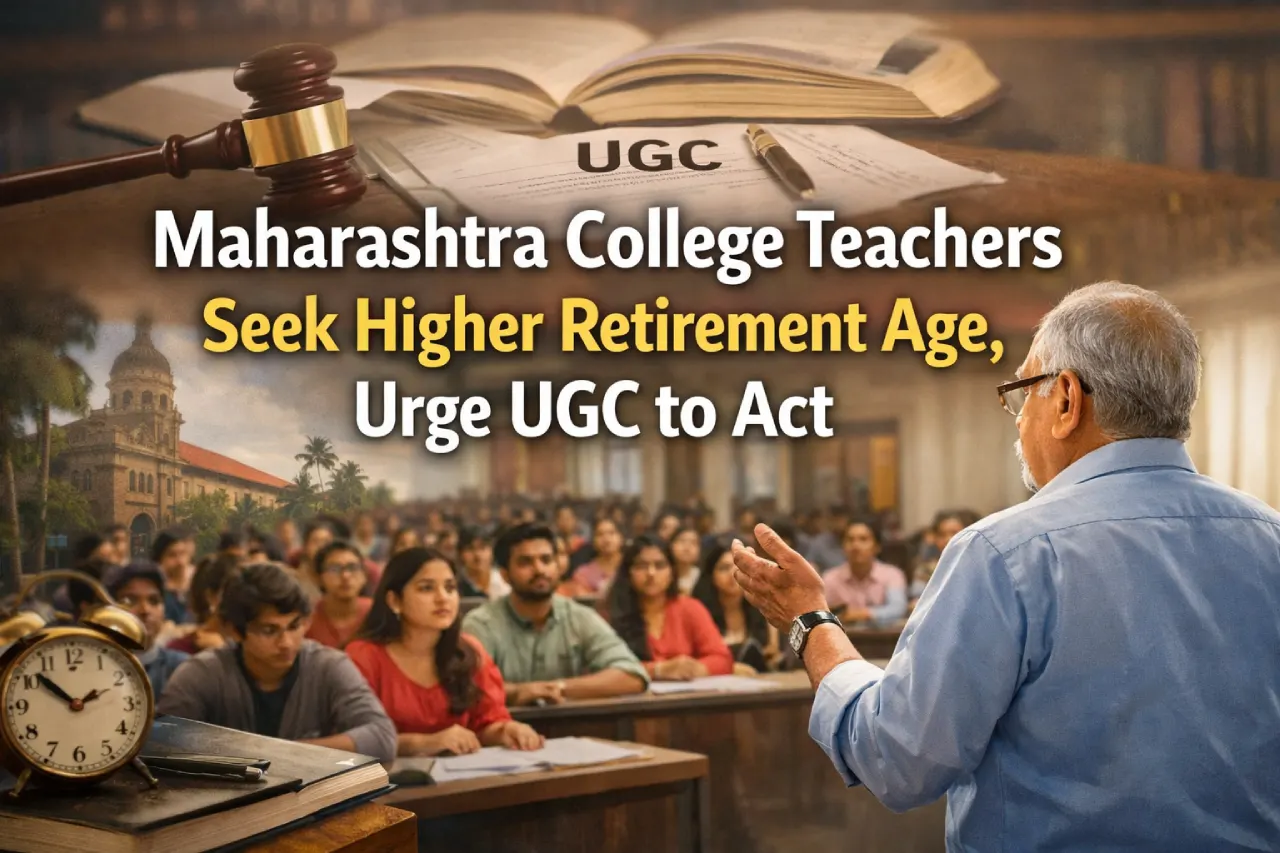
Maharashtra College Teachers Seek Higher Retirement Age, Urge UGC to Act

Maharashtra College Teachers Seek Higher Retirement Age, Urge UGC to Act

Teachers from colleges across Maharashtra have urged the University Grants Commission to raise the retirement age for teaching faculty from the current 60 years to 65 years. The demand has been made by teachers’ associations who argue that experienced educators are being forced to retire too early, even as colleges continue to face staff shortages. They believe extending the retirement age will help retain academic expertise and improve teaching quality in higher education institutions.

I am writing about this issue because it affects not just teachers, but also students and the overall higher education system. At a time when universities are struggling with vacant posts and delayed recruitments, losing senior faculty creates gaps in teaching, research, and mentorship. The demand also raises a larger question about how India values experience in academia and whether policy needs to evolve with changing life expectancy and professional capability.

What Maharashtra Teachers Are Demanding

Teachers’ bodies have formally requested UGC to revise the retirement age for college and university teachers to 65 years, bringing it in line with several central institutions. They argue that many educators remain academically active and physically fit well beyond 60.

According to them, forcing retirement at 60 leads to a loss of institutional memory and teaching continuity.

Why Teachers Want the Age Limit Raised

Teachers say the demand is based on practical realities. Many colleges face:

  • Acute shortage of qualified faculty
  • Delays in permanent recruitment
  • Heavy teaching loads on existing staff

Extending the retirement age would offer immediate relief without additional recruitment costs.

Comparison with Central Institutions

In several central universities and institutions, teachers are allowed to work up to 65 years, and in some cases even longer through re-employment. Maharashtra teachers feel this creates inequality between state and central institutions.

They believe a uniform retirement policy across the country would be fairer and more effective.

Impact on Students and Academic Quality

Senior teachers often play a key role in mentoring young faculty, guiding research scholars, and maintaining academic standards. Their early retirement disrupts this balance and places extra pressure on junior staff.

Students, especially at postgraduate and research levels, are among the biggest losers.

Concerns About Youth Employment

Some critics argue that extending retirement age could limit opportunities for younger aspirants. Teachers’ associations counter this by saying vacant posts already exist and recruitment processes are slow, so extending service will not block new jobs.

They stress that experience and new talent should coexist.

What UGC’s Role Will Be

UGC has the authority to frame regulations related to service conditions in higher education. Any change in retirement age would require policy review and coordination with state governments.

Teachers are hopeful that the commission will consider the request seriously.

Leave a Comment

End of Article

Loading more posts...