
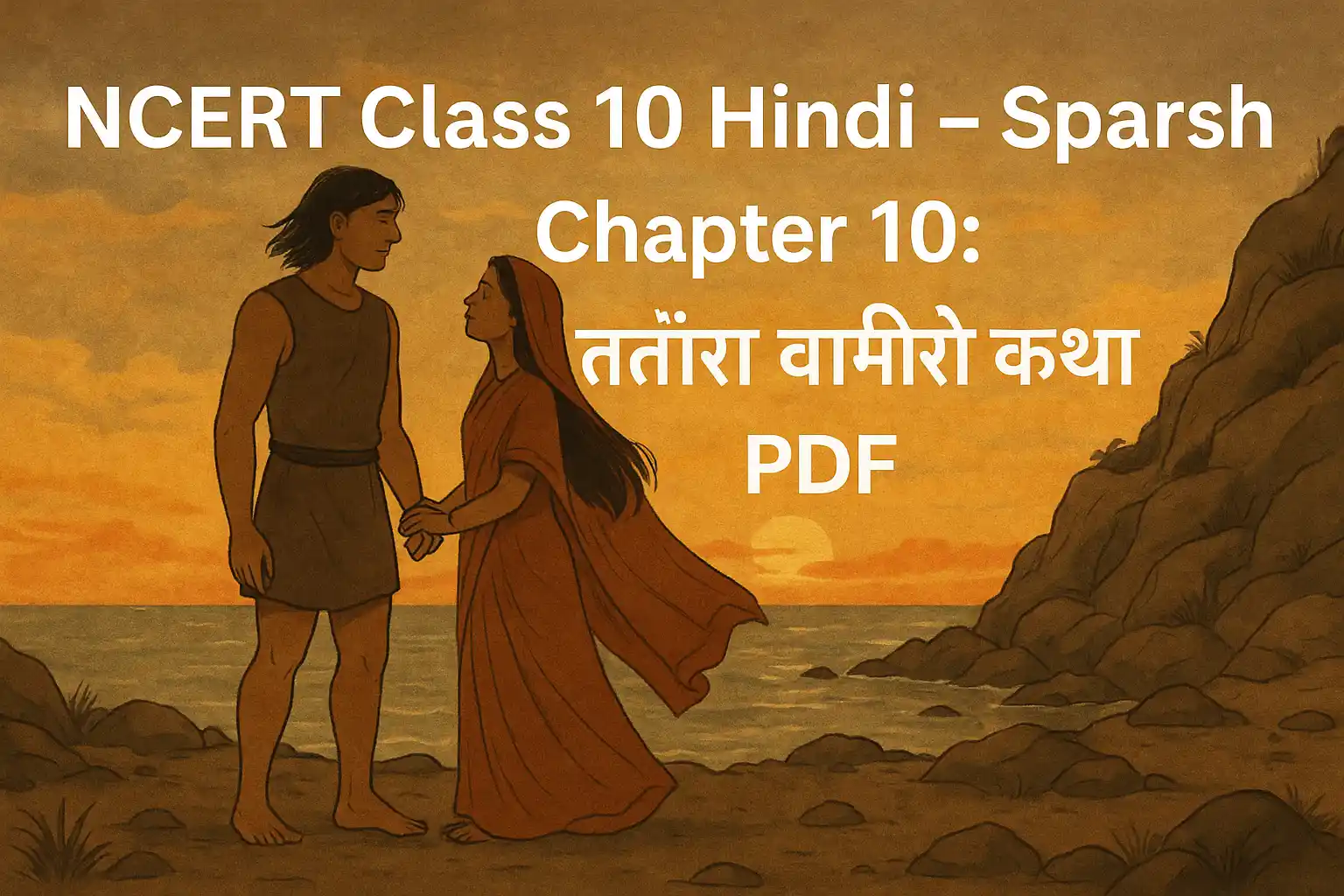
“Tatara Vamiro Katha” (तताँरा वामीरो कथा) is a fascinating story included in NCERT Class 10 Hindi Sparsh Chapter 10. The story revolves around the lives, struggles, and experiences of ordinary people, highlighting social values, courage, and moral lessons. Students can download the NCERT Class 10 Hindi Sparsh Chapter 10 PDF to read the complete story and understand its themes, characters, and exercises for exam preparation.
I chose to write about this chapter because it captures the essence of storytelling in Hindi literature while teaching life lessons. Stories like “Tatara Vamiro Katha” help students understand human behaviour, morality, and the consequences of choices. It is important for students to read this story as it enhances comprehension, critical thinking, and appreciation for literature. The story’s simple yet impactful narrative also provides a perfect example for students to analyse character development, plot structure, and the moral of a tale, which is valuable for both academic and personal growth.
Overview of “Tatara Vamiro Katha”
This chapter narrates a compelling story where the characters face social, moral, or personal challenges. The story’s main aim is to showcase human values like honesty, courage, and empathy. Through the plot, students learn about different situations people encounter and how thoughtful actions can bring meaningful outcomes.
Key Themes of the Story:
- Moral and ethical values in everyday life
- Courage, honesty, and social responsibility
- Impact of choices on oneself and others
- Lessons on empathy and understanding human nature
Characters in the Story
- Tatara – The protagonist whose actions and decisions form the core of the story
- Vamiro – A supporting character that highlights friendship, guidance, or moral contrast
- Other Characters – Represent societal values and common people’s struggles
The story uses relatable characters to make moral lessons easy for students to understand and connect with.
Why This Chapter is Important for Class 10 Students
For students, this chapter is not just about reading a story; it is about understanding life lessons through literature. It improves comprehension, teaches ethical reasoning, and helps students express thoughts in Hindi clearly. By studying this chapter, students also develop the ability to answer questions based on plot, character analysis, and moral interpretation effectively.
Benefits of Reading “Tatara Vamiro Katha”:
- Enhances Hindi reading and comprehension skills
- Provides examples of ethical decision-making
- Teaches students to analyse plot and characters
- Helps in writing structured answers for exams
Summary of the Chapter
“Tatara Vamiro Katha” begins with an introduction to Tatara and Vamiro, highlighting their lives and surroundings. The story progresses as the characters face challenges that test their courage, honesty, and wisdom. Each incident in the story demonstrates a moral or lesson, making the narrative engaging and thought-provoking. By the end, the story leaves a strong impression about the importance of values in life.
Key Lessons from the Story:
- Courage and honesty are always rewarded
- Thoughtful choices lead to positive outcomes
- Empathy and understanding strengthen human relationships
- Stories can reflect real-life situations and guide moral thinking
How to Download NCERT Class 10 Hindi Sparsh Chapter 10 PDF
Students can easily download the NCERT Class 10 Hindi Sparsh Chapter 10 – तताँरा वामीरो कथा PDF from here.

















