JOIN WHATSAPP
STORIES

NCERT Class 10 Sanskrit Shemushi Chapter 10 अन्योक्तयः PDF – Download and Summary

NCERT Class 10 Sanskrit Shemushi Chapter 10 अन्योक्तयः PDF

Chapter 10 of the Class 10 NCERT Sanskrit textbook Shemushi is titled अन्योक्तयः, which refers to indirect expressions or allegorical sayings. This chapter brings a fresh twist to the Sanskrit syllabus, as it moves away from stories and instead focuses on proverbs or wise sayings that carry deeper meanings hidden behind simple imagery. These sayings use symbols from nature, animals, or daily life to convey lessons about human behaviour, morality, and practical wisdom.

I chose to write about this chapter because it’s unique compared to the rest of the Shemushi book. It doesn’t just teach Sanskrit—it teaches us how people in ancient India creatively used metaphors and similes to explain life lessons. In today’s fast-paced world, we often overlook this style of communication. But अन्योक्तयः reminds us how powerful and beautiful indirect speech can be. I also find this chapter to be a good source of revision material, especially for translation practice and understanding literary devices in Sanskrit.

What are अन्योक्तयः?

The word अन्योक्तिः means “indirect speech” or “allegory.” In this chapter, various श्लोक (verses) present messages about life, duty, and ethics using symbolic language. Each verse says one thing but means another. This makes it a very rich and thought-provoking chapter.

Some examples of indirect expression in this chapter include:

  • A bee moving from flower to flower teaches us about people who are never satisfied with what they have.
  • A deer being attracted to music and losing its life shows how over-indulgence in pleasures can lead to harm.
  • A frog sitting calmly near a snake’s mouth highlights how ignorance of danger can be fatal.

These verses are not just for reading—they’re for reflecting. Each one invites the student to think and interpret.

Why this Chapter is Worth Studying

  • Sharpens interpretative thinking through indirect meanings
  • Helps improve vocabulary related to nature and living beings
  • Develops skills to translate poetry into logical messages
  • Teaches moral values and real-world lessons in a subtle way
  • Introduces poetic techniques like simile (उपमा) and metaphor (रूपक)

Download PDF

Click below to download the official NCERT Shemushi Chapter 10 PDF – अन्योक्तय
Leave a Comment

End of Article

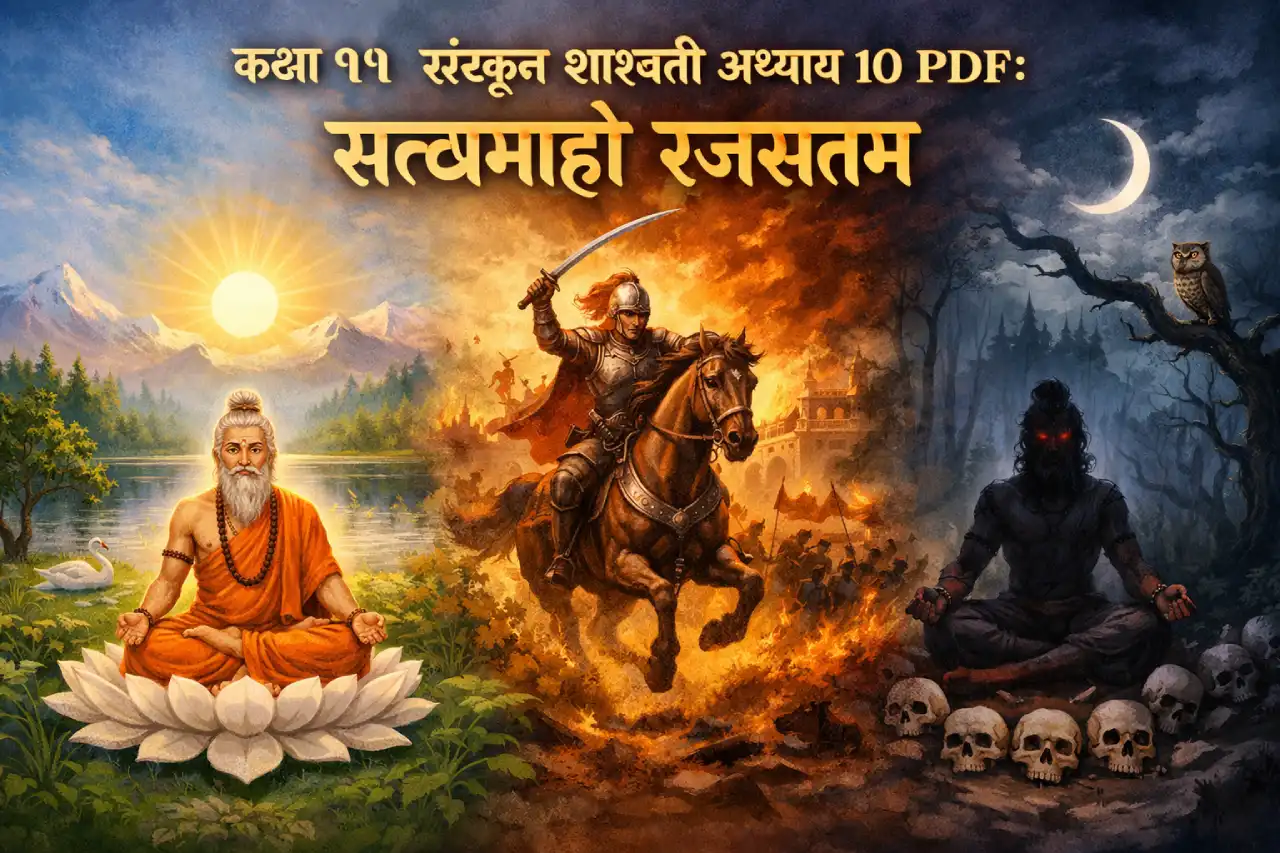
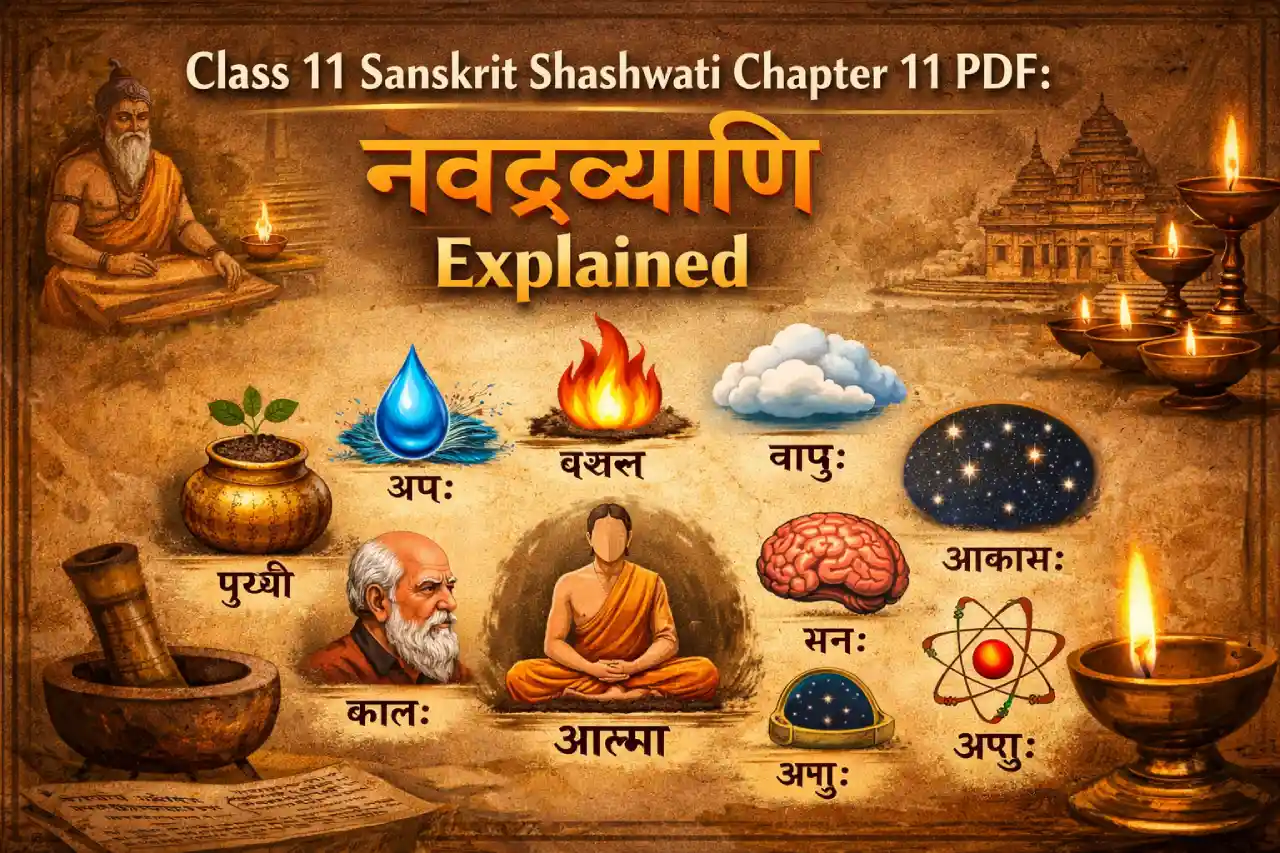
Class 11 Sanskrit Shashwati Chapter 11 PDF: नवद्रव्याणि Explained

Class 11 Sanskrit Shashwati Chapter 11 PDF: नवद्रव्याणि Explained

NCERT Class 11 Sanskrit Shashwati Chapter 11, titled “नवद्रव्याणि”, introduces students to an important concept from Indian philosophy—the nine fundamental substances that make up the universe. The chapter explains these elements in a simple and structured way, helping students understand how ancient thinkers tried to explain the nature of reality through observation and logic.

I am writing about this chapter because many students search for the official NCERT PDF along with a simple explanation before exams. In my experience, topics like “नवद्रव्याणि” may feel slightly abstract at first, but once you understand the list and their meanings, it becomes quite easy to remember and revise. This chapter is important not only for Sanskrit exams but also for gaining a basic idea of traditional Indian philosophy. It helps students connect language learning with deeper concepts. Studying from the official NCERT book and revising regularly can make this chapter scoring and easy to handle.

About the Chapter: नवद्रव्याणि

The term “नवद्रव्याणि” means “nine substances.” These are considered the basic elements that exist in the universe according to classical Indian thought.

The chapter explains each of these substances and their role in the functioning of the world.

The Nine Substances Explained

Here is a simple table to understand the nine dravyas:

Sanskrit TermMeaning (Simple English)
पृथ्वी (Prithvi)Earth
आपः (Apah)Water
तेजः (Tejas)Fire
वायु (Vayu)Air
आकाश (Akasha)Space
काल (Kala)Time
दिशा (Disha)Direction
आत्मा (Atma)Soul
मनः (Manas)Mind

These elements together explain the physical and non-physical aspects of existence.

Key Ideas in the Chapter

1. Understanding the Universe

The chapter explains how everything in the world is made up of basic substances.

2. Physical and Non-Physical Elements

Some substances like earth and water are physical, while others like time and soul are abstract.

3. Connection Between Mind and Body

The inclusion of “मनः” (mind) and “आत्मा” (soul) shows the importance of inner consciousness.

Why This Chapter Is Important for Students

  • Helps understand basic philosophical concepts
  • Improves Sanskrit reading and comprehension
  • Important for exam questions and explanations
  • Builds logical and conceptual thinking

Students who understand the list properly can easily score marks.

Study Tips for Chapter 11

  • Memorise the nine dravyas and their meanings
  • Understand the difference between physical and abstract elements
  • Practise writing short explanations
  • Revise regularly using a table format

This makes the chapter easier to revise before exams.

How to Download NCERT Class 11 Sanskrit Shashwati Chapter 11 PDF

Students can download the official chapter PDF from the National Council of Educational Research and Training website by following these steps:

Always use the official NCERT website to ensure you get the correct and updated version.

Leave a Comment

End of Article

Loading more posts...