JOIN WHATSAPP
STORIES

NCERT Class 10 Science Chapter 12 Hindi Medium: विद्युत धारा के चुंबकीय प्रभाव PDF Download

NCERT Class 10 Science Chapter 12 Hindi Medium: विद्युत धारा के चुंबकीय प्रभाव PDF Download

The NCERT Class 10 Science Chapter 12, विद्युत धारा के चुंबकीय प्रभाव (Magnetic Effect of Electric Current), explores how electricity and magnetism are closely related — two forces that together form the basis of modern technology. This chapter helps students understand how an electric current produces a magnetic field, how this field behaves, and how devices like electric motors, generators, and electromagnets work. It connects classroom science with real-world machines and technologies that drive industries, homes, and even transportation.

I wanted to write about this topic because it explains one of the most fascinating discoveries in physics — that electricity can create magnetism and vice versa. Understanding this concept helps students see how many common devices function — from fans and washing machines to loudspeakers and electric bells. It’s a chapter that bridges theory with application, making science practical and meaningful. For Class 10 students, this topic is not only important for board exams but also forms the foundation for higher studies in physics and electrical engineering.

Understanding the Magnetic Effect of Electric Current

When an electric current flows through a conductor, it generates a magnetic field around it. This phenomenon was first observed by Hans Christian Oersted in 1820. He noticed that the needle of a magnetic compass deflects when placed near a current-carrying wire. This simple observation proved that electricity and magnetism are interconnected.

Key Observation

  • A current-carrying wire produces a magnetic field.
  • The direction of the magnetic field depends on the direction of the current.

The magnetic field lines form concentric circles around the wire, and their direction can be determined using the Right-Hand Thumb Rule.

Right-Hand Thumb Rule

If you hold a wire in your right hand with the thumb pointing in the direction of the current, the fingers curl around the wire in the direction of the magnetic field lines.

This rule helps in visualising the direction of the magnetic field around any conductor.

Example

If current flows upward through a wire, the magnetic field circles the wire in an anticlockwise direction.

Magnetic Field Due to a Current in a Circular Loop

When a wire is bent into a circular loop, the magnetic field produced at the center becomes stronger because the field lines due to each part of the loop add up.

  • The strength of the magnetic field increases with the number of turns in the coil.
  • The direction of the field at the center of the loop is perpendicular to the plane of the loop.

This principle is used in creating electromagnets and electric motors.

Download PDF

Students can download the NCERT Class 10 Science Chapter 12: विद्युत धारा के चुंबकीय प्रभाव PDF from here.
Leave a Comment

End of Article

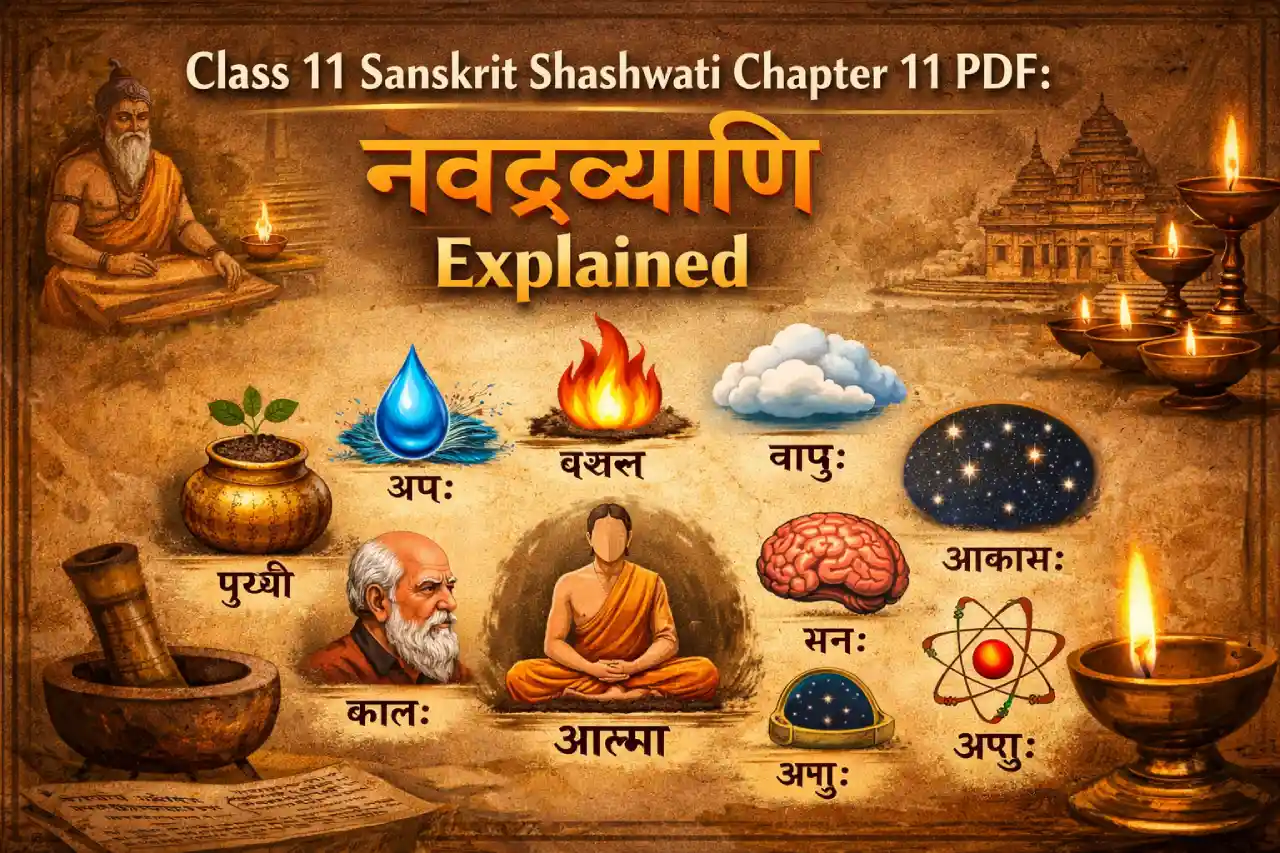
Class 11 Sanskrit Shashwati Chapter 11 PDF: नवद्रव्याणि Explained

Class 11 Sanskrit Shashwati Chapter 11 PDF: नवद्रव्याणि Explained

NCERT Class 11 Sanskrit Shashwati Chapter 11, titled “नवद्रव्याणि”, introduces students to an important concept from Indian philosophy—the nine fundamental substances that make up the universe. The chapter explains these elements in a simple and structured way, helping students understand how ancient thinkers tried to explain the nature of reality through observation and logic.

I am writing about this chapter because many students search for the official NCERT PDF along with a simple explanation before exams. In my experience, topics like “नवद्रव्याणि” may feel slightly abstract at first, but once you understand the list and their meanings, it becomes quite easy to remember and revise. This chapter is important not only for Sanskrit exams but also for gaining a basic idea of traditional Indian philosophy. It helps students connect language learning with deeper concepts. Studying from the official NCERT book and revising regularly can make this chapter scoring and easy to handle.

About the Chapter: नवद्रव्याणि

The term “नवद्रव्याणि” means “nine substances.” These are considered the basic elements that exist in the universe according to classical Indian thought.

The chapter explains each of these substances and their role in the functioning of the world.

The Nine Substances Explained

Here is a simple table to understand the nine dravyas:

Sanskrit TermMeaning (Simple English)
पृथ्वी (Prithvi)Earth
आपः (Apah)Water
तेजः (Tejas)Fire
वायु (Vayu)Air
आकाश (Akasha)Space
काल (Kala)Time
दिशा (Disha)Direction
आत्मा (Atma)Soul
मनः (Manas)Mind

These elements together explain the physical and non-physical aspects of existence.

Key Ideas in the Chapter

1. Understanding the Universe

The chapter explains how everything in the world is made up of basic substances.

2. Physical and Non-Physical Elements

Some substances like earth and water are physical, while others like time and soul are abstract.

3. Connection Between Mind and Body

The inclusion of “मनः” (mind) and “आत्मा” (soul) shows the importance of inner consciousness.

Why This Chapter Is Important for Students

  • Helps understand basic philosophical concepts
  • Improves Sanskrit reading and comprehension
  • Important for exam questions and explanations
  • Builds logical and conceptual thinking

Students who understand the list properly can easily score marks.

Study Tips for Chapter 11

  • Memorise the nine dravyas and their meanings
  • Understand the difference between physical and abstract elements
  • Practise writing short explanations
  • Revise regularly using a table format

This makes the chapter easier to revise before exams.

How to Download NCERT Class 11 Sanskrit Shashwati Chapter 11 PDF

Students can download the official chapter PDF from the National Council of Educational Research and Training website by following these steps:

Always use the official NCERT website to ensure you get the correct and updated version.

Leave a Comment

End of Article

Loading more posts...