JOIN WHATSAPP
STORIES

NCERT Class 11 Business Studies Chapter 7: Formation of a Company PDF Download

NCERT Class 11 Business Studies Chapter 7: Formation of a Company

Chapter 7 of Class 11 Business Studies is all about the Formation of a Company. It explains the step-by-step process of starting a company in India—from the idea stage to getting approval and registration. Students get to learn the actual formalities and legal documents needed to start a business legally, including terms like Memorandum of Association, Articles of Association, and Certificate of Incorporation.

I chose this chapter because many students, especially those interested in business, don’t realise how important and detailed the company formation process is. In real life, this process is followed every day by thousands of entrepreneurs. If someone plans to launch a startup or join a business course, this chapter gives the basics of how to register and legally form a company. I personally think it’s one of the most practical chapters in the Business Studies syllabus, and it gives us a real-world sense of how businesses begin their journey—from paperwork to approvals.

Formation of a Company

Forming a company is not just about starting a business idea—it involves several legal steps that must be followed. This chapter breaks down those steps clearly, and it’s a part of the official NCERT Class 11 Business Studies syllabus.

Stages in Formation of a Company

The process of forming a company usually has four main stages:

  1. Promotion
    • This is the idea stage
    • Promoters come up with the business plan
    • Arrangements for capital and location are made
  2. Incorporation
    • This is the legal process of registering the company
    • Documents like the Memorandum of Association (MOA), Articles of Association (AOA), and Declaration by Professionals are submitted
    • Registrar of Companies (ROC) gives the Certificate of Incorporation
  3. Subscription of Capital
    • Only for public companies
    • Company issues shares to raise funds
    • Prospectus is released to invite investors
  4. Commencement of Business
    • For public companies, this step is needed
    • They can start business after getting the Certificate of Commencement

Private companies can start business immediately after incorporation, while public companies have to complete all four steps.

Key Documents Required

  • MOA (Memorandum of Association): Main document that defines the company’s purpose
  • AOA (Articles of Association): Rules for internal management
  • Prospectus: Only for public companies inviting share capital
  • Statutory Declaration: That all rules are followed

Example from Real Life

If someone wants to start a business like an e-commerce company or tech startup in India, they need to register their company with the Ministry of Corporate Affairs (MCA). Legal documents like MOA and AOA must be filed online. Once approved, the business gets a CIN (Corporate Identity Number) and is legally recognised.

Companies like Zomato, Paytm, and Nykaa have all gone through these steps at the start.

Download PDF

Click Here to Download NCERT Class 11 Business Studies Chapter 7: Formation of a Company PDF
Leave a Comment

End of Article

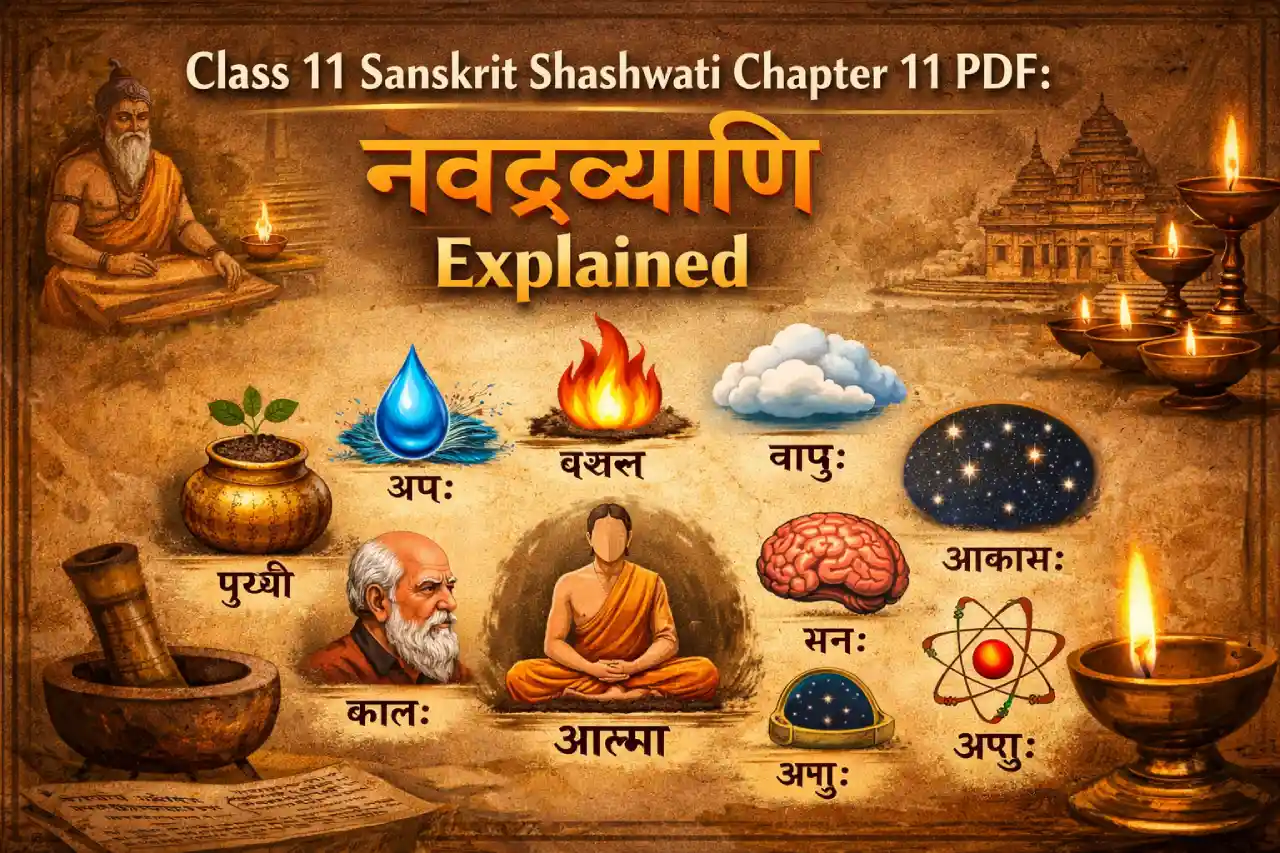
Class 11 Sanskrit Shashwati Chapter 11 PDF: नवद्रव्याणि Explained

Class 11 Sanskrit Shashwati Chapter 11 PDF: नवद्रव्याणि Explained

NCERT Class 11 Sanskrit Shashwati Chapter 11, titled “नवद्रव्याणि”, introduces students to an important concept from Indian philosophy—the nine fundamental substances that make up the universe. The chapter explains these elements in a simple and structured way, helping students understand how ancient thinkers tried to explain the nature of reality through observation and logic.

I am writing about this chapter because many students search for the official NCERT PDF along with a simple explanation before exams. In my experience, topics like “नवद्रव्याणि” may feel slightly abstract at first, but once you understand the list and their meanings, it becomes quite easy to remember and revise. This chapter is important not only for Sanskrit exams but also for gaining a basic idea of traditional Indian philosophy. It helps students connect language learning with deeper concepts. Studying from the official NCERT book and revising regularly can make this chapter scoring and easy to handle.

About the Chapter: नवद्रव्याणि

The term “नवद्रव्याणि” means “nine substances.” These are considered the basic elements that exist in the universe according to classical Indian thought.

The chapter explains each of these substances and their role in the functioning of the world.

The Nine Substances Explained

Here is a simple table to understand the nine dravyas:

Sanskrit TermMeaning (Simple English)
पृथ्वी (Prithvi)Earth
आपः (Apah)Water
तेजः (Tejas)Fire
वायु (Vayu)Air
आकाश (Akasha)Space
काल (Kala)Time
दिशा (Disha)Direction
आत्मा (Atma)Soul
मनः (Manas)Mind

These elements together explain the physical and non-physical aspects of existence.

Key Ideas in the Chapter

1. Understanding the Universe

The chapter explains how everything in the world is made up of basic substances.

2. Physical and Non-Physical Elements

Some substances like earth and water are physical, while others like time and soul are abstract.

3. Connection Between Mind and Body

The inclusion of “मनः” (mind) and “आत्मा” (soul) shows the importance of inner consciousness.

Why This Chapter Is Important for Students

  • Helps understand basic philosophical concepts
  • Improves Sanskrit reading and comprehension
  • Important for exam questions and explanations
  • Builds logical and conceptual thinking

Students who understand the list properly can easily score marks.

Study Tips for Chapter 11

  • Memorise the nine dravyas and their meanings
  • Understand the difference between physical and abstract elements
  • Practise writing short explanations
  • Revise regularly using a table format

This makes the chapter easier to revise before exams.

How to Download NCERT Class 11 Sanskrit Shashwati Chapter 11 PDF

Students can download the official chapter PDF from the National Council of Educational Research and Training website by following these steps:

Always use the official NCERT website to ensure you get the correct and updated version.

Leave a Comment

End of Article

Loading more posts...