JOIN WHATSAPP
STORIES

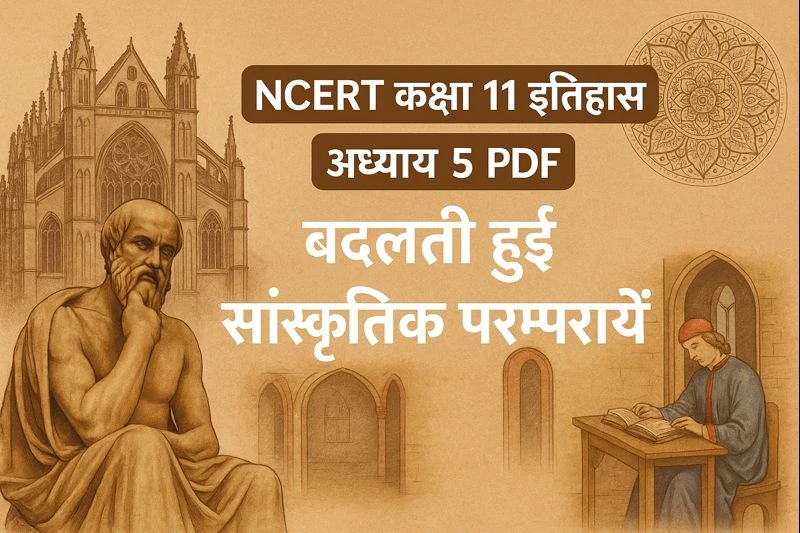
NCERT Class 11 History Chapter 5 PDF (Hindi): बदलती हुई सांस्कृतिक परम्परायें

NCERT Class 11 History Chapter 5 PDF (Hindi): बदलती हुई सांस्कृतिक परम्परायें

Chapter 5 of Class 11 History (Hindi Medium), बदलती हुई सांस्कृतिक परम्परायें, takes us into the heart of European cultural transformation between the 14th and 17th centuries. This period, known as the Renaissance, witnessed a powerful shift in thought, art, literature, and scientific understanding. Artists painted with new techniques, scholars questioned long-held ideas, and scientists began to explore the world through observation rather than blind belief. This chapter explains how Europe moved from a religiously dominated worldview to one that encouraged reason, individuality, and creativity.

This chapter helps learners understand how artists like Leonardo da Vinci and Michelangelo changed the way humans see themselves, how printing brought knowledge to common people, and how thinkers like Galileo challenged the old scientific mindset. These changes did not happen overnight but through steady cultural shifts, debates, and discoveries. Understanding this chapter helps students appreciate the power of ideas and how cultural transformation can shape entire civilizations.

About Chapter 5: बदलती हुई सांस्कृतिक परम्परायें

This chapter focuses on Europe’s cultural rebirth, mainly between the 14th and 17th centuries, covering topics like art, literature, religion, and scientific thinking.

Beginning of Renaissance

The Renaissance began in northern Italian cities such as Florence, Venice, and Milan. These cities were centres of trade and wealth, which supported artists, scholars, and new ideas.

Key features of early Renaissance thought:

  • Focus on human potential
  • Study of classical Greek and Roman texts
  • Interest in nature and realistic art
  • Growth of individual expression

Humanism: A New Way of Thinking

Humanism encouraged people to think about human life, emotions, and achievements rather than focusing only on religion.

Humanists:

  • Collected old manuscripts
  • Studied grammar, history, poetry, and philosophy
  • Promoted education and intellectual debate

Transformation in Art

Art during the Renaissance became more realistic and expressive. Artists used:

  • Perspective to show depth
  • Natural colours and human proportions
  • Detailed human expressions
  • Themes from daily life and mythology

Famous artists mentioned in the chapter include:

  • Leonardo da Vinci
  • Michelangelo
  • Raphael

Scientific Changes

Scientific inquiry grew rapidly during this period. Scholars stopped relying only on religious explanations and began experimenting.

Major figures:

  • Copernicus: Proposed that the Earth revolves around the Sun
  • Galileo: Improved telescopes and supported heliocentric ideas
  • Vesalius: Advanced knowledge of human anatomy

These discoveries were the foundation of modern science.

Printing Revolution

Johannes Gutenberg’s invention of the printing press changed Europe forever.
Impact of printing:

  • Books became cheaper
  • Literacy increased
  • New ideas spread quickly
  • People questioned traditional authority

Reformation and Religious Changes

The Catholic Church faced criticism, leading to the Protestant Reformation.
Key points:

  • Martin Luther challenged Church practices
  • New Christian groups formed
  • Religious debates reshaped European politics and society

NCERT Class 11 History Chapter 5 PDF Download (Hindi Medium)

Students can download the official NCERT Class 11 History Chapter 5 PDF (Hindi): बदलती हुई सांस्कृतिक परम्परायें directly from here.

Leave a Comment

End of Article

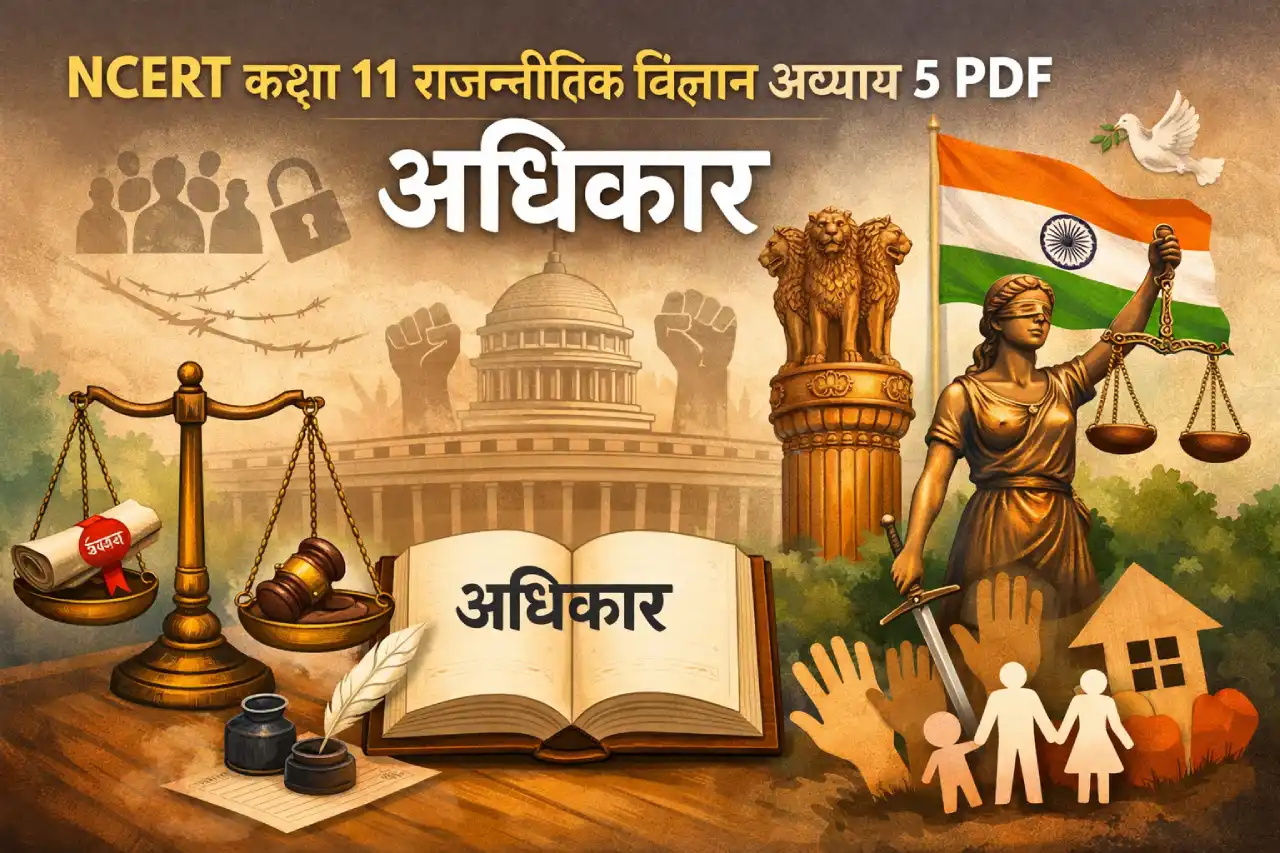
NCERT Class 11 Political Science Chapter 5 PDF (Hindi): अधिकार

NCERT Class 11 Political Science Chapter 5 PDF (Hindi): अधिकार

Chapter 5 of Class 11 Political Science Part 1 (Hindi Medium), titled अधिकार, deals with the idea of rights and why they are essential for a free and dignified life. This chapter explains what rights mean, how they differ from privileges, and why societies create laws to protect them. It also introduces students to different kinds of rights such as civil, political, and social rights, using simple explanations and everyday examples.

I am writing about this chapter because the word “rights” is often used in daily conversations, protests, debates, and even social media arguments, but many students do not clearly understand what counts as a right and what does not. Knowing this difference is important, especially in a democracy like India. This chapter helps students understand that rights are not just demands but legally and morally justified claims. It also explains why rights must be balanced with duties and responsibilities. For students preparing for board exams or competitive exams, this chapter builds a strong foundation for topics related to the Constitution, democracy, and citizenship.

What Are Rights?

Rights are justified claims that individuals can make on society and the state. They allow people to live with freedom, security, and self-respect. The chapter clearly explains that rights are not unlimited freedoms. They exist within a legal and moral framework so that one person’s freedom does not harm another.

Rights are important because they:

  • Protect individual freedom
  • Ensure equality before law
  • Prevent misuse of power
  • Help people participate in public life

Types of Rights Explained in the Chapter

The chapter talks about different categories of rights that are recognised in democratic societies.

Major Types of Rights

Type of RightWhat It Includes
Civil RightsRight to life, freedom of speech, equality before law
Political RightsRight to vote, contest elections, form political groups
Social RightsRight to education, health, and basic welfare
Economic RightsRight to work, fair wages, and livelihood

These rights together ensure that freedom is not limited to paper but works in real life.

Legal Rights and Moral Rights

The chapter makes an important distinction between legal and moral rights. Legal rights are protected by law and can be enforced in courts. Moral rights are based on ethical values and social expectations, even if they are not written in law.

For example, the right to free speech is a legal right, while treating others with dignity is a moral responsibility. Both are necessary for a healthy society.

Rights and Responsibilities Go Together

One of the strongest messages in this chapter is that rights cannot exist without responsibilities. If citizens enjoy freedom of expression, they must also avoid spreading hatred or false information. If people demand equality, they must also respect others’ rights.

This balance is what keeps a democracy stable and fair.

Why Rights Are Crucial in a Democracy

In a democracy, citizens are not subjects; they are active participants. Rights allow people to question the government, demand accountability, and express opinions without fear. The chapter explains that without rights, democracy would lose its meaning and power would remain concentrated in a few hands.

NCERT Class 11 Political Science Chapter 5 PDF Download (Hindi Medium)

Students can download the official NCERT PDF by following these steps:

  • Visit the official NCERT website
  • Click on E-Books
  • Select Class 11
  • Choose Political Science
  • Open Political Theory – Part 1 (Hindi Medium)
  • Click on Chapter 5: अधिकार
  • Download the PDF for regular study and revision

Using the official NCERT PDF ensures accuracy and alignment with the current syllabus.

Leave a Comment

End of Article

Loading more posts...