JOIN WHATSAPP
STORIES

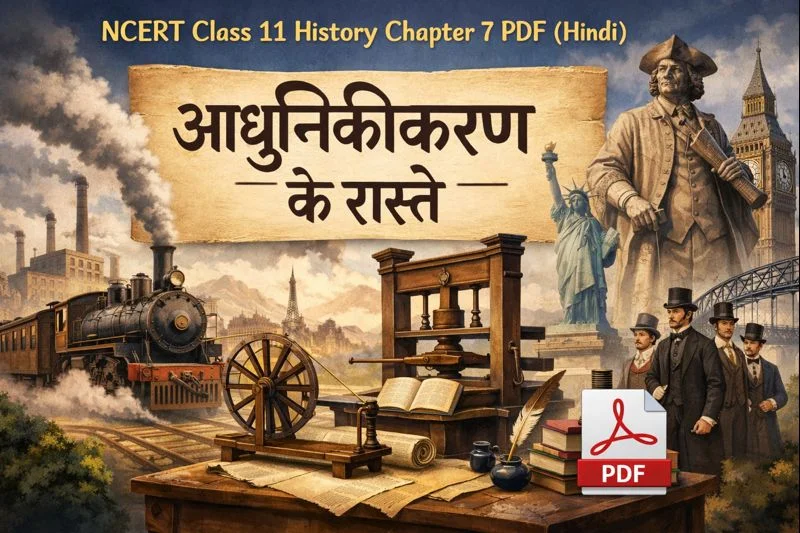
NCERT Class 11 History Chapter 7 PDF (Hindi): आधुनिकीकरण के रास्ते

NCERT Class 11 History Chapter 7 PDF (Hindi): आधुनिकीकरण के रास्ते

Chapter 7 of Class 11 History (Hindi Medium), आधुनिकीकरण के रास्ते, explains how different countries tried to become modern in the nineteenth and early twentieth centuries. The chapter mainly looks at Japan and China, showing how each society responded to internal challenges and external pressure from Western powers. It discusses reforms in education, industry, military, and governance, and highlights that there was no single path to modernisation. Every country followed its own route based on history, culture, and political conditions.

It shows how Japan modernised rapidly through planned reforms, while China faced internal conflicts and foreign domination that slowed change. These stories help students understand that progress is not automatic or uniform. The chapter also makes us think about our own society and how changes in education, technology, and governance shape a nation’s future. By studying these examples, learners can see that modernisation involves difficult choices, resistance, and long-term planning. It builds a deeper understanding of how today’s modern nations came into being and why historical context matters.

About Chapter 7: आधुनिकीकरण के रास्ते

This chapter compares different models of modernisation, focusing mainly on Japan and China, and explains how political leadership, social structure, and foreign influence affected their journeys.

What Is Modernisation?

Modernisation refers to changes that transform a traditional society into a modern one. These changes include:

  • Industrial growth
  • Modern education
  • Scientific thinking
  • Strong central administration
  • Modern military systems

Japan’s Path to Modernisation

Japan’s modernisation began with the Meiji Restoration (1868). The Japanese leadership realised that staying isolated would make the country weak.

Key steps taken by Japan:

  • Abolished feudal system
  • Introduced compulsory education
  • Built modern industries
  • Strengthened the army and navy
  • Adopted Western technology while preserving Japanese culture

Japan’s success shows how planned reforms and unity can bring fast transformation.

China’s Struggle with Modernisation

China faced a much harder path due to:

  • Foreign imperialism
  • Internal rebellions
  • Weak central authority

Major developments discussed in the chapter include:

  • Opium Wars and foreign control
  • Self-Strengthening Movement
  • Boxer Rebellion
  • Fall of the Qing dynasty

Despite attempts at reform, China’s progress was slow and uneven.

Role of Nationalism and Reform

Both countries experienced strong debates between tradition and change.

  • Reformers wanted modern laws and institutions
  • Conservatives wanted to protect traditional values

These debates shaped political movements and future governments.

Comparison of Japan and China

AspectJapanChina
Speed of changeFastSlow
Government supportStrongWeak
Foreign controlLimitedExtensive
OutcomeBecame a modern powerFaced long instability

NCERT Class 11 History Chapter 7 PDF Download (Hindi Medium)

Students can download the official NCERT Class 11 History Chapter 7 PDF (Hindi): आधुनिकीकरण के रास्ते from here.

Leave a Comment

End of Article

NCERT Class 11 Political Science Chapter 5 PDF (Hindi): अधिकार

NCERT Class 11 Political Science Chapter 5 PDF (Hindi): अधिकार

Chapter 5 of Class 11 Political Science Part 1 (Hindi Medium), titled अधिकार, deals with the idea of rights and why they are essential for a free and dignified life. This chapter explains what rights mean, how they differ from privileges, and why societies create laws to protect them. It also introduces students to different kinds of rights such as civil, political, and social rights, using simple explanations and everyday examples.

I am writing about this chapter because the word “rights” is often used in daily conversations, protests, debates, and even social media arguments, but many students do not clearly understand what counts as a right and what does not. Knowing this difference is important, especially in a democracy like India. This chapter helps students understand that rights are not just demands but legally and morally justified claims. It also explains why rights must be balanced with duties and responsibilities. For students preparing for board exams or competitive exams, this chapter builds a strong foundation for topics related to the Constitution, democracy, and citizenship.

What Are Rights?

Rights are justified claims that individuals can make on society and the state. They allow people to live with freedom, security, and self-respect. The chapter clearly explains that rights are not unlimited freedoms. They exist within a legal and moral framework so that one person’s freedom does not harm another.

Rights are important because they:

  • Protect individual freedom
  • Ensure equality before law
  • Prevent misuse of power
  • Help people participate in public life

Types of Rights Explained in the Chapter

The chapter talks about different categories of rights that are recognised in democratic societies.

Major Types of Rights

Type of RightWhat It Includes
Civil RightsRight to life, freedom of speech, equality before law
Political RightsRight to vote, contest elections, form political groups
Social RightsRight to education, health, and basic welfare
Economic RightsRight to work, fair wages, and livelihood

These rights together ensure that freedom is not limited to paper but works in real life.

Legal Rights and Moral Rights

The chapter makes an important distinction between legal and moral rights. Legal rights are protected by law and can be enforced in courts. Moral rights are based on ethical values and social expectations, even if they are not written in law.

For example, the right to free speech is a legal right, while treating others with dignity is a moral responsibility. Both are necessary for a healthy society.

Rights and Responsibilities Go Together

One of the strongest messages in this chapter is that rights cannot exist without responsibilities. If citizens enjoy freedom of expression, they must also avoid spreading hatred or false information. If people demand equality, they must also respect others’ rights.

This balance is what keeps a democracy stable and fair.

Why Rights Are Crucial in a Democracy

In a democracy, citizens are not subjects; they are active participants. Rights allow people to question the government, demand accountability, and express opinions without fear. The chapter explains that without rights, democracy would lose its meaning and power would remain concentrated in a few hands.

NCERT Class 11 Political Science Chapter 5 PDF Download (Hindi Medium)

Students can download the official NCERT PDF by following these steps:

  • Visit the official NCERT website
  • Click on E-Books
  • Select Class 11
  • Choose Political Science
  • Open Political Theory – Part 1 (Hindi Medium)
  • Click on Chapter 5: अधिकार
  • Download the PDF for regular study and revision

Using the official NCERT PDF ensures accuracy and alignment with the current syllabus.

Leave a Comment

End of Article

Loading more posts...