JOIN WHATSAPP
STORIES

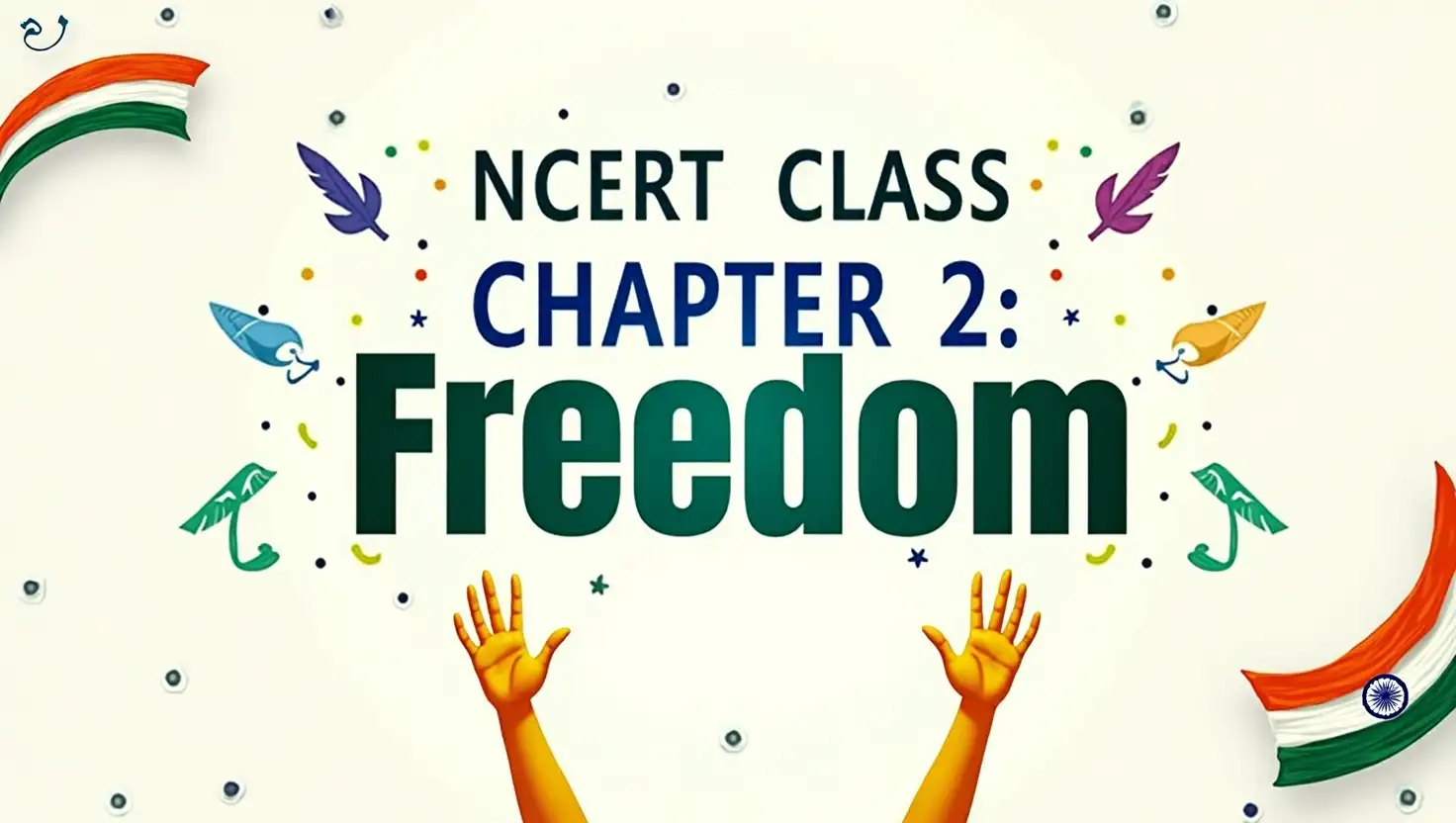
NCERT Class 11 Political Science Chapter 2: Freedom PDF Download with Summary

NCERT Class 11 Political Science Chapter 2: Freedom

Chapter 2 of Class 11 Political Science is all about Freedom, one of the most basic ideas in a democratic society. This chapter explores what freedom really means, what are its limits, and why it is important in our day-to-day lives. It also discusses whether complete freedom is possible and how the State ensures individual liberty without harming the society as a whole. By giving real-life examples and different viewpoints, this chapter helps students understand the balance between rights and responsibilities.

I chose to write about this chapter because the word “freedom” is used often in politics, media, and everyday conversations, but most of us don’t stop to think about what it truly means. Are we really free if we are scared to speak our mind? Is putting rules always an attack on our freedom? These are serious questions and this chapter tries to answer them. It’s not only helpful for exams but also for anyone trying to become a more informed and responsible citizen. Also, this chapter lays the groundwork for more advanced political ideas like liberty, equality, and justice. Students preparing for board exams, CUET or even competitive exams like UPSC can benefit a lot from understanding this chapter clearly.

Key Concepts in Chapter 2: Freedom

This chapter introduces freedom as both a political and a personal value. Here are the important parts covered:

1. Meaning of Freedom

  • Freedom means absence of external control or interference
  • It also means having choices and the ability to decide for oneself
  • True freedom is not about doing anything we want, but making responsible choices

2. Why is Freedom Important?

  • Helps in expressing ideas and beliefs
  • Allows creativity and personal growth
  • Builds a healthy democratic society
  • Encourages open debates and questioning of authority

3. Is Absolute Freedom Possible?

  • The chapter clearly says no – absolute freedom can harm others
  • For example, your freedom to play loud music should not disturb your neighbour’s peace
  • So freedom has to come with some reasonable restrictions

4. Types of Freedom

Type of FreedomWhat it Means
Positive FreedomFreedom for – freedom to do something (e.g., right to education)
Negative FreedomFreedom from – freedom from restrictions (e.g., no censorship)

5. Harm Principle

  • Based on John Stuart Mill’s idea
  • Says individuals should be free until their actions harm others
  • Example: You can express your views, but hate speech is not acceptable

6. Freedom and Law

  • Laws are needed to protect freedom, not always to restrict it
  • Example: Anti-child labour laws help protect the freedom of children to study and grow

7. Freedom and Democracy

  • A good democracy ensures freedom of speech, movement, religion, and expression
  • It also sets limits to make sure one person’s freedom doesn’t harm another’s

Download NCERT Class 11 Political Science Chapter 2 PDF

If you’re looking for a clean and official version of Chapter 2, here’s the direct NCERT PDF link. This is helpful for reading on the go or making notes during revision.

Click here to download the NCERT Class 11 Political Science Chapter 2: Freedom PDF
Leave a Comment

End of Article

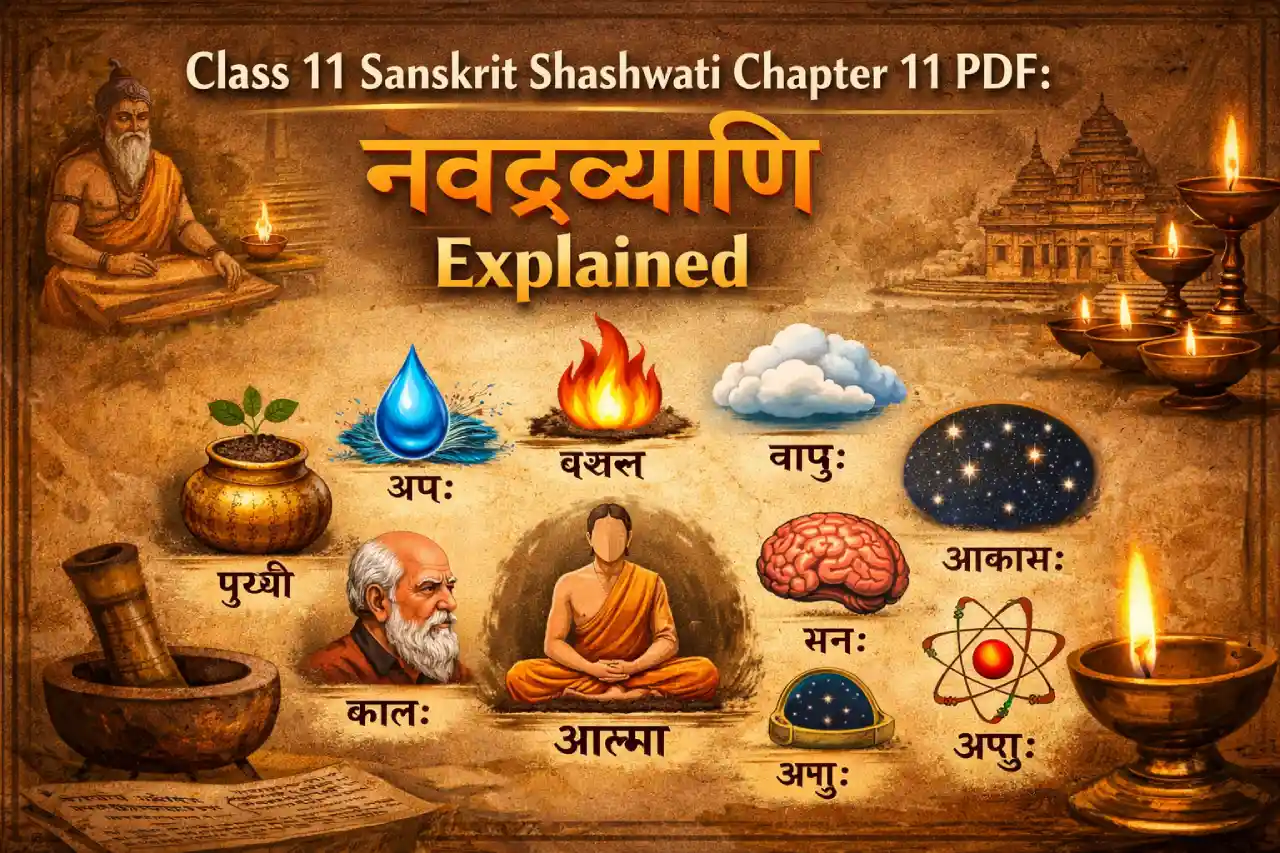
Class 11 Sanskrit Shashwati Chapter 11 PDF: नवद्रव्याणि Explained

Class 11 Sanskrit Shashwati Chapter 11 PDF: नवद्रव्याणि Explained

NCERT Class 11 Sanskrit Shashwati Chapter 11, titled “नवद्रव्याणि”, introduces students to an important concept from Indian philosophy—the nine fundamental substances that make up the universe. The chapter explains these elements in a simple and structured way, helping students understand how ancient thinkers tried to explain the nature of reality through observation and logic.

I am writing about this chapter because many students search for the official NCERT PDF along with a simple explanation before exams. In my experience, topics like “नवद्रव्याणि” may feel slightly abstract at first, but once you understand the list and their meanings, it becomes quite easy to remember and revise. This chapter is important not only for Sanskrit exams but also for gaining a basic idea of traditional Indian philosophy. It helps students connect language learning with deeper concepts. Studying from the official NCERT book and revising regularly can make this chapter scoring and easy to handle.

About the Chapter: नवद्रव्याणि

The term “नवद्रव्याणि” means “nine substances.” These are considered the basic elements that exist in the universe according to classical Indian thought.

The chapter explains each of these substances and their role in the functioning of the world.

The Nine Substances Explained

Here is a simple table to understand the nine dravyas:

Sanskrit TermMeaning (Simple English)
पृथ्वी (Prithvi)Earth
आपः (Apah)Water
तेजः (Tejas)Fire
वायु (Vayu)Air
आकाश (Akasha)Space
काल (Kala)Time
दिशा (Disha)Direction
आत्मा (Atma)Soul
मनः (Manas)Mind

These elements together explain the physical and non-physical aspects of existence.

Key Ideas in the Chapter

1. Understanding the Universe

The chapter explains how everything in the world is made up of basic substances.

2. Physical and Non-Physical Elements

Some substances like earth and water are physical, while others like time and soul are abstract.

3. Connection Between Mind and Body

The inclusion of “मनः” (mind) and “आत्मा” (soul) shows the importance of inner consciousness.

Why This Chapter Is Important for Students

  • Helps understand basic philosophical concepts
  • Improves Sanskrit reading and comprehension
  • Important for exam questions and explanations
  • Builds logical and conceptual thinking

Students who understand the list properly can easily score marks.

Study Tips for Chapter 11

  • Memorise the nine dravyas and their meanings
  • Understand the difference between physical and abstract elements
  • Practise writing short explanations
  • Revise regularly using a table format

This makes the chapter easier to revise before exams.

How to Download NCERT Class 11 Sanskrit Shashwati Chapter 11 PDF

Students can download the official chapter PDF from the National Council of Educational Research and Training website by following these steps:

Always use the official NCERT website to ensure you get the correct and updated version.

Leave a Comment

End of Article

Loading more posts...