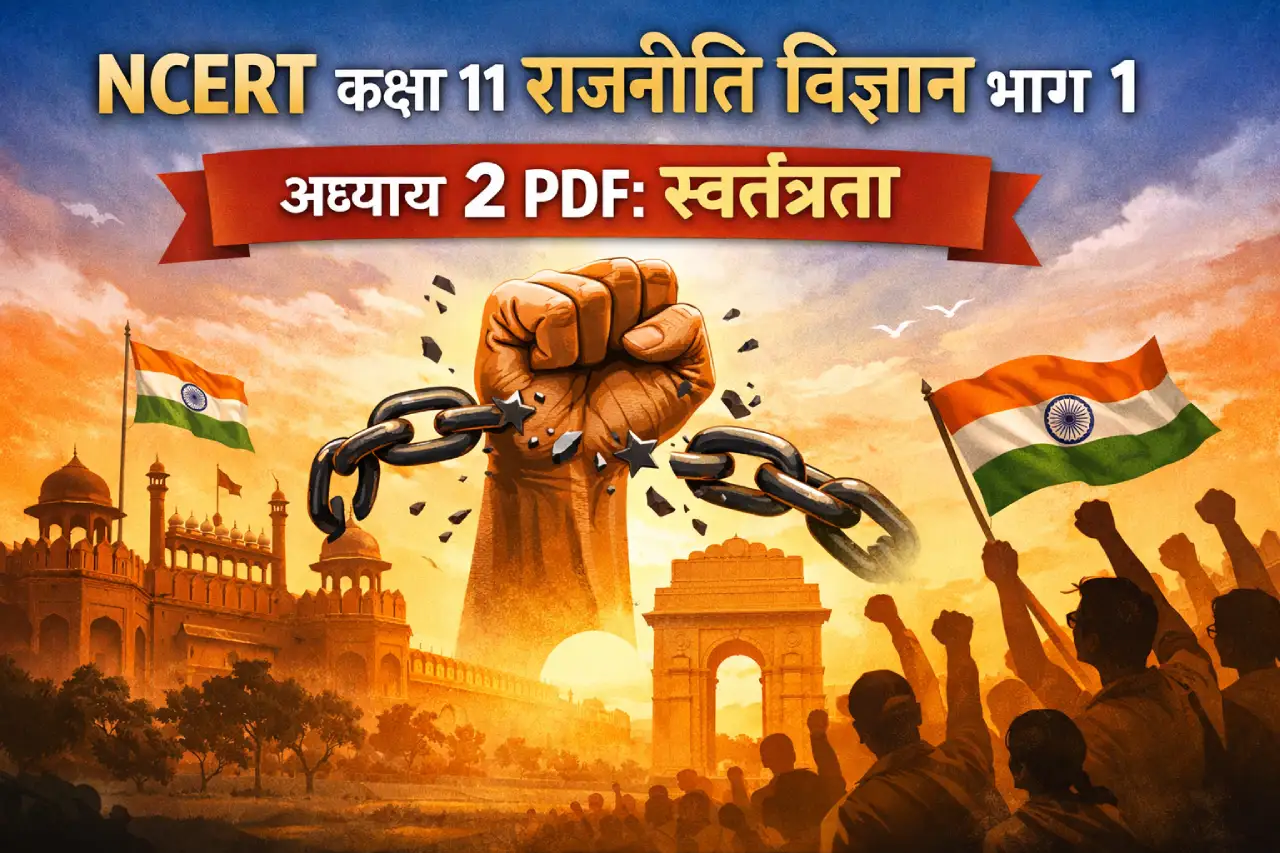
Chapter 2 of Class 11 Political Science Part 1 (Hindi Medium), स्वतंत्रता, deals with the idea of freedom and how it shapes political life and personal choices. This chapter explains what freedom really means, the different ways it is understood, and why it is considered a core value in democratic societies. It goes beyond the simple idea of “doing whatever one wants” and looks at freedom as a balance between individual choice and social responsibility.
This chapter helps learners understand why freedom cannot exist without rules, why one person’s freedom cannot harm another’s, and how societies try to protect freedom through laws and constitutions. It also connects theory with real-life issues like freedom of speech, personal liberty, censorship, and social restrictions. Once students understand this chapter, they begin to see current debates and news in a more thoughtful and informed way, which is exactly what Political Science aims to do.
About Chapter 2: स्वतंत्रता
This chapter introduces the concept of freedom and explains how political thinkers have defined and defended it over time.
What Is Freedom?
In political theory, freedom refers to the ability of individuals to make choices and act according to their will, without unnecessary restrictions. However, freedom is never absolute and always exists within a social framework.
Freedom involves:
- Choice and decision-making
- Absence of unreasonable control
- Protection through laws
- Responsibility towards others
Negative and Positive Freedom
The chapter discusses two important ideas of freedom:
| Type of Freedom | Meaning |
|---|---|
| Negative Freedom | Freedom from external interference |
| Positive Freedom | Freedom to develop one’s potential |
Negative freedom focuses on limits to state power, while positive freedom focuses on creating conditions that help people live meaningful lives.
Why Freedom Needs Limits
Unlimited freedom can create chaos. This chapter explains that:
- Laws protect freedom rather than destroy it
- Restrictions are needed to prevent harm
- Social order helps everyone enjoy freedom equally
For example, freedom of speech does not mean spreading hate or violence.
Freedom and Equality
Freedom is closely linked with equality. If some people have too much power or privilege, others cannot enjoy real freedom. The chapter shows how social and economic inequality can limit individual liberty.
Freedom in Everyday Life
Freedom affects daily life in many ways:
- Choosing education and career
- Expressing opinions
- Practising religion
- Moving freely
- Participating in political activities
These freedoms are protected by democratic systems and constitutional rights.
NCERT Class 11 Political Science Chapter 2 PDF Download (Hindi Medium)
Students can download the official NCERT PDF by following these steps:
- Visit https://ncert.nic.in
- Click on E-Books
- Select Class 11
- Choose Political Science
- Open Part 1 – Political Theory (Hindi Medium)
- Select Chapter 2: स्वतंत्रता
- Download the PDF for offline study
Always use the official NCERT website to ensure accurate and updated content.