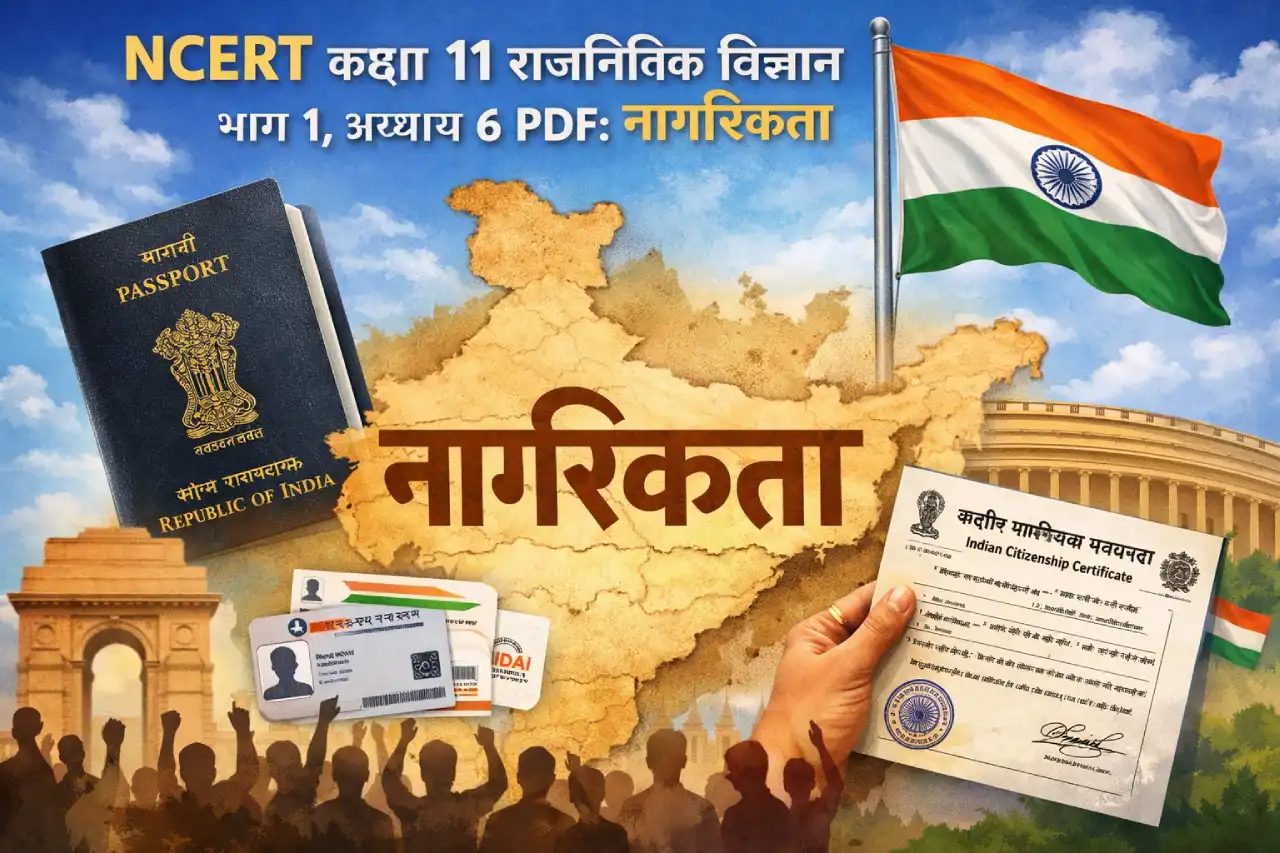
Chapter 6 of Class 11 Political Science Part 1 (Hindi Medium), titled नागरिकता, explains what it means to be a citizen in a modern democratic society. This chapter looks at citizenship not just as a legal status, but as a relationship between individuals and the state. It discusses who can be called a citizen, what rights and duties citizens have, and how citizenship gives people a sense of belonging and political identity. The chapter also touches upon ideas like equality before law, participation in public life, and respect for diversity within a nation.
Many students know they are citizens of a country, but they may not fully understand what that actually involves. This chapter helps clarify why citizenship is more than holding an identity card or passport. It explains how citizens contribute to democracy through voting, debate, and civic responsibility. In today’s world, where questions of migration, identity, and rights are regularly discussed, understanding citizenship becomes even more important. This chapter gives students the tools to think clearly about inclusion, equality, and democratic participation in a diverse society like India.
About Chapter 6: नागरिकता
This chapter explores the meaning, importance, and challenges of citizenship in both national and global contexts.
What Is Citizenship?
Citizenship refers to the legal and political membership of a person in a state. It gives individuals certain rights and places certain responsibilities on them.
Citizenship includes:
- Legal recognition by the state
- Political rights such as voting
- Equal treatment under law
- Sense of belonging to a nation
Rights and Duties of Citizens
The chapter explains that citizenship is a balance between rights and duties.
| Rights of Citizens | Duties of Citizens |
|---|---|
| Right to vote | Obey the law |
| Freedom of expression | Respect others’ rights |
| Equality before law | Participate responsibly in public life |
| Protection by the state | Promote harmony and unity |
Both sides are equally important for a healthy democracy.
Universal and Equal Citizenship
Modern democracies follow the idea of universal citizenship, where all adults are considered equal citizens regardless of caste, religion, gender, or wealth. The chapter highlights that earlier societies often excluded women, workers, or minorities, but democratic struggles helped expand citizenship rights over time.
Citizenship and Diversity
In a country with many cultures, languages, and religions, citizenship plays a key role in holding society together. The chapter explains how democratic citizenship respects diversity while ensuring equal rights for all. It also discusses the challenges of managing differences without discrimination or exclusion.
Global Citizenship and Migration
The chapter briefly introduces the idea that globalisation and migration have raised new questions about citizenship. People often live and work outside their country of birth, which creates debates around rights, identity, and belonging.
NCERT Class 11 Political Science Chapter 6 PDF Download (Hindi Medium)
Students can download the official NCERT PDF by following these steps:
- Visit the official NCERT website
- Click on E-Books
- Select Class 11
- Choose Political Science
- Open Political Theory – Part 1 (Hindi Medium)
- Click on Chapter 6: नागरिकता
- Download the PDF for study and revision
Always use the official NCERT source to ensure accurate and updated content.