JOIN WHATSAPP
STORIES

NCERT Class 12 Biology Chapter 1: Sexual Reproduction in Flowering Plants PDF Notes & Download

NCERT Class 12 Biology Chapter 1: Sexual Reproduction in Flowering Plants PDF

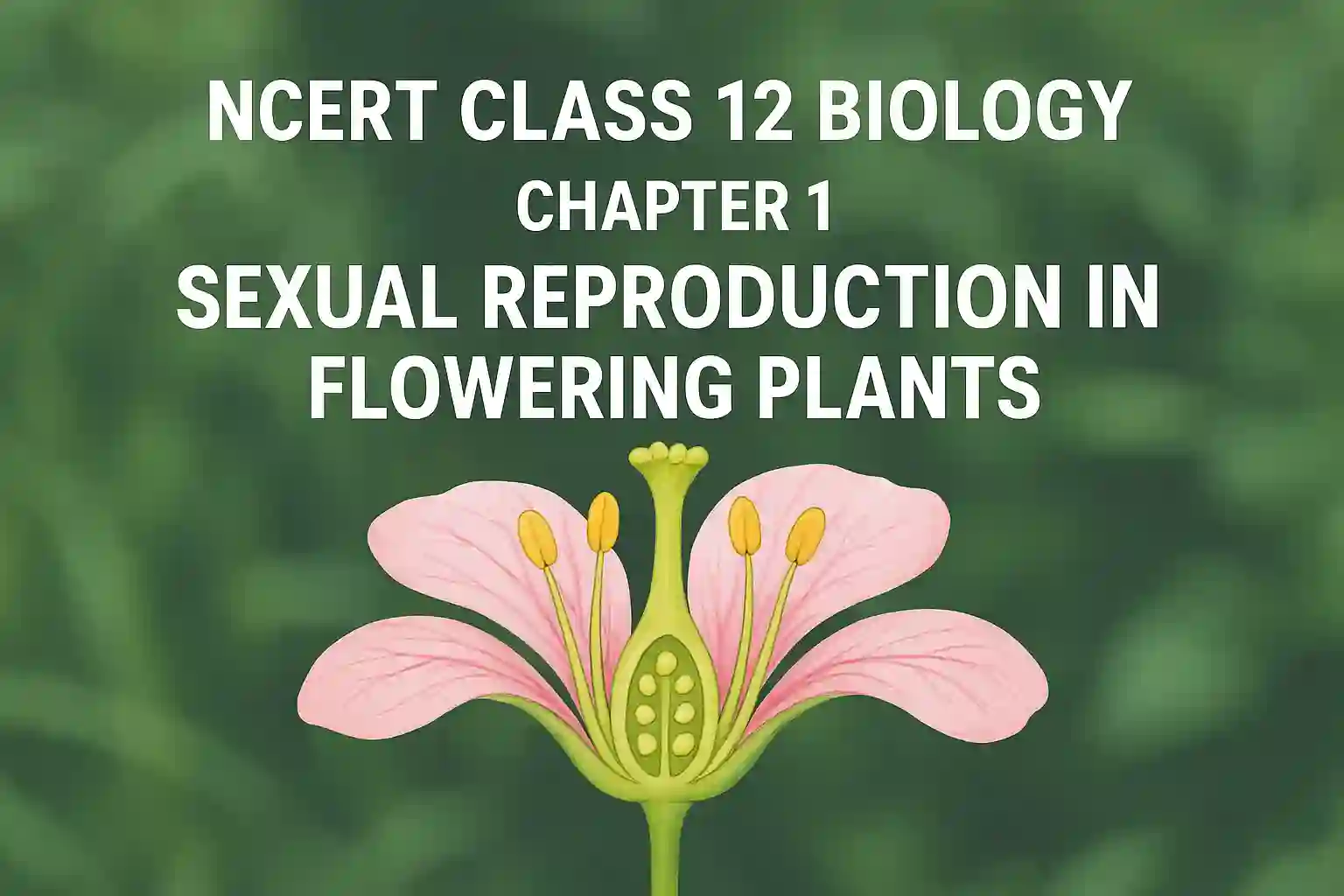
Chapter 1 of Class 12 Biology, Sexual Reproduction in Flowering Plants, deals with how flowering plants reproduce through the formation of male and female gametes, pollination, fertilisation and seed formation. This chapter lays the foundation for understanding plant breeding, hybridisation and seed development in detail. It is one of the most scoring chapters in board exams and also has weightage in NEET and other entrance tests.

I’m writing about this topic because students often take plant reproduction lightly, thinking it’s all theory and not important. But actually, many tricky MCQs in NEET come from this chapter. Understanding the basics like anther structure, megasporogenesis and double fertilisation can make plant reproduction easy to learn. I believe that if the concepts are studied in a flow and with examples from real flowering plants, the chapter becomes much easier to revise and remember. That’s why I’ve also added a link to download the official NCERT PDF so you can study it anytime offline.

Main Topics in Sexual Reproduction in Flowering Plants

This chapter explains the entire life cycle of flowering plants, focusing mainly on the sexual phase.

Pre-Fertilisation Events

  • Sporogenesis: Formation of spores from spore mother cells
  • Gametogenesis: Formation of male and female gametes
  • Microsporogenesis: Happens inside anthers, forms pollen grains
  • Megasporogenesis: Happens inside ovary, forms embryo sac

Structure of Flower

  • A typical flower has four whorls: sepals, petals, stamens and carpels
  • Stamens produce pollen, and carpels develop into fruits after fertilisation
  • In many flowers, both male and female parts are present, making them bisexual

Pollination

  • Self-pollination (Autogamy): Pollen from the same flower
  • Cross-pollination (Allogamy): Pollen from a different flower
  • Agents of pollination: wind, water, insects, birds and animals
  • Special adaptations like sticky pollen, attractive petals, and nectar guide pollinators

Double Fertilisation

  • Unique to angiosperms
  • One male gamete fuses with the egg to form zygote (syngamy)
  • Other male gamete fuses with two polar nuclei to form endosperm (triple fusion)

Post-Fertilisation Changes

  • Ovule becomes seed
  • Ovary turns into fruit
  • Zygote develops into embryo
  • Endosperm provides nutrition to the developing embryo

Seed and Fruit Formation

  • Seeds can be monocot or dicot depending on the type of plant
  • Fruits may be dry (like groundnut) or fleshy (like mango)
  • Some plants show apomixis, i.e., seed formation without fertilisation (important in agriculture)

Quick Revision Table

ConceptKey Points
MicrosporogenesisFormation of pollen grains in anther
MegasporogenesisFormation of embryo sac in ovary
Double FertilisationTwo fusions: syngamy and triple fusion
Pollination TypesAutogamy, Geitonogamy, Xenogamy
Fruit FormationOvary turns into fruit post-fertilisation

Download PDF – NCERT Class 12 Biology Chapter 1

To understand Sexual Reproduction in Flowering Plants better, it’s best to study directly from the official NCERT textbook. Here’s how you can download the PDF for free.

NCERT Class 12 Biology Chapter 1

Leave a Comment

End of Article

Class 11 Sanskrit Shashwati Chapter 11 PDF: नवद्रव्याणि Explained

Class 11 Sanskrit Shashwati Chapter 11 PDF: नवद्रव्याणि Explained

NCERT Class 11 Sanskrit Shashwati Chapter 11, titled “नवद्रव्याणि”, introduces students to an important concept from Indian philosophy—the nine fundamental substances that make up the universe. The chapter explains these elements in a simple and structured way, helping students understand how ancient thinkers tried to explain the nature of reality through observation and logic.

I am writing about this chapter because many students search for the official NCERT PDF along with a simple explanation before exams. In my experience, topics like “नवद्रव्याणि” may feel slightly abstract at first, but once you understand the list and their meanings, it becomes quite easy to remember and revise. This chapter is important not only for Sanskrit exams but also for gaining a basic idea of traditional Indian philosophy. It helps students connect language learning with deeper concepts. Studying from the official NCERT book and revising regularly can make this chapter scoring and easy to handle.

About the Chapter: नवद्रव्याणि

The term “नवद्रव्याणि” means “nine substances.” These are considered the basic elements that exist in the universe according to classical Indian thought.

The chapter explains each of these substances and their role in the functioning of the world.

The Nine Substances Explained

Here is a simple table to understand the nine dravyas:

Sanskrit TermMeaning (Simple English)
पृथ्वी (Prithvi)Earth
आपः (Apah)Water
तेजः (Tejas)Fire
वायु (Vayu)Air
आकाश (Akasha)Space
काल (Kala)Time
दिशा (Disha)Direction
आत्मा (Atma)Soul
मनः (Manas)Mind

These elements together explain the physical and non-physical aspects of existence.

Key Ideas in the Chapter

1. Understanding the Universe

The chapter explains how everything in the world is made up of basic substances.

2. Physical and Non-Physical Elements

Some substances like earth and water are physical, while others like time and soul are abstract.

3. Connection Between Mind and Body

The inclusion of “मनः” (mind) and “आत्मा” (soul) shows the importance of inner consciousness.

Why This Chapter Is Important for Students

  • Helps understand basic philosophical concepts
  • Improves Sanskrit reading and comprehension
  • Important for exam questions and explanations
  • Builds logical and conceptual thinking

Students who understand the list properly can easily score marks.

Study Tips for Chapter 11

  • Memorise the nine dravyas and their meanings
  • Understand the difference between physical and abstract elements
  • Practise writing short explanations
  • Revise regularly using a table format

This makes the chapter easier to revise before exams.

How to Download NCERT Class 11 Sanskrit Shashwati Chapter 11 PDF

Students can download the official chapter PDF from the National Council of Educational Research and Training website by following these steps:

Always use the official NCERT website to ensure you get the correct and updated version.

Leave a Comment

End of Article

Loading more posts...















