JOIN WHATSAPP
STORIES

NCERT Class 12 Business Studies Chapter 2: Principles of Management PDF Explained with Examples

NCERT Class 12 Business Studies Chapter 2: Principles of Management

Chapter 2 of Class 12 Business Studies, titled Principles of Management, focuses on the core rules and guidelines that help managers take better decisions and run businesses efficiently. This chapter explains the meaning and importance of management principles and then goes into detail about two major sets of principles—Fayol’s Principles of Management and Taylor’s Scientific Management. These principles are useful not only in board exams but also in understanding how successful companies operate in the real world.

I’m writing about this topic because I have seen many students struggle with this chapter, thinking it is only about theory and mugging up points. But actually, this chapter is very practical. If we relate the principles with real-life business examples or even school activities, they become easy to understand and remember. Also, this chapter is frequently asked in the CBSE board exams, especially in case study questions. That’s why I believe it’s important to go beyond just reading the NCERT book and understand the meaning behind these principles. The goal is not just to score marks, but to actually grasp how good management works.

What are Principles of Management?

Management principles are broad guidelines based on experience and logic that help managers plan, organise and control business activities. These are not rigid laws like in science, but flexible suggestions that can be adapted depending on the situation.

Features of Management Principles

  • Universal: Applicable to all types of organisations
  • General Guidelines: Not strict rules, but suggestions
  • Formed by Practice and Experimentation
  • Flexible: Can be modified as per need
  • Behavioural: Focused on human behaviour
  • Aimed at Optimising Resources and Efficiency

Importance of Management Principles

  • Helps in achieving organisational goals
  • Improves efficiency and productivity
  • Ensures proper decision making
  • Helps in training and development of managers
  • Encourages research and innovation
  • Brings coordination in team efforts

Taylor’s Principles of Scientific Management

F.W. Taylor was known as the Father of Scientific Management. His principles were more focused on efficiency and cost reduction in industrial settings.

Key Principles:

  • Science, not Rule of Thumb
  • Harmony, not Discord
  • Cooperation, not Individualism
  • Development of Each Person to their Greatest Efficiency

Taylor’s Techniques:

  • Functional Foremanship: Different experts supervise different work
  • Standardisation and Simplification of Work
  • Motion Study: Finding the best way to do a job
  • Time Study: Setting time standards for tasks
  • Fatigue Study: Finding rest intervals for maximum productivity
  • Differential Piece Wage System: Higher pay for better performers

These techniques were used to reduce wastage, increase productivity and boost worker motivation in factories.

Download PDF – NCERT Class 12 Business Studies Chapter 2

You can download the complete PDF of Chapter 2 Principles of Management
Leave a Comment

End of Article

Class 11 Sanskrit Shashwati Chapter 11 PDF: नवद्रव्याणि Explained

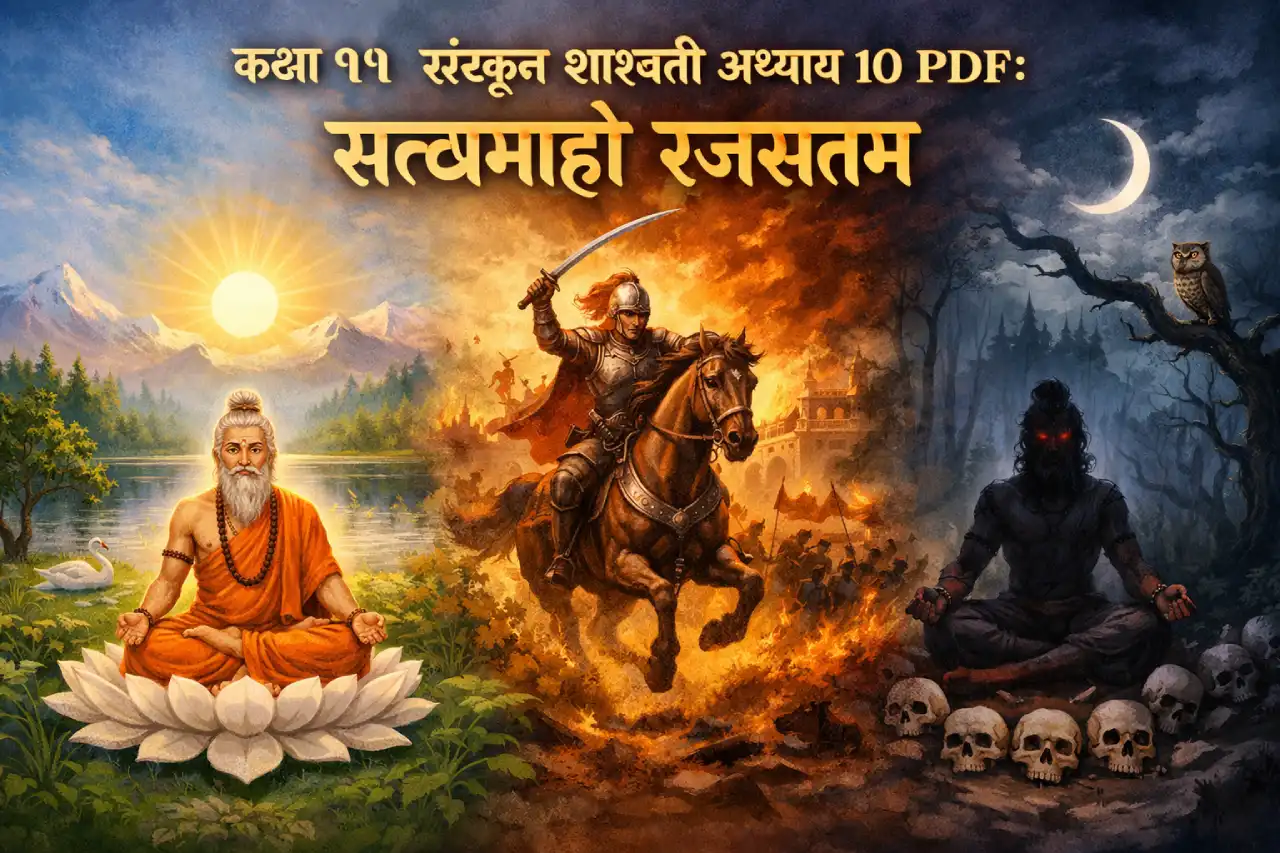
Class 11 Sanskrit Shashwati Chapter 11 PDF: नवद्रव्याणि Explained

NCERT Class 11 Sanskrit Shashwati Chapter 11, titled “नवद्रव्याणि”, introduces students to an important concept from Indian philosophy—the nine fundamental substances that make up the universe. The chapter explains these elements in a simple and structured way, helping students understand how ancient thinkers tried to explain the nature of reality through observation and logic.

I am writing about this chapter because many students search for the official NCERT PDF along with a simple explanation before exams. In my experience, topics like “नवद्रव्याणि” may feel slightly abstract at first, but once you understand the list and their meanings, it becomes quite easy to remember and revise. This chapter is important not only for Sanskrit exams but also for gaining a basic idea of traditional Indian philosophy. It helps students connect language learning with deeper concepts. Studying from the official NCERT book and revising regularly can make this chapter scoring and easy to handle.

About the Chapter: नवद्रव्याणि

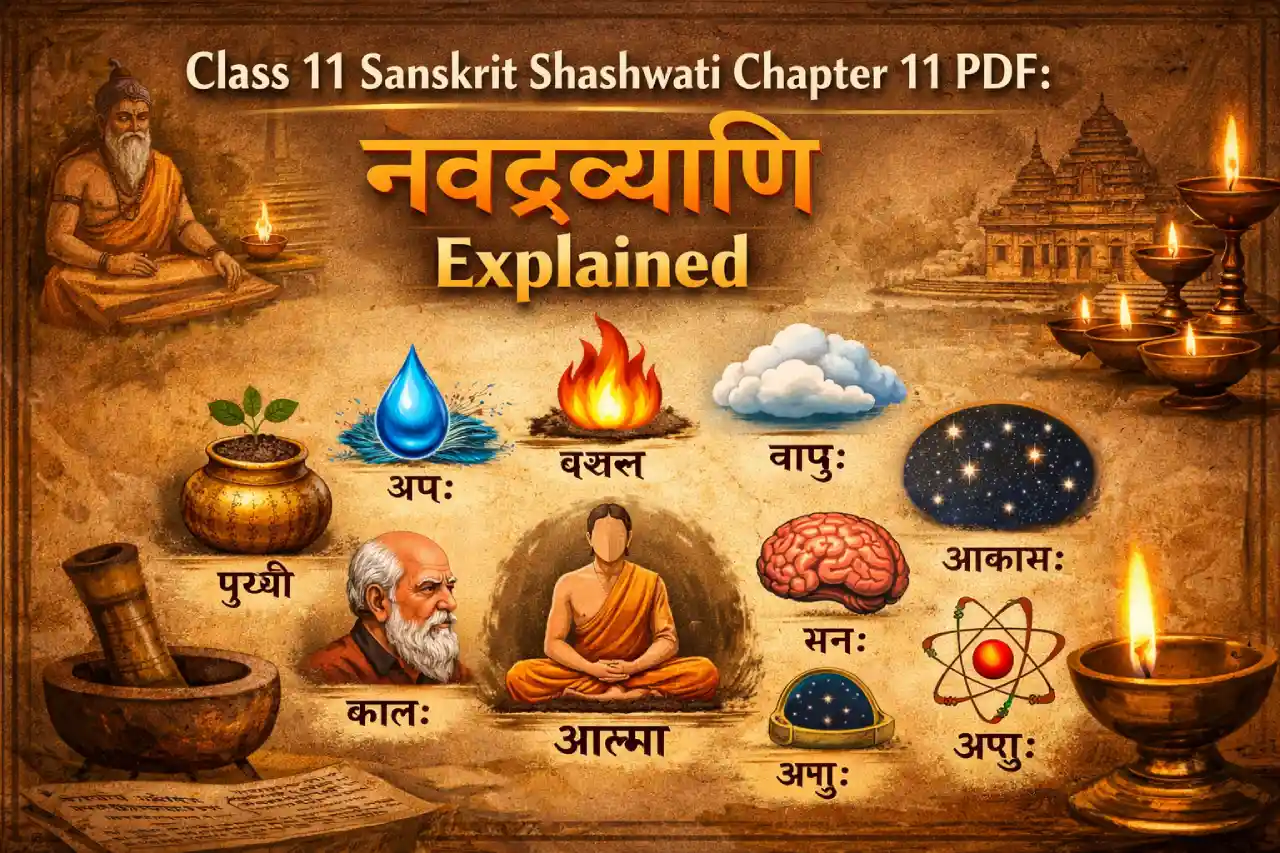
The term “नवद्रव्याणि” means “nine substances.” These are considered the basic elements that exist in the universe according to classical Indian thought.

The chapter explains each of these substances and their role in the functioning of the world.

The Nine Substances Explained

Here is a simple table to understand the nine dravyas:

Sanskrit TermMeaning (Simple English)
पृथ्वी (Prithvi)Earth
आपः (Apah)Water
तेजः (Tejas)Fire
वायु (Vayu)Air
आकाश (Akasha)Space
काल (Kala)Time
दिशा (Disha)Direction
आत्मा (Atma)Soul
मनः (Manas)Mind

These elements together explain the physical and non-physical aspects of existence.

Key Ideas in the Chapter

1. Understanding the Universe

The chapter explains how everything in the world is made up of basic substances.

2. Physical and Non-Physical Elements

Some substances like earth and water are physical, while others like time and soul are abstract.

3. Connection Between Mind and Body

The inclusion of “मनः” (mind) and “आत्मा” (soul) shows the importance of inner consciousness.

Why This Chapter Is Important for Students

  • Helps understand basic philosophical concepts
  • Improves Sanskrit reading and comprehension
  • Important for exam questions and explanations
  • Builds logical and conceptual thinking

Students who understand the list properly can easily score marks.

Study Tips for Chapter 11

  • Memorise the nine dravyas and their meanings
  • Understand the difference between physical and abstract elements
  • Practise writing short explanations
  • Revise regularly using a table format

This makes the chapter easier to revise before exams.

How to Download NCERT Class 11 Sanskrit Shashwati Chapter 11 PDF

Students can download the official chapter PDF from the National Council of Educational Research and Training website by following these steps:

Always use the official NCERT website to ensure you get the correct and updated version.

Leave a Comment

End of Article

Loading more posts...