
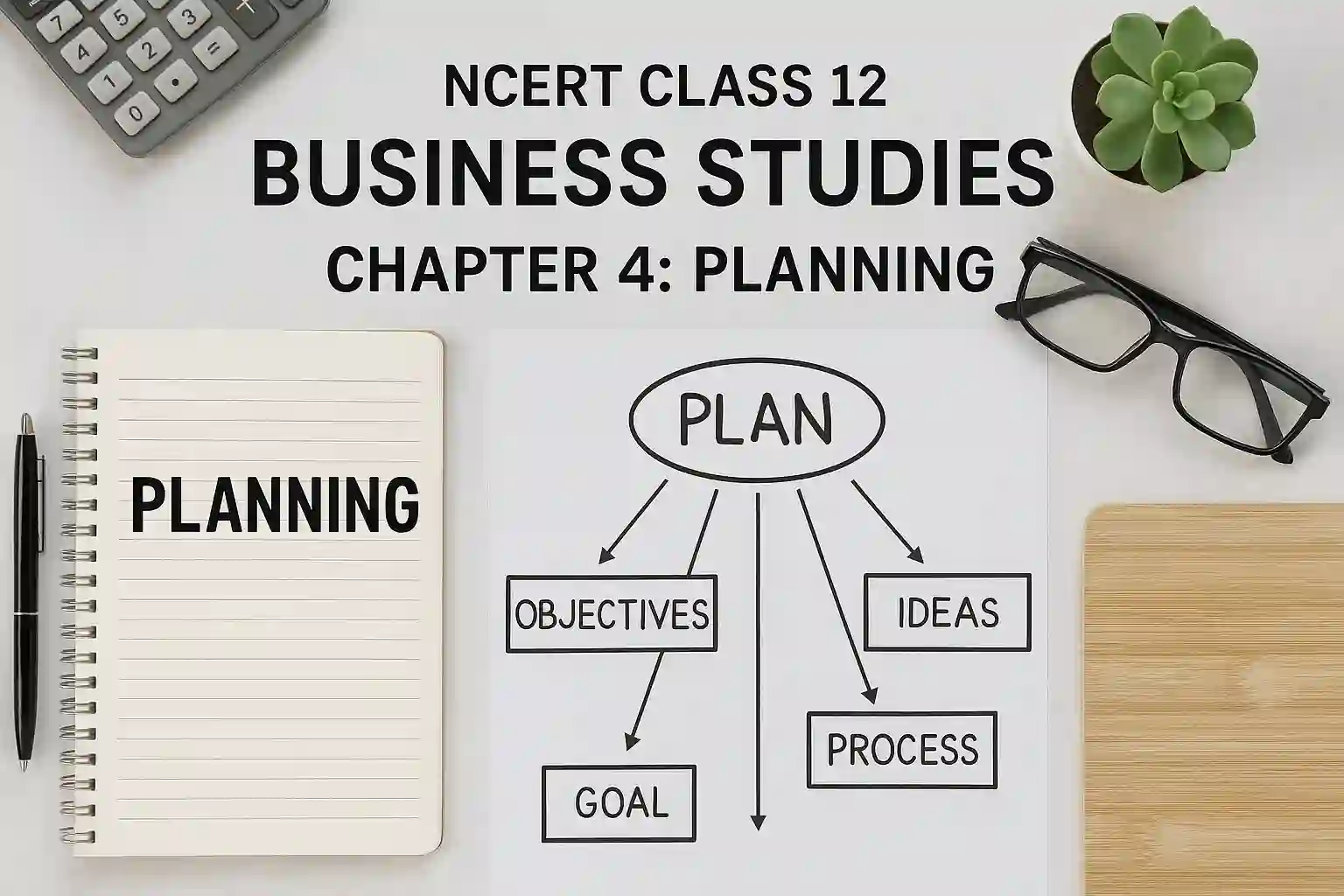
Chapter 4 of Class 12 Business Studies is based on Planning, one of the key functions of management. It explains how planning helps in setting clear objectives and deciding the right steps to achieve them. The chapter talks about the importance of planning, its features, limitations, and also the steps involved in the planning process. Whether it’s a small business or a large company, no organisation can survive without proper planning.
I’ve chosen to write about this chapter because planning is not just a business concept, it’s a life skill. Many students feel this topic is too theoretical and hard to relate to, but if you look at your daily routine, exam preparation, or even saving pocket money – planning is involved everywhere. This chapter makes you think logically and teaches you how to prepare for the future in a structured way. It’s also a scoring chapter if you understand the flow and make notes properly. So I thought of breaking it down in simple words to help you understand the topic and prepare well for your board exams.
What is Planning in Business?
Planning means thinking in advance about what to do, how to do it, when to do it and who will do it. It is the process of setting goals and choosing the best way to achieve them.
In business, planning helps in avoiding confusion, using resources efficiently and preparing for future risks. It gives a clear direction to employees and creates a path to follow.
Features of Planning
- Goal-Oriented: Planning focuses on achieving specific objectives
- Primary Function: It is the first function before organising, staffing, etc.
- Pervasive: Planning is required at all levels of management
- Continuous Process: Plans need to be updated regularly
- Futuristic: It is always done for future activities
- Decision-Making Activity: Planning involves choosing the best alternative
Importance of Planning
- Provides Direction: Everyone knows what to do and in what order
- Reduces Risks of Uncertainty: Helps in being ready for future changes
- Minimises Wastage: Better use of time, money and resources
- Encourages Innovative Ideas: Planning opens room for new ways of doing things
- Helps in Coordination: Teams work together in an organised manner
- Facilitates Decision-Making: Managers can take decisions faster with clarity
Limitations of Planning
Even though planning is useful, it has some drawbacks too:
- Rigidity: Once a plan is made, it becomes difficult to change it
- Does Not Guarantee Success: It helps but cannot stop external failures
- Time-Consuming: It needs a lot of time and effort
- Costly Process: Planning involves cost of research and experts
- Reduces Creativity: Employees just follow the plan and don’t think out of the box
Types of Plans
| Type of Plan | Explanation |
|---|---|
| Objectives | Specific goals to be achieved |
| Strategy | Long-term plan to achieve business objectives |
| Policy | Guidelines to take consistent decisions |
| Procedure | Step-by-step method to carry out routine activities |
| Rule | Strict instructions that must be followed |
| Programme | A complete plan with objectives, procedures, and rules |
| Budget | A financial plan for income and expenses |
Download PDF – NCERT Class 12 Business Studies Chapter 4
You can download the official NCERT PDF of Chapter 4 – Planning directly from her.

















