JOIN WHATSAPP
STORIES

NCERT Class 12 Geography (Fundamental of Human Geography) Chapter 5: Secondary Activities – Notes, Concepts and Free PDF Download

NCERT Class 12 Geography (Fundamental of Human Geography) Chapter 5: Secondary Activities

Chapter 5 of the NCERT Class 12 Geography (Fundamentals of Human Geography) textbook covers “Secondary Activities”, which deal with industries and manufacturing. These activities involve processing raw materials (from primary activities) into usable products. Whether it’s turning cotton into cloth, or iron ore into steel – these all fall under secondary activities. The chapter talks about types of industries, their location, industrial systems, and major industrial regions across the world.

I chose to write on this topic because many students think industries are just factories, but there’s much more to it. Understanding how industries work, where they are located, and how they grow is key to understanding any country’s economic development. In exams like UPSC, questions on industrial belts, planning, and environmental impacts are quite common. And in real life too, industries affect migration, urbanisation and even global trade. That’s why this chapter is important not just for scoring marks but also for building awareness about how economies are shaped.

What Are Secondary Activities?

Secondary activities are economic activities that involve manufacturing and processing of natural resources. These convert raw materials into finished or semi-finished goods.

For example:

  • Wheat (primary) → Bread (secondary)
  • Cotton (primary) → Fabric (secondary)

Key Features

  • Use raw materials from primary sector
  • Add value to resources
  • Create employment and income
  • Often linked with urbanisation

Types of Secondary Activities

The chapter breaks down secondary activities into various industrial sectors.

1. Manufacturing Industry

These include factories that produce goods for domestic or international markets.

Types of Manufacturing Industries

TypeDescriptionExamples
Cottage IndustrySmall scale, often home-basedHandloom weaving in India
Small-Scale IndustryLimited capital and labourSoap making, toys
Large-Scale IndustryBig investment, machinery-basedAutomobile, steel plants
Heavy IndustryInvolves large machines and big infrastructureShipbuilding, steel
Light IndustryMakes consumer goodsElectronics, garments

2. Processing Industry

Involves converting raw food items into packaged products. Example: Dairy, Sugar Mills, Food Processing Plants.

3. Construction Industry

This includes building infrastructure – roads, bridges, buildings. It’s a major employer in developing countries like India.

Download PDF: NCERT Class 12 Geography Chapter 5 – Secondary Activities

You can download the full official PDF of this chapter from here:

NCERT Class 12 Geography (Fundamental of Human Geography) Chapter 5: Secondary Activities
Leave a Comment

End of Article

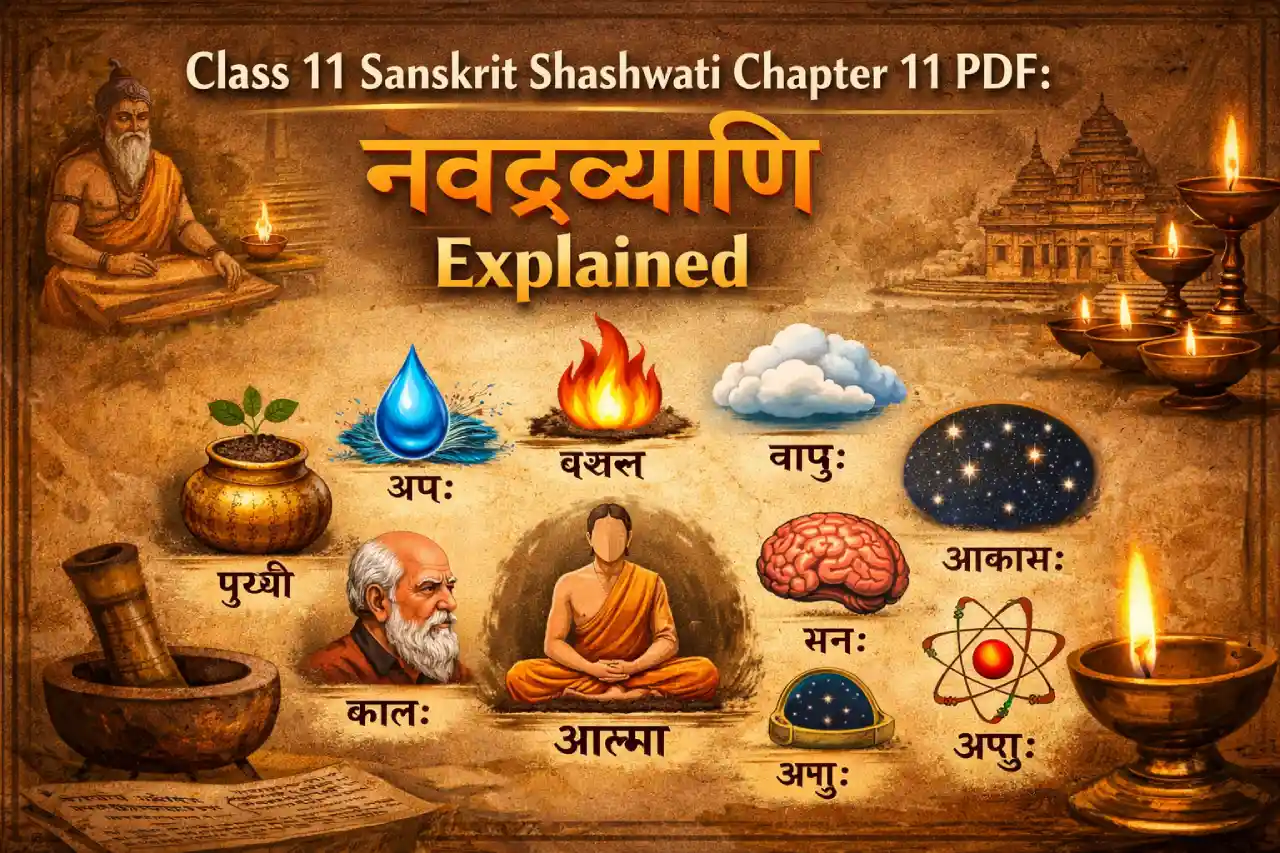
Class 11 Sanskrit Shashwati Chapter 11 PDF: नवद्रव्याणि Explained

Class 11 Sanskrit Shashwati Chapter 11 PDF: नवद्रव्याणि Explained

NCERT Class 11 Sanskrit Shashwati Chapter 11, titled “नवद्रव्याणि”, introduces students to an important concept from Indian philosophy—the nine fundamental substances that make up the universe. The chapter explains these elements in a simple and structured way, helping students understand how ancient thinkers tried to explain the nature of reality through observation and logic.

I am writing about this chapter because many students search for the official NCERT PDF along with a simple explanation before exams. In my experience, topics like “नवद्रव्याणि” may feel slightly abstract at first, but once you understand the list and their meanings, it becomes quite easy to remember and revise. This chapter is important not only for Sanskrit exams but also for gaining a basic idea of traditional Indian philosophy. It helps students connect language learning with deeper concepts. Studying from the official NCERT book and revising regularly can make this chapter scoring and easy to handle.

About the Chapter: नवद्रव्याणि

The term “नवद्रव्याणि” means “nine substances.” These are considered the basic elements that exist in the universe according to classical Indian thought.

The chapter explains each of these substances and their role in the functioning of the world.

The Nine Substances Explained

Here is a simple table to understand the nine dravyas:

Sanskrit TermMeaning (Simple English)
पृथ्वी (Prithvi)Earth
आपः (Apah)Water
तेजः (Tejas)Fire
वायु (Vayu)Air
आकाश (Akasha)Space
काल (Kala)Time
दिशा (Disha)Direction
आत्मा (Atma)Soul
मनः (Manas)Mind

These elements together explain the physical and non-physical aspects of existence.

Key Ideas in the Chapter

1. Understanding the Universe

The chapter explains how everything in the world is made up of basic substances.

2. Physical and Non-Physical Elements

Some substances like earth and water are physical, while others like time and soul are abstract.

3. Connection Between Mind and Body

The inclusion of “मनः” (mind) and “आत्मा” (soul) shows the importance of inner consciousness.

Why This Chapter Is Important for Students

  • Helps understand basic philosophical concepts
  • Improves Sanskrit reading and comprehension
  • Important for exam questions and explanations
  • Builds logical and conceptual thinking

Students who understand the list properly can easily score marks.

Study Tips for Chapter 11

  • Memorise the nine dravyas and their meanings
  • Understand the difference between physical and abstract elements
  • Practise writing short explanations
  • Revise regularly using a table format

This makes the chapter easier to revise before exams.

How to Download NCERT Class 11 Sanskrit Shashwati Chapter 11 PDF

Students can download the official chapter PDF from the National Council of Educational Research and Training website by following these steps:

Always use the official NCERT website to ensure you get the correct and updated version.

Leave a Comment

End of Article

Loading more posts...