JOIN WHATSAPP
STORIES

NCERT Class 12 History Chapter 3: Early Societies PDF Notes and Download Link

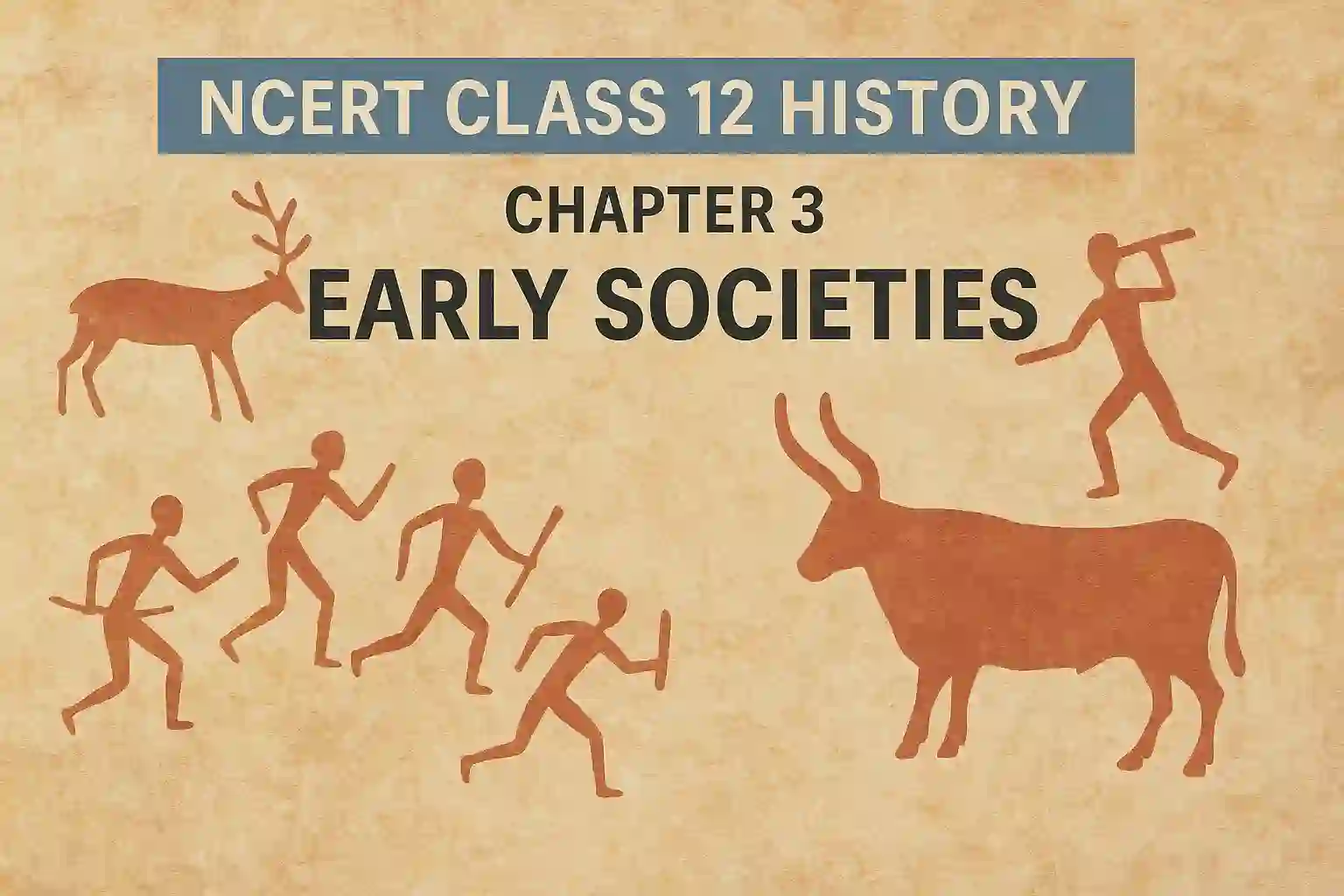
NCERT Class 12 History Chapter 3: Early Societies

The third chapter of Class 12 History, Early Societies, takes us far back into human prehistory to explore how early humans lived, hunted, gathered, created tools, and slowly moved toward farming. The chapter focuses on archaeological evidence from regions like the Indian subcontinent, West Asia, and Africa. It shows how early human societies evolved over thousands of years and how their way of life kept changing based on climate, geography, and innovation.

I chose to write on this chapter because it helps us understand the roots of human society. This is not just about studying old tools or bones but understanding how survival, food, shelter, and cooperation shaped the beginnings of culture and civilisation. Many students find this chapter a bit abstract at first, but once we relate it to our own lives—how we eat, work, or use resources—it becomes much more interesting. The chapter also gives insight into how archaeologists work, how findings are interpreted, and how even a piece of pottery or cave painting can tell us deep stories about the past. That’s why I feel this chapter needs some attention and simple explanation.

Life in Early Societies

The chapter begins by introducing us to prehistoric times when humans were mainly hunter-gatherers. The timeline stretches back to over 2 million years ago. Since there was no writing in those times, everything we know today comes from fossils, tools, cave art, and ancient sites.

The Stone Age: A Quick Breakdown

PeriodMain Features
Palaeolithic (Old Stone Age)Use of crude stone tools, hunting-gathering lifestyle, fire discovery, caves for shelter
Mesolithic (Middle Stone Age)Smaller tools called microliths, fishing, limited domestication of animals
Neolithic (New Stone Age)Start of agriculture, pottery-making, settled life in villages, polished stone tools

Some major Indian sites of these periods include Bhimbetka (rock paintings), Mehrgarh (early farming), and Burzahom (pit dwellings in Kashmir).

Food and Tools

  • Early humans were dependent on nature for food
  • They hunted animals, gathered fruits, nuts, and roots
  • Over time, tools became sharper and more specialised
  • Tools were made from stone, bone, and later, metal

Cave paintings at places like Bhimbetka show scenes of hunting, dancing, and animals—indicating not just survival but also early culture and community life.

Key Questions from This Chapter

  • What are the main features of a hunter-gatherer society?
  • How did the transition from hunting to farming take place?
  • Describe important archaeological sites like Bhimbetka or Mehrgarh
  • What is the role of archaeology in studying early societies?
  • What are microliths and why were they important?

These are often asked in short answers or MCQ format in exams.

Download PDF: NCERT Class 12 History Chapter 3 – Early Societies

To read the full chapter and prepare from the official source, you can download the NCERT PDF from here.
NCERT Class 12 History Chapter 3: Early Societies

Leave a Comment

End of Article

Class 11 Sanskrit Shashwati Chapter 11 PDF: नवद्रव्याणि Explained

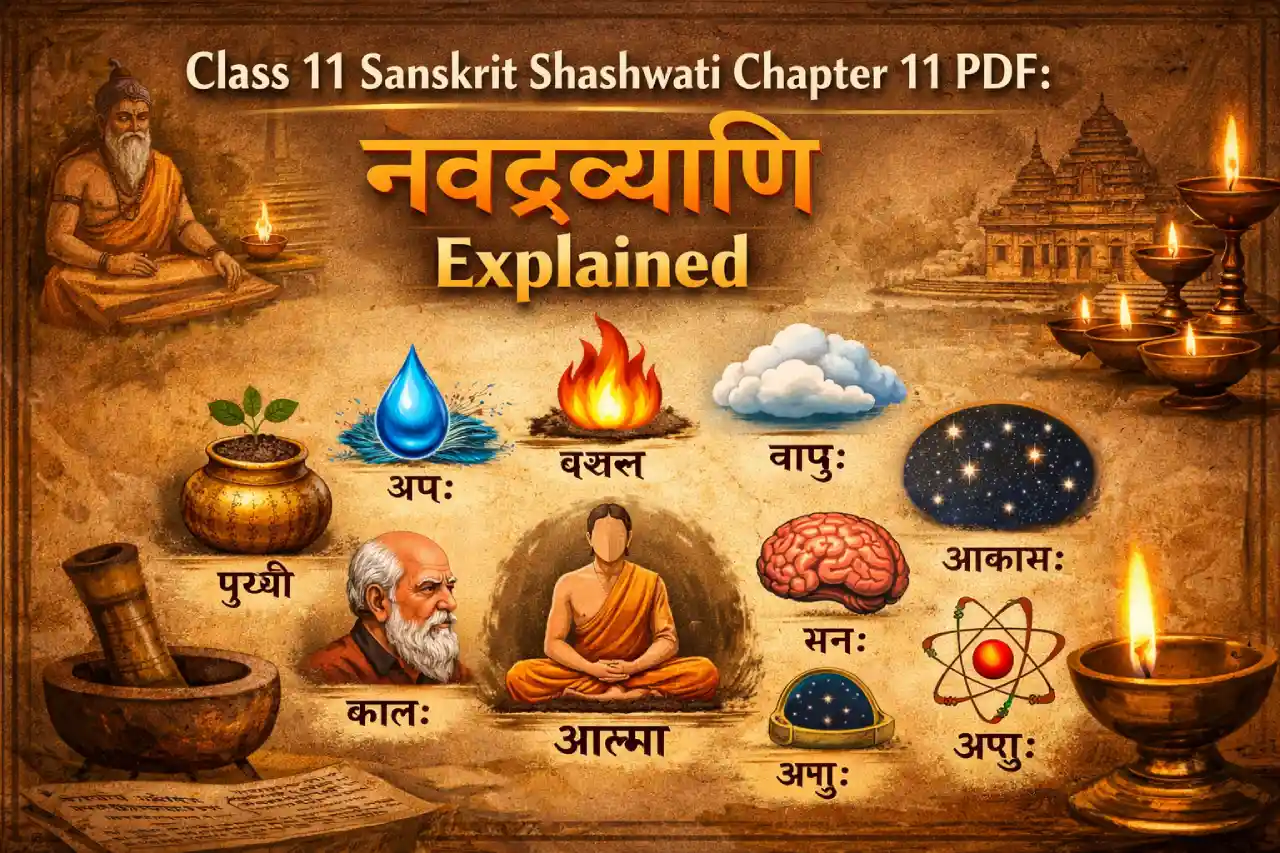
Class 11 Sanskrit Shashwati Chapter 11 PDF: नवद्रव्याणि Explained

NCERT Class 11 Sanskrit Shashwati Chapter 11, titled “नवद्रव्याणि”, introduces students to an important concept from Indian philosophy—the nine fundamental substances that make up the universe. The chapter explains these elements in a simple and structured way, helping students understand how ancient thinkers tried to explain the nature of reality through observation and logic.

I am writing about this chapter because many students search for the official NCERT PDF along with a simple explanation before exams. In my experience, topics like “नवद्रव्याणि” may feel slightly abstract at first, but once you understand the list and their meanings, it becomes quite easy to remember and revise. This chapter is important not only for Sanskrit exams but also for gaining a basic idea of traditional Indian philosophy. It helps students connect language learning with deeper concepts. Studying from the official NCERT book and revising regularly can make this chapter scoring and easy to handle.

About the Chapter: नवद्रव्याणि

The term “नवद्रव्याणि” means “nine substances.” These are considered the basic elements that exist in the universe according to classical Indian thought.

The chapter explains each of these substances and their role in the functioning of the world.

The Nine Substances Explained

Here is a simple table to understand the nine dravyas:

Sanskrit TermMeaning (Simple English)
पृथ्वी (Prithvi)Earth
आपः (Apah)Water
तेजः (Tejas)Fire
वायु (Vayu)Air
आकाश (Akasha)Space
काल (Kala)Time
दिशा (Disha)Direction
आत्मा (Atma)Soul
मनः (Manas)Mind

These elements together explain the physical and non-physical aspects of existence.

Key Ideas in the Chapter

1. Understanding the Universe

The chapter explains how everything in the world is made up of basic substances.

2. Physical and Non-Physical Elements

Some substances like earth and water are physical, while others like time and soul are abstract.

3. Connection Between Mind and Body

The inclusion of “मनः” (mind) and “आत्मा” (soul) shows the importance of inner consciousness.

Why This Chapter Is Important for Students

  • Helps understand basic philosophical concepts
  • Improves Sanskrit reading and comprehension
  • Important for exam questions and explanations
  • Builds logical and conceptual thinking

Students who understand the list properly can easily score marks.

Study Tips for Chapter 11

  • Memorise the nine dravyas and their meanings
  • Understand the difference between physical and abstract elements
  • Practise writing short explanations
  • Revise regularly using a table format

This makes the chapter easier to revise before exams.

How to Download NCERT Class 11 Sanskrit Shashwati Chapter 11 PDF

Students can download the official chapter PDF from the National Council of Educational Research and Training website by following these steps:

Always use the official NCERT website to ensure you get the correct and updated version.

Leave a Comment

End of Article

Loading more posts...















