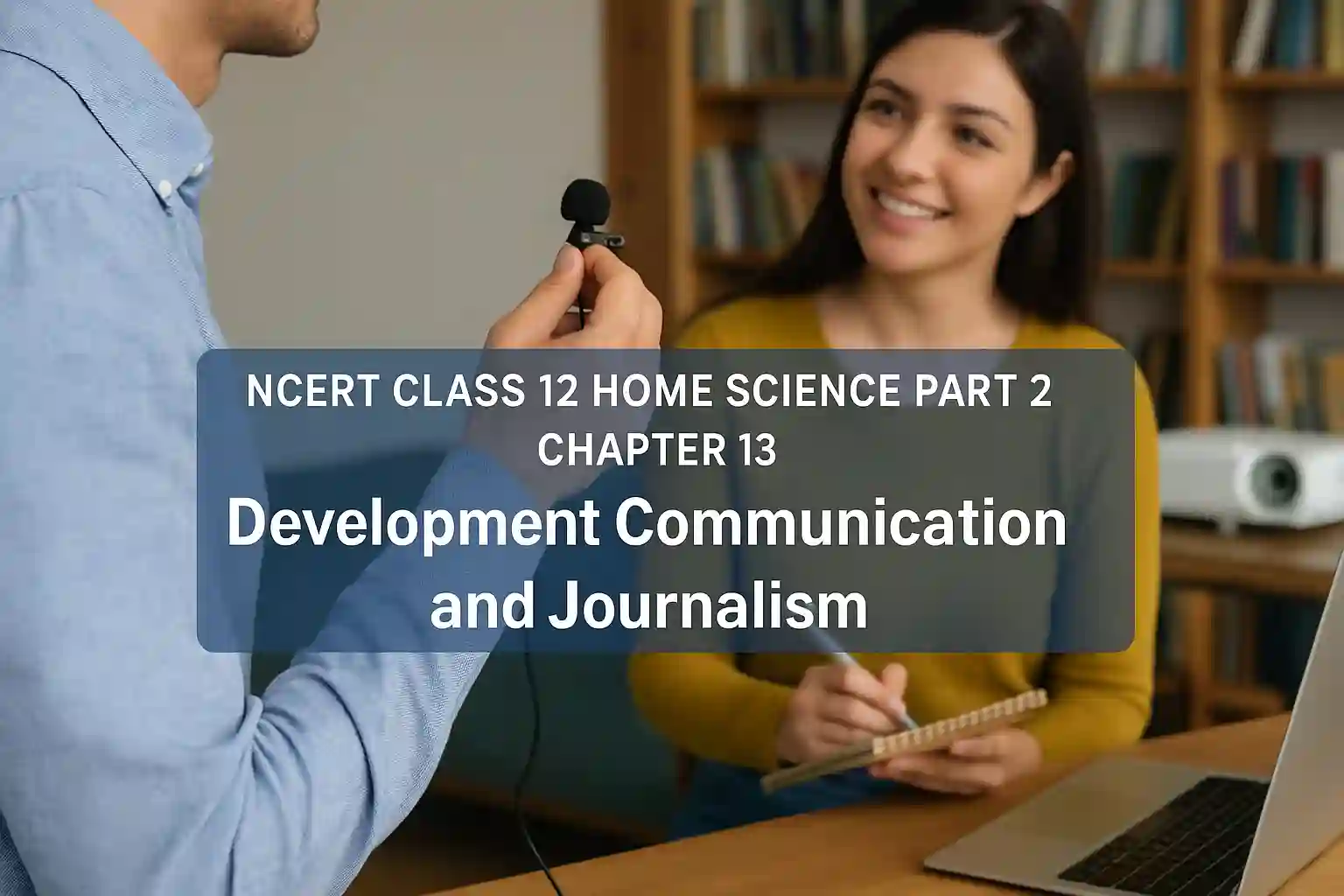
NCERT Class 12 Home Science Part 2 Chapter 13, Development Communication and Journalism, focuses on how communication is used as a tool for social change and how journalism plays a role in educating people. The chapter explains the concept of development communication, its principles, methods, and the role of media in spreading awareness about important social, economic, and health-related issues. It also highlights the ethics and responsibilities of journalists in reporting information that benefits the community.
I chose to write about this chapter because in today’s time, the way information reaches people can shape opinions, influence decisions, and even inspire change. Development communication is not just about delivering news — it’s about using information to improve lives, especially in rural and underprivileged communities. Journalism, when done ethically, becomes a bridge between the government, experts, and the public, ensuring that the right messages reach the right people. Students learning this chapter will understand how to use communication skills responsibly, identify credible sources, and become aware of the power of media in nation-building. This is especially important because we live in an age where misinformation can spread quickly, making media literacy a vital skill.
Key Topics in Chapter 13
This chapter introduces students to the fundamentals of development communication and its practical applications.
Main areas covered:
- Meaning of Development Communication – Using communication to promote social and economic development
- Objectives – Spreading awareness, changing behaviour, and mobilising communities
- Approaches – Top-down, bottom-up, participatory, and integrated communication
- Role of Journalism – Providing accurate information, encouraging debate, and promoting accountability
- Forms of Media in Development – Print media, radio, television, social media, and folk communication
- Ethics in Journalism – Accuracy, fairness, respect for privacy, and avoiding sensationalism
- Challenges – Limited access to technology, low literacy rates, and misinformation
- Case Studies and Examples – Successful campaigns like polio eradication and Swachh Bharat Abhiyan
Practical Relevance
This chapter teaches students how communication can be planned and used to bring positive change. For example, a well-structured campaign on health awareness in a village can significantly improve vaccination rates. Similarly, investigative journalism can expose corruption and push authorities to take action. The principles learned here can be applied in careers like media, public relations, NGO work, and community development.
Download PDF
You can download NCERT Class 12 Home Science Part 2 Chapter 13: Development Communication and Journalism PDF from here.