The National Institute for the Empowerment of Persons with Intellectual Disabilities (NIEPID) has signed an MoU with the Jai Vakeel Foundation to create and roll out a structured and uniform curriculum for children with intellectual disabilities. This partnership aims to fill a major gap in India’s special education system by providing standardised learning material and training resources across the country. The initiative is expected to make quality education more accessible and effective for children with intellectual and developmental conditions.
I’m writing about this because I feel this collaboration is a big step towards inclusivity in Indian education. Children with intellectual disabilities are often overlooked in mainstream schooling and even within special education settings, there is a lack of consistency in curriculum and training. This MoU has the potential to change that. If executed well, it will help schools, caregivers, and educators across India follow a clear framework. Most importantly, it will give thousands of children the opportunity to learn, grow, and participate meaningfully in society. For parents and educators alike, this is something to pay attention to—because a structured foundation can shape a child’s entire future.
What the MoU Between NIEPID and Jai Vakeel Foundation Means
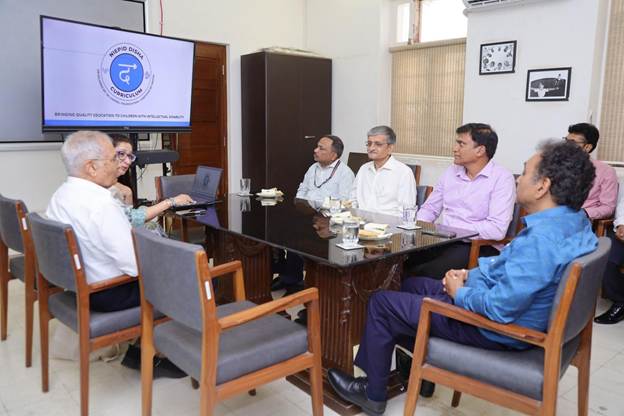
NIEPID, which functions under the Ministry of Social Justice and Empowerment, is India’s nodal body for the development of services for individuals with intellectual disabilities. The Jai Vakeel Foundation is one of India’s oldest and largest non-profit organisations working in the same field. Together, they have agreed to collaborate on designing a national-level structured and uniform curriculum that can be adopted in special schools across states.
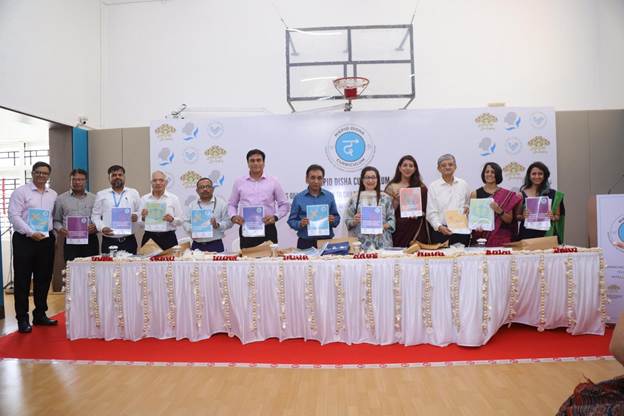
Under this MoU:
- Both organisations will co-develop educational resources suitable for different levels of intellectual functioning
- Teacher training modules will be created and shared widely
- Pilot projects will be rolled out to test the effectiveness of the framework before scaling up
- Monitoring tools will be developed to track student progress
Why a Uniform Curriculum Is Needed
At present, there is no single, structured curriculum in India that is followed across schools for children with intellectual disabilities. As a result, what a child learns in one state may be completely different from what is taught in another. This not only creates confusion but also puts children at a disadvantage, especially when they move between schools or appear for assessments.
A structured curriculum brings in clarity for both teachers and students. It ensures that key areas like communication, daily living skills, emotional development, and vocational training are covered consistently. With proper teacher training, schools will be better prepared to handle the unique needs of each student.
Training Teachers and Supporting Parents
The MoU also focuses on teacher capacity building. In many special schools, teachers don’t always get regular training or access to updated methods. The Jai Vakeel Foundation has experience in building such systems at the grassroots level. With NIEPID’s academic backing, the plan is to launch national training programmes that are practical, easy to implement, and suited for Indian classrooms.
Parents too will benefit from this move. Many families feel lost after receiving a diagnosis and struggle to find the right learning path for their child. A structured system will offer guidance and set realistic goals. Resources like home-based learning materials and simple assessment tools can help parents stay involved in the child’s progress.
The Bigger Impact on India’s Inclusive Education Goals
This collaboration supports the goals of the National Education Policy 2020, which talks about inclusive classrooms and the need for tailor-made educational approaches for students with disabilities. By bringing structure and consistency, this MoU lays the groundwork for larger systemic reforms in how special education is delivered in India.
While the partnership is still in its early stages, the intent and planning behind it are promising. If state governments adopt this framework and allocate proper resources, this can become a turning point for children with intellectual disabilities in the country.