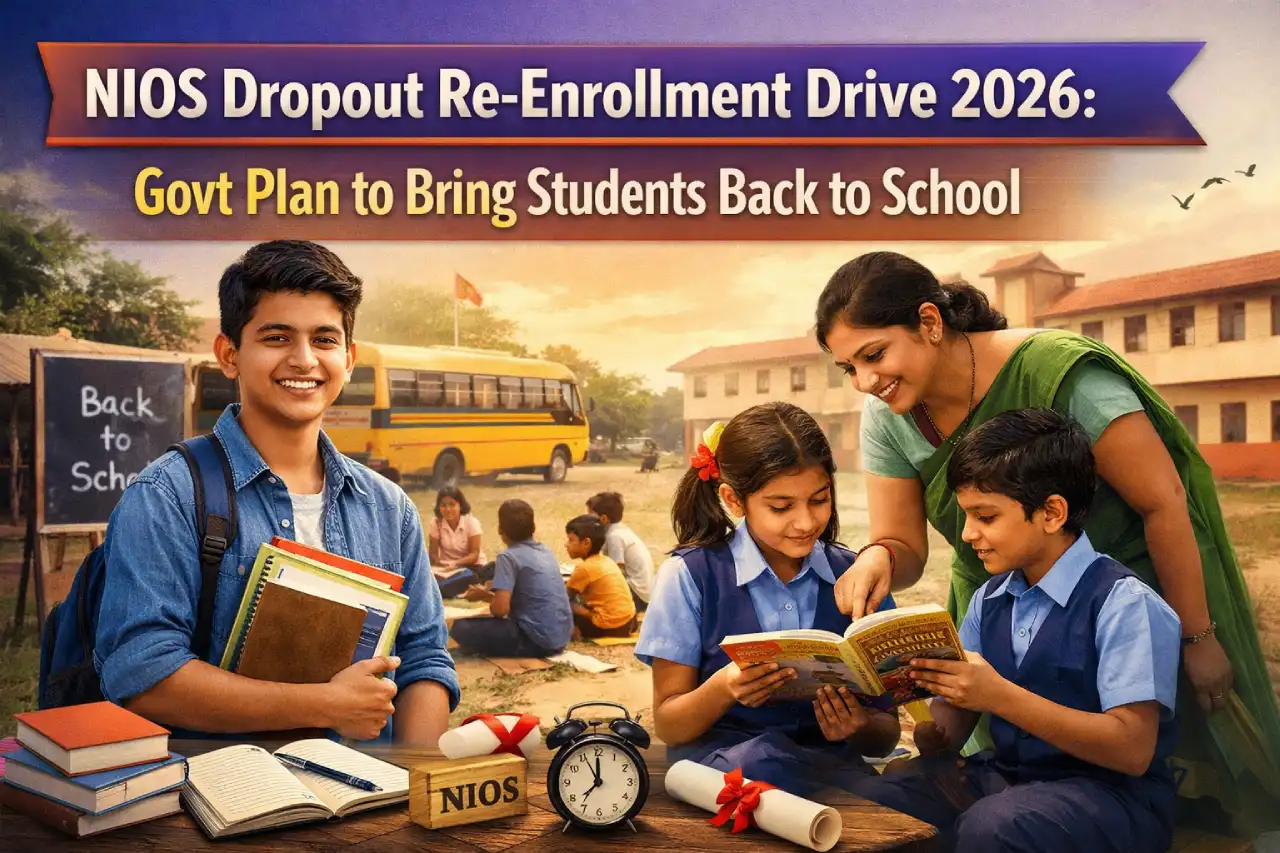
The Ministry of Education is preparing to launch a nationwide initiative aimed at bringing school dropout students back into the education system through the National Institute of Open Schooling (NIOS). This programme is expected to offer flexible learning options for students who had to discontinue their studies due to various reasons. By using open schooling methods, the government wants to create a second chance for learners to complete their education without the pressure of a traditional classroom setup.
I felt this is an important development to talk about because dropout rates remain a serious issue, especially in secondary and senior secondary levels. Many students leave school due to financial problems, family responsibilities, or lack of access to quality education. Initiatives like this can help bridge that gap. If implemented properly, it can give lakhs of students a fresh opportunity to continue their studies and build a better future.
What Is the Government’s New Plan
The government’s plan focuses on identifying and re-enrolling dropout students.
- Nationwide surveys will be conducted to identify out-of-school children
- State governments and local bodies will work together
- Special campaigns will encourage students to return to education
The idea is to make sure no student is left behind.
Role of NIOS in the Initiative
The National Institute of Open Schooling (NIOS) will be the main platform.
- Provides flexible learning options
- Allows students to study at their own pace
- Offers multiple chances to appear for exams
- Gives freedom to choose subjects
This makes it easier for students who cannot follow regular schooling.
Why Open Schooling Is Important
Open schooling can solve many challenges faced by students.
- Helps students who dropped out due to personal reasons
- Reduces pressure of strict schedules
- Supports working students or those with responsibilities
- Provides an alternative path to complete education
It is especially useful for rural and economically weaker sections.
Focus on NEP 2020 Goals
This initiative aligns with the National Education Policy 2020.
- Aims for 100% Gross Enrolment Ratio (GER)
- Promotes inclusive and flexible education
- Encourages alternative learning pathways
The government sees this as a key step towards universal education.
Expansion of Study Centres
To support this programme, infrastructure will be improved.
- More NIOS study centres will be set up
- New exam centres will be created
- Focus on rural and underserved areas
This will make education more accessible to all.
Skill-Based and Vocational Learning
The programme will also include practical learning.
- Vocational courses will be introduced
- Skill-based programmes to improve employability
- Focus on real-world skills alongside academics
This can help students find jobs after completing their studies.
Support System for Students
The government is planning proper guidance for learners.
- Trained faculty will assist students
- Help with enrolment and subject selection
- Academic support throughout the course
This ensures students do not feel lost after joining.
Key Highlights at a Glance
| Aspect | Details |
|---|---|
| Programme | Nationwide dropout re-enrolment drive |
| Platform | NIOS (Open Schooling) |
| Target | Out-of-school students |
| Focus | Flexible learning and inclusivity |
| Support | Study centres, faculty, vocational courses |
| Goal | 100% GER under NEP 2020 |
What This Means for Students
From my perspective, this is a much-needed step.
- Students get a second chance to complete education
- Flexible options reduce stress and pressure
- Opportunity to learn skills and improve job prospects
It can change the lives of many students who thought their education had ended.