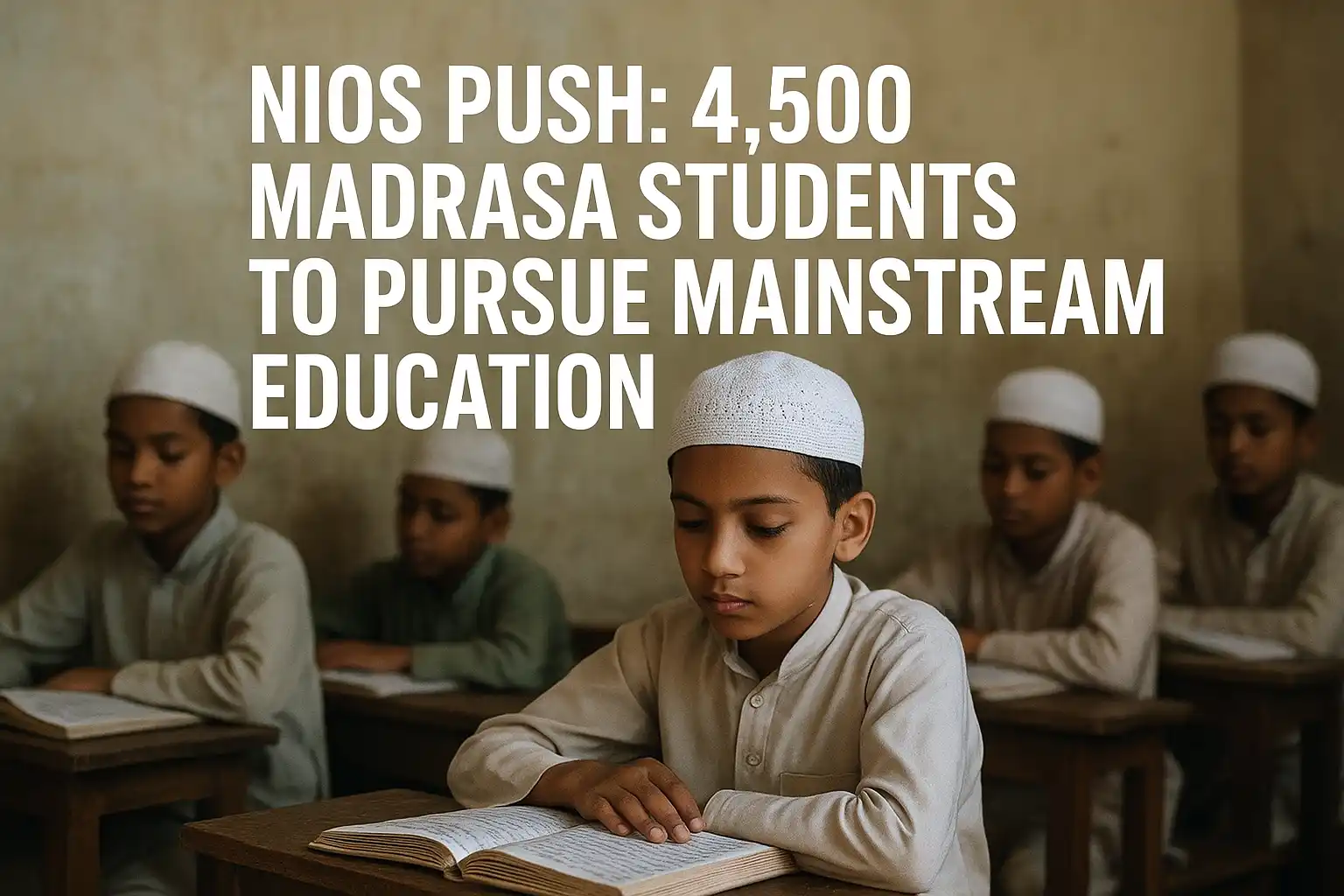
A new step towards educational inclusion is taking shape as 4,500 madrasa students across the state have registered for Class 10 and 12 exams through the National Institute of Open Schooling (NIOS). This move aims to give students from traditional religious schools an opportunity to blend their religious education with formal academic qualifications, helping them access broader career paths and higher studies.
I’m writing about this initiative because it marks a significant shift in how India approaches inclusive learning. For years, students in madrasas had limited exposure to mainstream subjects, often restricting their academic progression. By enrolling through NIOS, they can now pursue recognised courses and board examinations, gaining eligibility for colleges and professional streams. This initiative is not only about exams — it’s about bridging educational divides, empowering young learners, and giving them choices beyond conventional paths.
NIOS Welcomes Madrasa Students Into Mainstream Learning
The NIOS Bengaluru Regional Office confirmed that 4,500 madrasa students have already registered for the upcoming Class 10 and 12 board exams. Lokesh Kumar Aluru, an official from the office, shared that NIOS conducts examinations twice a year — under Stream 1 and Stream 2. Stream 1 exams are held between April and May, while Stream 2 takes place from October to November. Students can choose either based on their readiness and schedule.
NIOS, which operates under the Ministry of Education, Government of India, offers flexible education to those unable to attend regular schools. Its open schooling model allows learners from different backgrounds — including madrasas, rural areas, and working youth — to pursue formal education at their own pace.
What Makes This Move Important
For many madrasa students, this step could be life-changing. Madrasas traditionally focus on religious studies, and while that forms a strong cultural foundation, students often lack formal certification needed for mainstream college admissions or government jobs. Through NIOS, they can now study subjects like Mathematics, Science, Social Studies, and English, while continuing their religious education.
This dual approach helps them stay connected to their faith while preparing for future opportunities in modern sectors like technology, medicine, and public administration. It also promotes national integration by allowing madrasa students to join the same academic pathways as their peers in mainstream schools.
Government’s Role and Support
This initiative is part of a broader government effort to integrate various educational streams under the National Education Policy (NEP) 2020, which emphasises flexibility and inclusivity. State education departments, in collaboration with NIOS, have conducted outreach programmes to encourage madrasas to register their students.
In many regions, awareness sessions and orientation meetings were held for parents, highlighting how open schooling can complement religious learning without replacing it. The response has been largely positive, with growing interest in subjects that open doors to modern careers.
Challenges Ahead
While this progress is encouraging, challenges remain. Some madrasas lack trained teachers for formal subjects, while others face infrastructural and digital limitations. Students also need guidance in adjusting to structured exams and written assessments, which are different from their usual oral and memorisation-based learning.
Experts say mentorship and community-level academic support will be crucial. NGOs and educational volunteers have already begun offering tutoring and guidance to ensure these students can perform well in the NIOS exams.
A Step Toward Inclusive Education
The NIOS initiative is an important stride in making education accessible to every child, regardless of background or learning tradition. It ensures that madrasa students are not left behind in the country’s educational progress.
By bridging traditional learning with modern subjects, this programme is helping shape a generation that values both knowledge and cultural identity. For many of these 4,500 students, it’s not just about passing an exam — it’s about breaking barriers and rewriting their educational story.