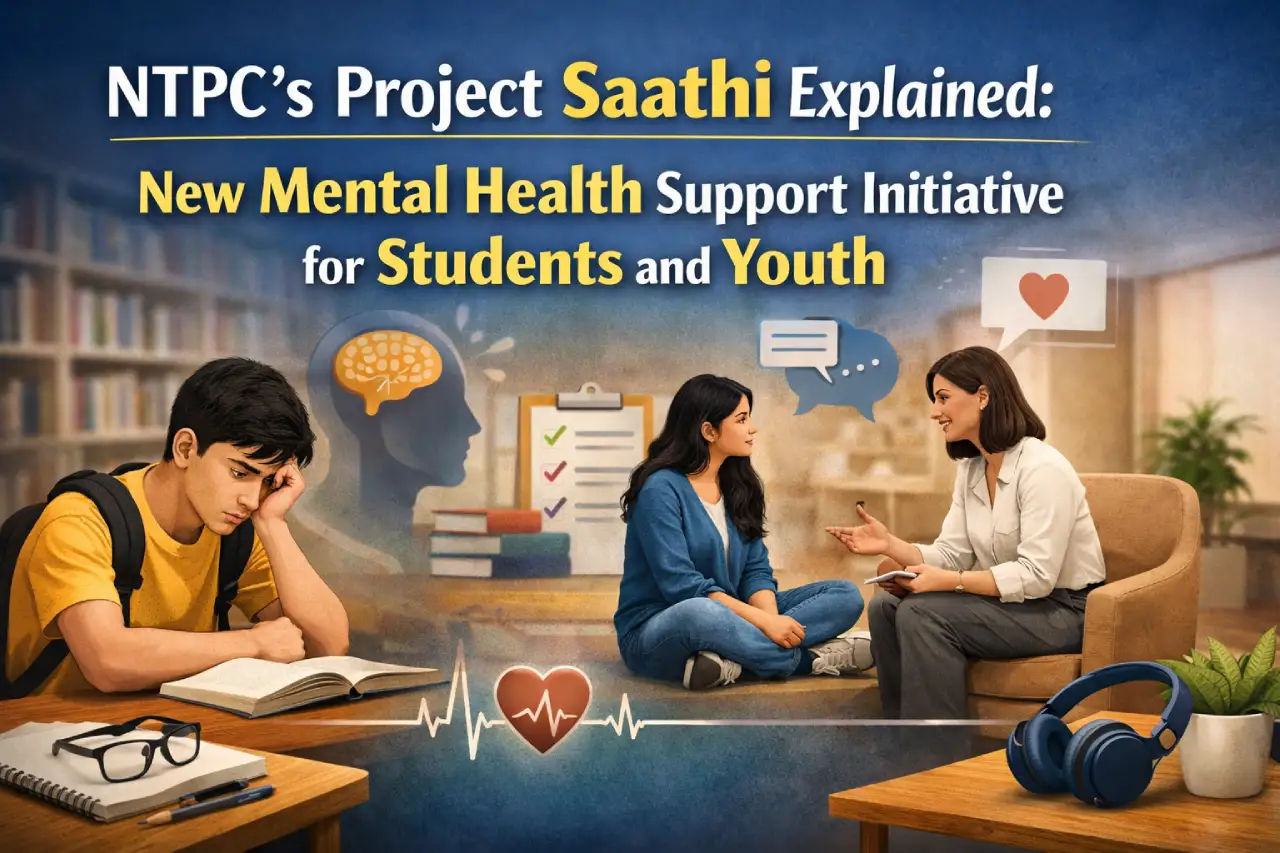
In a timely move to address growing mental health concerns among young people, NTPC has launched a new initiative in partnership with Emoneeds to make professional mental health support more accessible to students and youth. Rolled out under NTPC’s corporate social responsibility efforts, the programme focuses on awareness, early support, and practical coping strategies. Named Project Saathi, the initiative targets individuals aged 13 years and above and aims to create safe spaces where students can understand stress, emotions, and mental well-being in a structured and supportive manner.
I am writing about this initiative because mental health challenges among students are often discussed quietly, if at all. Academic pressure, exam stress, career uncertainty, and social expectations affect students across age groups, yet access to professional support remains limited. When large organisations step in with focused programmes like this, it signals that mental health is no longer a side issue. It also helps normalise conversations around emotional well-being, especially in school and college environments where such support is urgently needed.
What Project Saathi Is All About
Project Saathi is designed as a structured mental health support initiative that combines awareness with practical learning. Through interactive sessions, students are guided to better understand stress, emotional responses, and everyday mental health challenges. The focus is not only on identifying problems but also on building coping skills that students can use in daily life.
The programme is meant to be preventive as well as supportive, helping students recognise early signs of stress before they become overwhelming.
Who Is Behind the Initiative
The initiative is being implemented by NTPC in collaboration with Emoneeds, an organisation that provides care and support to people dealing with mental health issues.
By combining NTPC’s reach and CSR framework with Emoneeds’ mental health expertise, the programme aims to reach a wide and diverse group of students.
Focus on Students and Youth Aged 13 and Above
Project Saathi is open to individuals aged 13 years and above, covering school students, college students, and young adults. This age group is often at a stage where emotional stress increases but guidance is limited.
The sessions are designed to be age-appropriate and interactive, encouraging participation rather than one-way lectures.
What Students Learn Through These Sessions
According to Emoneeds, the initiative focuses on helping students:
- Understand stress and emotional responses
- Learn healthy coping mechanisms
- Recognise when to seek help
- Reduce stigma around mental health conversations
These skills are essential not just for academics but for long-term personal and professional life.
Why Corporate Support for Mental Health Matters
Mental health support in educational settings often depends on limited resources. When large organisations invest in such initiatives, it helps bridge gaps that schools and colleges may struggle to address on their own.
From my point of view, corporate-led mental health programmes can play a big role in changing attitudes, especially when they focus on awareness and early support rather than crisis-only intervention.
A Step Towards Normalising Mental Health Conversations
One of the most important aspects of Project Saathi is its focus on normalising discussions around emotions and stress. Many students hesitate to speak openly due to fear of judgement or misunderstanding.
By introducing these conversations in group settings, the initiative helps students realise that mental health challenges are common and manageable.
Long-Term Impact on Student Well-Being
If implemented consistently, programmes like Project Saathi can help students build emotional resilience at an early stage. Better awareness leads to healthier coping habits, improved focus, and reduced anxiety around studies and life decisions.
It also encourages students to seek professional help when needed, rather than ignoring warning signs.