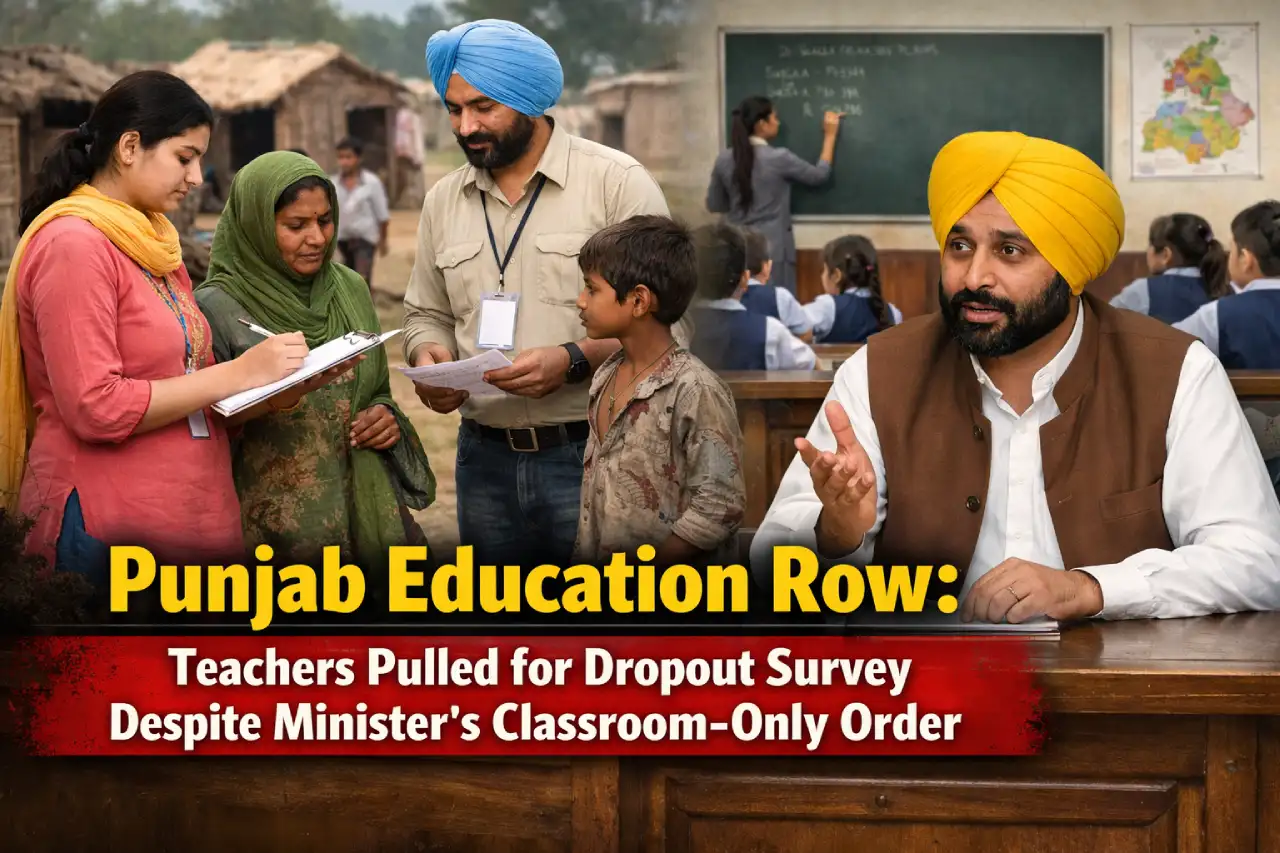
Teachers in Ludhiana and other parts of Punjab have once again been assigned non-teaching duties, despite a clear directive from the state education minister to keep them focused on classroom work. In the middle of pre-board examinations, school teachers have been asked to step out of schools to conduct a door-to-door survey to identify dropout students. This has triggered concern and frustration among teachers, who say such tasks directly affect academic schedules and student preparation.
I am writing about this issue because it highlights a recurring gap between policy announcements and ground-level implementation in the education system. Teachers are repeatedly assured that they will be relieved of non-academic work, yet are pulled into administrative exercises at critical academic moments. Understanding what has been ordered, who issued it, and why it matters is important for parents, educators, and policymakers alike.
What the Minister Had Directed Earlier
Punjab’s education minister Harjot Bains had earlier issued clear instructions that teachers should not be burdened with non-teaching duties. The intent behind this directive was to ensure that teachers remain in classrooms, focus on learning outcomes, and give proper attention to students, especially during examination periods.
The directive was widely welcomed by the teaching community, which has long complained about being diverted to surveys, election duties, and administrative work.
What the Education Department Has Now Ordered
Despite this assurance, the Punjab School Education Department has issued fresh instructions asking teachers to conduct a statewide dropout survey.
In a letter dated January 19, the state project director of Samagra Shiksha Abhiyan directed:
- District education officers and block education officers
- Heads of government schools
- Teaching staff
to carry out a house-to-house survey to identify out-of-school children.
Details of the Dropout Survey Drive
As per the official communication, teachers have been asked to identify children aged between 3 and 19 years who are not enrolled in school. The survey is to be conducted door-to-door and completed by January 30.
This exercise is meant to help the department update its data on dropout and out-of-school children, which is crucial for planning enrolment drives and welfare interventions.
Timing Raises Serious Concerns
What has upset teachers the most is the timing of the survey. The instructions have come at a time when pre-board examinations are underway in many schools.
Teachers argue that:
- Pre-boards are critical for exam preparation
- Students need guidance, revision support, and evaluation
- Teacher absence during this period affects learning quality
Many feel the survey could have been planned during vacations or non-exam periods.
Teachers Question the Contradiction
The move has revived a long-standing complaint that field-level orders often contradict public assurances made by ministers. Teachers point out that while the government speaks about improving learning outcomes, pulling teachers out of classrooms sends the opposite message.
There is also concern that repeated non-teaching assignments demoralise teachers and reduce accountability for academic performance.
Why Identifying Dropout Children Still Matters
At the same time, education experts acknowledge that identifying out-of-school children is an important task. Accurate data is essential for bringing children back into the education system and meeting enrolment targets.
However, many argue that this responsibility should be handled by dedicated survey staff or local administrative teams, rather than teachers during exam season.