JOIN WHATSAPP
STORIES

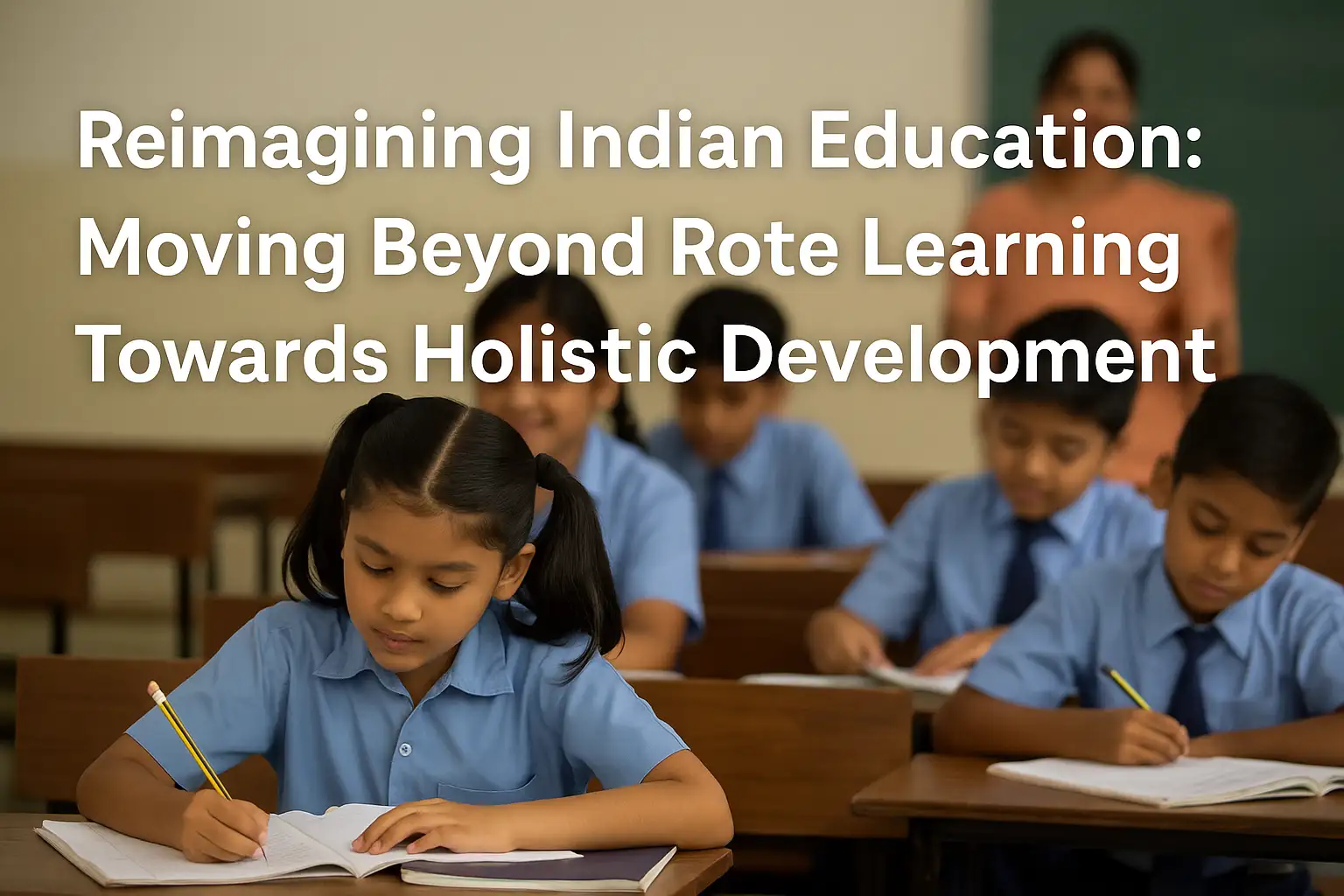
Reimagining Indian Education: Moving Beyond Rote Learning Towards Holistic Development

Reimagining Indian Education: Moving Beyond Rote Learning Towards Holistic Development

For decades, India’s education system has been dominated by rote learning — the practice of memorising facts for exams without fully understanding concepts. This approach has often limited creativity, critical thinking, and practical application. But today, there is a growing shift towards holistic development, where education is seen not just as a way to score marks but as a means to build life skills, emotional intelligence, and adaptability. With new policies, digital tools, and changing expectations from parents and students, Indian classrooms are slowly transforming into spaces that value creativity and overall growth.

I am writing about this because the future of any country depends on how its young minds are shaped. If we continue to train students only for exams, we risk leaving them unprepared for real-world challenges. Holistic education, on the other hand, nurtures curiosity, confidence, and resilience. It equips students with skills like communication, teamwork, and problem-solving, which are as important as academic knowledge. For teachers, it means rethinking classroom methods; for parents, it means valuing learning beyond grades. Talking about this change is important because it is not just about reforming schools, but about reimagining what education should mean in a fast-changing world.

Why Rote Learning Falls Short

  • Focuses on memorisation over understanding
  • Encourages exam-centred preparation rather than practical application
  • Limits creativity and discourages curiosity
  • Creates pressure without building long-term learning skills

What Holistic Development Looks Like

  • Experiential learning through projects, internships, and real-life activities
  • Focus on sports, arts, and co-curriculars alongside academics
  • Building emotional intelligence and mental well-being in classrooms
  • Encouraging critical thinking, problem-solving, and collaboration
  • Use of technology and digital platforms to personalise learning

Role of NEP 2020 in This Shift

The National Education Policy (NEP) 2020 has played a major role in driving this change. It emphasises flexible learning paths, multidisciplinary education, and a focus on vocational and skill-based training. It also encourages assessments that test understanding rather than rote memory. This policy framework is pushing schools and colleges to redesign curricula and teaching methods.

Challenges in Implementation

  • Shortage of trained teachers to adopt new methods
  • Unequal access to resources, especially in rural areas
  • Pressure from competitive exams that still prioritise rote learning
  • Need for greater awareness among parents about the value of holistic education
Leave a Comment

End of Article

Maharashtra to Recruit 5,500 Assistant Professors by June: Minister Chandrakant Patil Gives Timeline

Maharashtra to Recruit 5,500 Assistant Professors by June: Minister Chandrakant Patil Gives Timeline

Maharashtra’s Higher Education Minister Chandrakant Patil has assured that the long-awaited recruitment of 5,500 assistant professors across state universities will be completed by June 2026. This announcement comes after the initial deadline of March was missed due to administrative and procedural delays. The recruitment drive is aimed at filling vacant teaching positions in government and aided institutions, which have been affecting the quality of education and overall academic functioning in the state.

I am writing about this because faculty shortages have been a major concern in higher education for quite some time. From what I have seen, students often struggle due to a lack of permanent teachers, which directly impacts classroom learning and research opportunities. This update is important not just for job aspirants but also for students and institutions, as it promises to improve the student-teacher ratio and bring stability to the academic environment.

What the Minister Announced

Higher Education Minister Chandrakant Patil has clearly stated that the recruitment process is now on track.

Key points from the announcement:

  • 5,500 assistant professor posts to be filled
  • New deadline set for June 2026
  • Delay caused by administrative and procedural issues
  • Recruitment to cover multiple universities and colleges

The government has assured that efforts are being made to complete the process without further delay.

Why the Recruitment Was Delayed

The recruitment drive was initially expected to be completed by March but faced several challenges.

Some major reasons include:

  • Complexities in finalising eligibility criteria
  • Large number of applications to be reviewed
  • Scheduling of examinations and interviews
  • Inclusion of newly established colleges and institutions

From my understanding, these delays are common in large-scale recruitment, but they often create uncertainty among candidates.

Role of MPSC in the Recruitment Process

The Maharashtra Public Service Commission (MPSC) is handling the recruitment process.

  • Responsible for conducting exams and interviews
  • Ensures selection based on merit and transparency
  • Evaluates academic qualifications and performance

The commission is currently working to finalise the list of eligible candidates.

Selection Process Explained

The recruitment will follow a structured and rigorous selection process.

  • Screening of applications
  • Evaluation of academic credentials
  • Interviews conducted as per guidelines
  • Final selection based on merit

This process is aligned with University Grants Commission (UGC) norms.

Why This Recruitment is Important

Filling these vacancies is crucial for improving higher education in the state.

  • Helps improve student-teacher ratio
  • Ensures better classroom interaction and learning
  • Strengthens research and academic output
  • Provides stability in teaching staff

In my opinion, qualified faculty is the backbone of any strong education system.

Concerns Raised by Students and Academic Bodies

There have been growing concerns regarding the delay.

  • Student unions have highlighted lack of teachers
  • Academic bodies have raised issues about declining quality
  • Vacant posts affecting regular classes and research work

The latest assurance from the government is expected to address these concerns.

Government’s Broader Education Plan

The recruitment is part of a larger plan to improve higher education.

  • Focus on strengthening infrastructure and resources
  • Bringing in skilled and experienced faculty
  • Improving overall education standards
  • Aligning with future academic and industry needs

The government aims to create a more competitive and modern education system.

Key Highlights at a Glance

ParticularsDetails
Total Vacancies5,500 Assistant Professors
Revised DeadlineJune 2026
Conducting AuthorityMPSC
Recruitment TypeGovernment & Aided Institutions
Selection ProcessMerit-based with interviews

What This Means for Aspirants

For candidates waiting for these jobs, this update is quite important.

  • Recruitment process is moving forward
  • Clear timeline now available
  • Opportunity to secure teaching positions
  • Need to stay prepared for upcoming stages

From what I have seen, staying updated and prepared is key during such recruitment cycles.

Leave a Comment

End of Article

Loading more posts...