JOIN WHATSAPP
STORIES

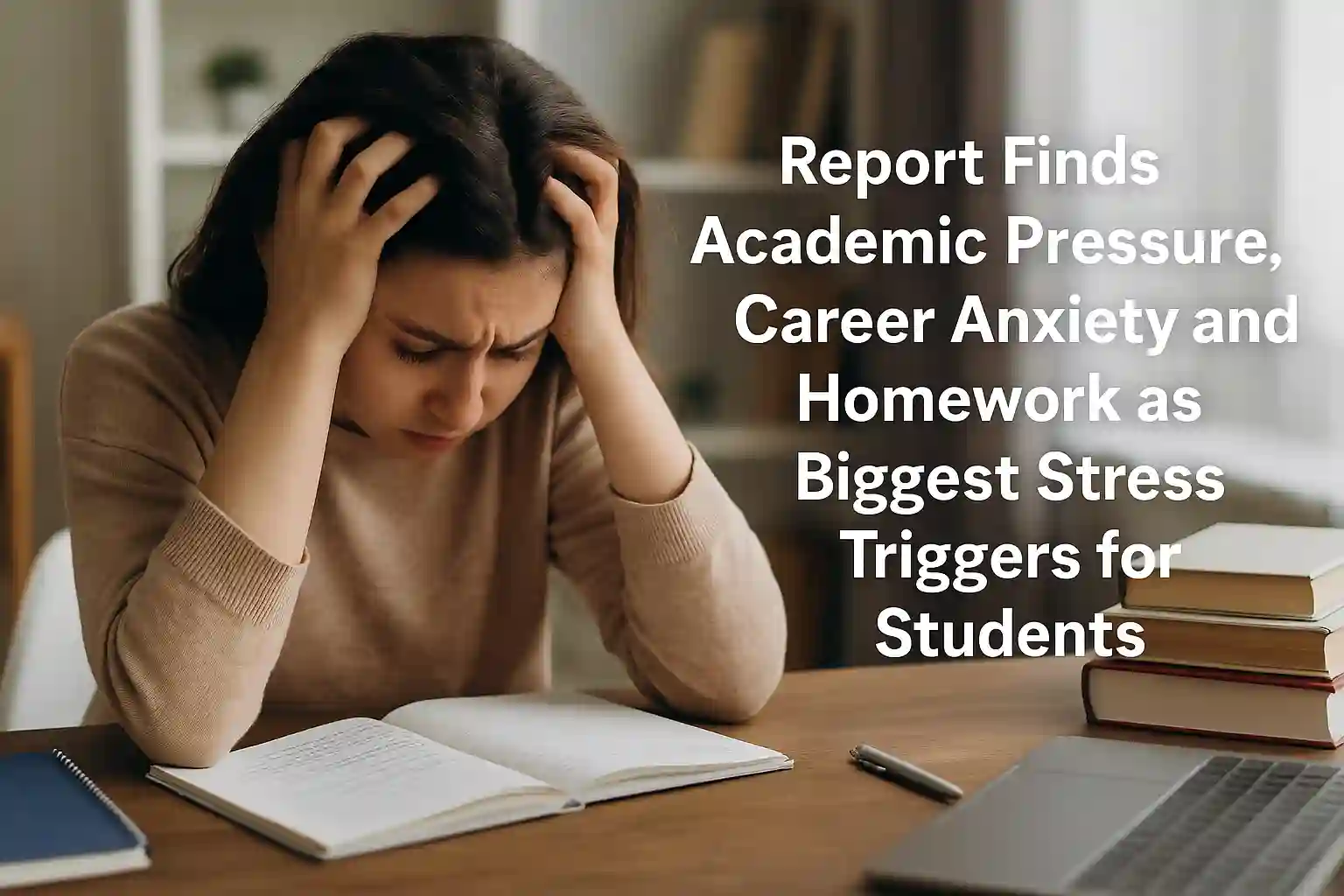
Report Finds Academic Pressure, Career Anxiety and Homework as Biggest Stress Triggers for Students

Report Finds Academic Pressure, Career Anxiety and Homework as Biggest Stress Triggers for Students

A recent report has revealed that the biggest stress factors for students today are academic pressure, career-related worries, and the heavy load of homework. These stressors, while not new, have reached worrying levels as students struggle to balance studies, competitive exams, extracurricular demands, and personal well-being.

I am writing about this because student stress is no longer a hidden issue confined to exam seasons. It has become a year-round challenge that affects mental health, academic performance, and even family relationships. Many parents and teachers still assume stress is a natural part of growing up, but research shows that excessive pressure can cause anxiety, depression, and burnout. By highlighting these findings, I hope to encourage more open conversations between students, parents, and schools about reducing unnecessary burdens and creating a healthier learning environment. It is important to look at what drives this stress and what solutions might actually work, instead of normalising it as part of student life.

Key Findings of the Report

The report highlights three main areas of concern:

  • Academic Pressure: High expectations from parents, teachers, and peers often push students into constant performance mode. Board exams, competitive tests, and fear of failure top this list.
  • Career Anxiety: Uncertainty about future career paths, pressure to choose “high-paying” professions, and confusion about opportunities abroad contribute to anxiety.
  • Homework Load: Excessive homework and assignments leave little room for rest or hobbies, creating an imbalance in daily life.

These stressors cut across school levels but are most severe among Class 9–12 students preparing for board and entrance exams.

Why Academic Pressure is Rising

Over the last decade, competition for limited seats in medical, engineering, and other professional courses has increased. Coaching institutes and private tuition have also normalised 12–14 hours of daily study for teenagers. Parents, fearing their children may be left behind, unknowingly add to this burden by comparing them with peers. The result is a cycle of pressure that leaves little time for creative or independent learning.

Career Anxiety in the Age of Uncertainty

Students today are also grappling with uncertainty about the job market. While traditional careers like medicine, law, and engineering remain popular, many new-age fields like AI, data science, design, and digital marketing are gaining ground. The lack of clear guidance and career counselling in most schools adds to the confusion. Students often end up pursuing fields they are unsure about, simply to meet family or societal expectations.

Homework and the Lack of Balance

Homework has long been a debated issue, but students now report that the volume and intensity have increased. Assignments often overlap with coaching work, leaving no time for relaxation or hobbies. This lack of balance reduces sleep, physical activity, and even family interaction, all of which are crucial for healthy development.

How Schools and Parents Can Help

To reduce these stressors, schools and parents can take some important steps:

  • Provide career counselling sessions from an early stage
  • Focus on skill-building and holistic education rather than only marks
  • Limit homework and encourage creative projects
  • Normalise conversations around mental health
  • Allow children to pursue hobbies and sports without guilt

Countries like Finland have shown that reducing homework and focusing on experiential learning can improve both well-being and academic outcomes. India too can learn from such models.

Leave a Comment

End of Article

Maharashtra to Recruit 5,500 Assistant Professors by June: Minister Chandrakant Patil Gives Timeline

Maharashtra to Recruit 5,500 Assistant Professors by June: Minister Chandrakant Patil Gives Timeline

Maharashtra’s Higher Education Minister Chandrakant Patil has assured that the long-awaited recruitment of 5,500 assistant professors across state universities will be completed by June 2026. This announcement comes after the initial deadline of March was missed due to administrative and procedural delays. The recruitment drive is aimed at filling vacant teaching positions in government and aided institutions, which have been affecting the quality of education and overall academic functioning in the state.

I am writing about this because faculty shortages have been a major concern in higher education for quite some time. From what I have seen, students often struggle due to a lack of permanent teachers, which directly impacts classroom learning and research opportunities. This update is important not just for job aspirants but also for students and institutions, as it promises to improve the student-teacher ratio and bring stability to the academic environment.

What the Minister Announced

Higher Education Minister Chandrakant Patil has clearly stated that the recruitment process is now on track.

Key points from the announcement:

  • 5,500 assistant professor posts to be filled
  • New deadline set for June 2026
  • Delay caused by administrative and procedural issues
  • Recruitment to cover multiple universities and colleges

The government has assured that efforts are being made to complete the process without further delay.

Why the Recruitment Was Delayed

The recruitment drive was initially expected to be completed by March but faced several challenges.

Some major reasons include:

  • Complexities in finalising eligibility criteria
  • Large number of applications to be reviewed
  • Scheduling of examinations and interviews
  • Inclusion of newly established colleges and institutions

From my understanding, these delays are common in large-scale recruitment, but they often create uncertainty among candidates.

Role of MPSC in the Recruitment Process

The Maharashtra Public Service Commission (MPSC) is handling the recruitment process.

  • Responsible for conducting exams and interviews
  • Ensures selection based on merit and transparency
  • Evaluates academic qualifications and performance

The commission is currently working to finalise the list of eligible candidates.

Selection Process Explained

The recruitment will follow a structured and rigorous selection process.

  • Screening of applications
  • Evaluation of academic credentials
  • Interviews conducted as per guidelines
  • Final selection based on merit

This process is aligned with University Grants Commission (UGC) norms.

Why This Recruitment is Important

Filling these vacancies is crucial for improving higher education in the state.

  • Helps improve student-teacher ratio
  • Ensures better classroom interaction and learning
  • Strengthens research and academic output
  • Provides stability in teaching staff

In my opinion, qualified faculty is the backbone of any strong education system.

Concerns Raised by Students and Academic Bodies

There have been growing concerns regarding the delay.

  • Student unions have highlighted lack of teachers
  • Academic bodies have raised issues about declining quality
  • Vacant posts affecting regular classes and research work

The latest assurance from the government is expected to address these concerns.

Government’s Broader Education Plan

The recruitment is part of a larger plan to improve higher education.

  • Focus on strengthening infrastructure and resources
  • Bringing in skilled and experienced faculty
  • Improving overall education standards
  • Aligning with future academic and industry needs

The government aims to create a more competitive and modern education system.

Key Highlights at a Glance

ParticularsDetails
Total Vacancies5,500 Assistant Professors
Revised DeadlineJune 2026
Conducting AuthorityMPSC
Recruitment TypeGovernment & Aided Institutions
Selection ProcessMerit-based with interviews

What This Means for Aspirants

For candidates waiting for these jobs, this update is quite important.

  • Recruitment process is moving forward
  • Clear timeline now available
  • Opportunity to secure teaching positions
  • Need to stay prepared for upcoming stages

From what I have seen, staying updated and prepared is key during such recruitment cycles.

Leave a Comment

End of Article

Loading more posts...