JOIN WHATSAPP
STORIES

RTE Admissions 2026 in Maharashtra: New Rules, Distance Limit and What Parents Should Know

RTE Admissions 2026 in Maharashtra: New Rules, Distance Limit and What Parents Should Know

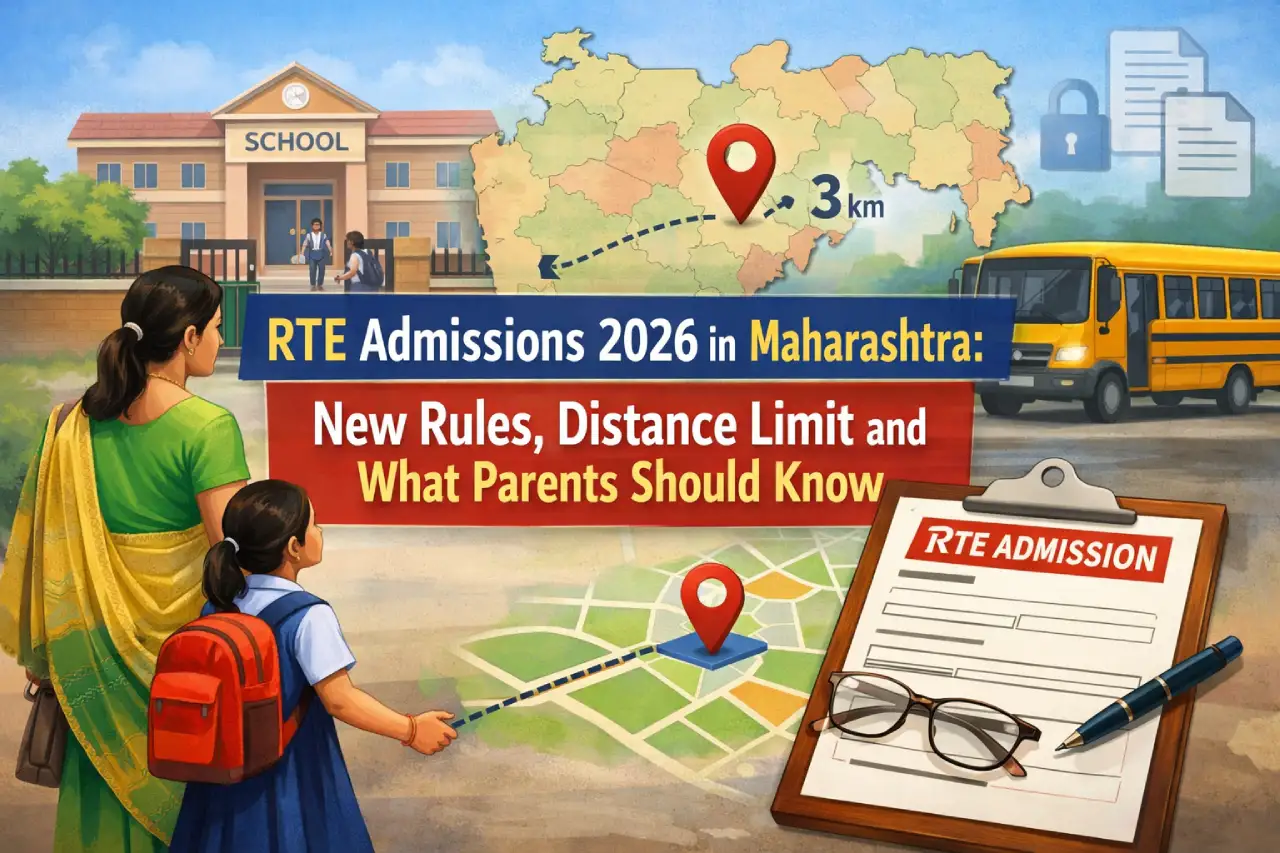
Admissions under the Right to Education (RTE) Act in Maharashtra are set to begin from February 17, with the school education department introducing a revised online admission process. While the changes aim to make the system more transparent and streamlined, one particular rule has triggered strong reactions from parents. Under the new framework, families can choose up to 10 private unaided schools, but all selected schools must be located within a one-kilometre radius of the student’s registered residential address.

I am writing about this development because RTE admissions directly affect thousands of families every year, especially those from economically weaker sections. Any change in rules can have a big impact on school choices, access to quality education and overall planning for parents. Understanding these revised guidelines is essential before the application window opens.

When Will RTE Admissions Begin

The Maharashtra school education department has announced that:

  • Online RTE admissions will start from February 17
  • Applications must be submitted through the official online portal
  • The revised process was notified earlier this month

Parents are advised to complete applications within the given timeline.

What Are the Key Changes in the New RTE Rules

Two major changes have been introduced:

  • Parents can select up to 10 private unaided schools
  • All selected schools must be within 1 km of the child’s residential address

Earlier, parents had greater flexibility in choosing schools beyond a strict distance limit.

Mandatory Document Upload at Application Stage

Another important change is related to documentation. Under the revised rules:

  • All required documents must be uploaded at the time of application
  • Earlier, documents were submitted later during admission

This aims to reduce fraudulent applications and speed up verification.

Why Parents Are Opposing the Distance Rule

Many parents have raised concerns that:

  • Good-quality schools may not exist within 1 km in some areas
  • Children may be forced to attend poorly performing schools
  • The rule limits parental choice

From my perspective, parents fear that the distance restriction could reduce access to better educational opportunities.

Government’s Rationale Behind the New Rule

Officials believe that:

  • Nearby schools make commuting safer and easier for children
  • Local schools should be strengthened and utilised
  • The process becomes more systematic

The intention is to create neighbourhood-based schooling.

Who Is Eligible Under RTE Admissions

RTE admissions are meant for:

  • Children from economically weaker sections
  • Disadvantaged groups

Private unaided schools must reserve a fixed percentage of seats under the Act.

How Parents Can Prepare for the Application Process

Parents should:

  • Check residential address details carefully
  • Keep documents scanned and ready
  • Identify schools within 1 km radius
  • Apply early to avoid technical issues

Good preparation can prevent last-minute stress.

What Parents Are Demanding

Parents’ groups are requesting:

  • Relaxation of the strict 1 km rule
  • More flexibility in school selection
  • Reconsideration of the policy

Discussions with authorities are expected.

Leave a Comment

End of Article

Maharashtra to Recruit 5,500 Assistant Professors by June: Minister Chandrakant Patil Gives Timeline

Maharashtra to Recruit 5,500 Assistant Professors by June: Minister Chandrakant Patil Gives Timeline

Maharashtra’s Higher Education Minister Chandrakant Patil has assured that the long-awaited recruitment of 5,500 assistant professors across state universities will be completed by June 2026. This announcement comes after the initial deadline of March was missed due to administrative and procedural delays. The recruitment drive is aimed at filling vacant teaching positions in government and aided institutions, which have been affecting the quality of education and overall academic functioning in the state.

I am writing about this because faculty shortages have been a major concern in higher education for quite some time. From what I have seen, students often struggle due to a lack of permanent teachers, which directly impacts classroom learning and research opportunities. This update is important not just for job aspirants but also for students and institutions, as it promises to improve the student-teacher ratio and bring stability to the academic environment.

What the Minister Announced

Higher Education Minister Chandrakant Patil has clearly stated that the recruitment process is now on track.

Key points from the announcement:

  • 5,500 assistant professor posts to be filled
  • New deadline set for June 2026
  • Delay caused by administrative and procedural issues
  • Recruitment to cover multiple universities and colleges

The government has assured that efforts are being made to complete the process without further delay.

Why the Recruitment Was Delayed

The recruitment drive was initially expected to be completed by March but faced several challenges.

Some major reasons include:

  • Complexities in finalising eligibility criteria
  • Large number of applications to be reviewed
  • Scheduling of examinations and interviews
  • Inclusion of newly established colleges and institutions

From my understanding, these delays are common in large-scale recruitment, but they often create uncertainty among candidates.

Role of MPSC in the Recruitment Process

The Maharashtra Public Service Commission (MPSC) is handling the recruitment process.

  • Responsible for conducting exams and interviews
  • Ensures selection based on merit and transparency
  • Evaluates academic qualifications and performance

The commission is currently working to finalise the list of eligible candidates.

Selection Process Explained

The recruitment will follow a structured and rigorous selection process.

  • Screening of applications
  • Evaluation of academic credentials
  • Interviews conducted as per guidelines
  • Final selection based on merit

This process is aligned with University Grants Commission (UGC) norms.

Why This Recruitment is Important

Filling these vacancies is crucial for improving higher education in the state.

  • Helps improve student-teacher ratio
  • Ensures better classroom interaction and learning
  • Strengthens research and academic output
  • Provides stability in teaching staff

In my opinion, qualified faculty is the backbone of any strong education system.

Concerns Raised by Students and Academic Bodies

There have been growing concerns regarding the delay.

  • Student unions have highlighted lack of teachers
  • Academic bodies have raised issues about declining quality
  • Vacant posts affecting regular classes and research work

The latest assurance from the government is expected to address these concerns.

Government’s Broader Education Plan

The recruitment is part of a larger plan to improve higher education.

  • Focus on strengthening infrastructure and resources
  • Bringing in skilled and experienced faculty
  • Improving overall education standards
  • Aligning with future academic and industry needs

The government aims to create a more competitive and modern education system.

Key Highlights at a Glance

ParticularsDetails
Total Vacancies5,500 Assistant Professors
Revised DeadlineJune 2026
Conducting AuthorityMPSC
Recruitment TypeGovernment & Aided Institutions
Selection ProcessMerit-based with interviews

What This Means for Aspirants

For candidates waiting for these jobs, this update is quite important.

  • Recruitment process is moving forward
  • Clear timeline now available
  • Opportunity to secure teaching positions
  • Need to stay prepared for upcoming stages

From what I have seen, staying updated and prepared is key during such recruitment cycles.

Leave a Comment

End of Article

Loading more posts...