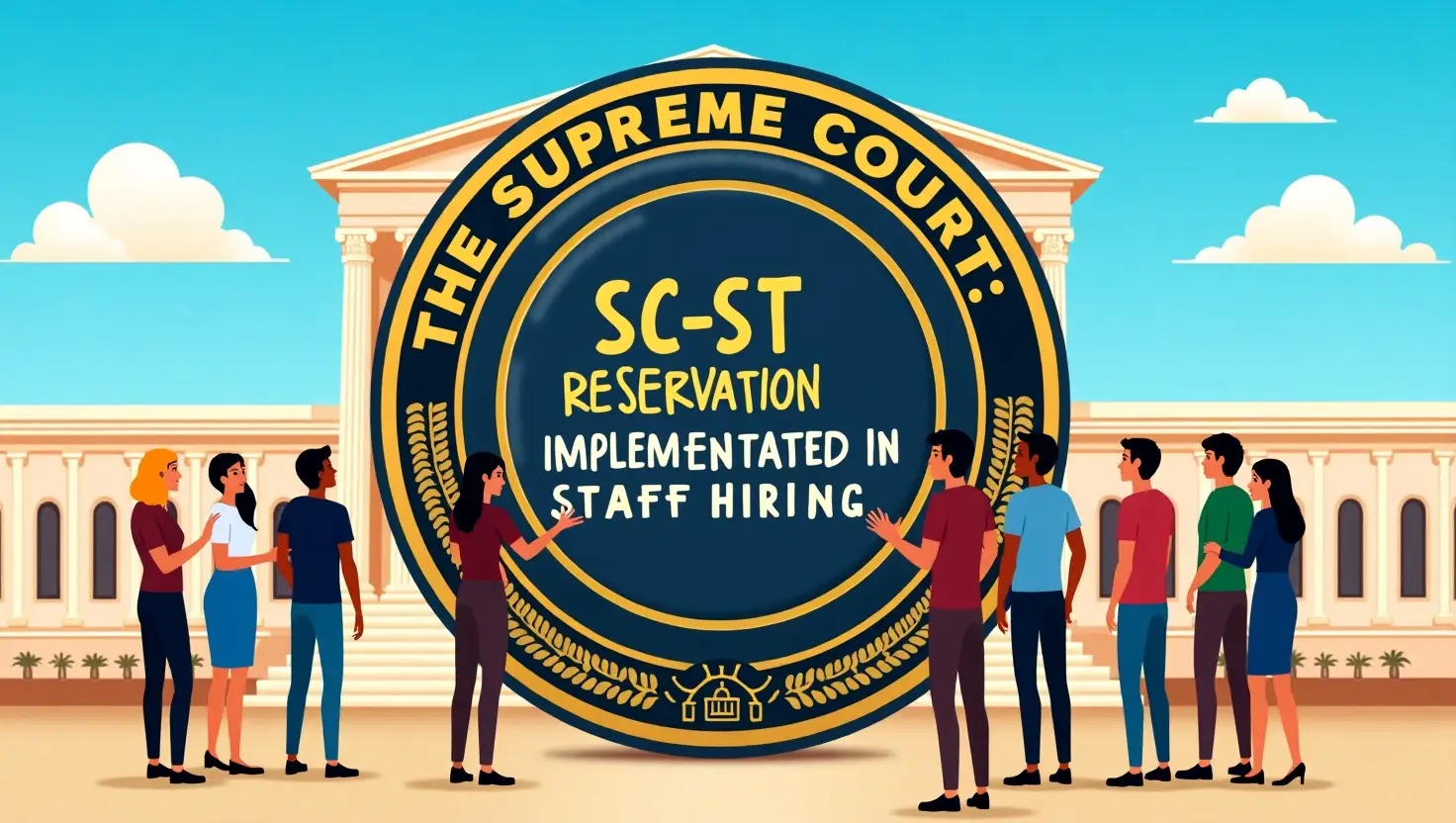
In a historic step, the Supreme Court of India has introduced SC-ST reservation in its own administrative staff recruitment for the first time since its establishment. This marks a significant shift in the apex court’s stance, which had previously not applied any caste-based reservation in hiring its non-judicial staff. The decision comes as part of efforts to ensure diversity and representation within the country’s top judicial institution, aligning it more closely with constitutional values.
I felt compelled to write about this development because it’s not just a legal update but a moment of social change. The Supreme Court has always been viewed as the guardian of the Constitution. Yet, for decades, it had not implemented the reservation policies it upheld across other government sectors. This move finally closes that gap. For students of law, aspiring government employees, and anyone interested in equity and inclusion, this news brings a new layer to understanding how institutions adapt over time. It’s a development that deserves public attention, discussion and even constructive scrutiny.
What Exactly Has the Supreme Court Changed?
The Supreme Court has officially decided to introduce reservation for Scheduled Castes (SCs) and Scheduled Tribes (STs) in the recruitment of its non-judicial staff. This includes administrative posts such as court clerks, stenographers, and assistants.
So far, the apex court had followed a general merit-based hiring policy, without providing reservation even though Article 16(4) of the Indian Constitution allows the state to provide reservation for backward classes in public employment.
As per reports, the decision will initially apply to Group C and D level posts. Details such as the exact quota breakdown and the implementation timeline are yet to be fully disclosed.
Why Is This Decision Important?
- It ends a long-standing contradiction where the court applied reservation in judgments but didn’t implement it internally
- It strengthens the principle of equal opportunity within one of the country’s most influential institutions
- It sends a strong signal to other constitutional bodies and autonomous institutions to evaluate their own diversity practices
Background: Why Was There No Reservation Till Now?
For years, the Supreme Court argued that since it was not a “state” under Article 12 of the Constitution, it wasn’t bound by reservation rules that apply to central or state governments. This interpretation had drawn criticism from legal experts and social justice activists.
However, the court’s internal administrative decisions, including staff recruitment, are now being seen in a different light — especially considering the judiciary’s role in interpreting laws fairly and equitably for all sections of society.
What Does This Mean for Future Recruitment?
- More inclusive hiring: Candidates from SC and ST communities will have reserved posts they can apply for in upcoming recruitment cycles.
- Better representation: Over time, the demographic composition of the court’s administrative wing is likely to reflect the social diversity of the country.
- Transparency in selection: The court will now need to publish detailed recruitment rules and quota-wise vacancy details for public scrutiny.
How Are Experts Reacting?
Legal scholars have mostly welcomed the move, calling it “long overdue”. Some believe this can act as a precedent for introducing OBC and EWS reservation as well. On the other hand, a few critics have pointed out that implementation must be carefully monitored to ensure merit isn’t compromised — a debate that often arises in discussions around reservation.
Final Thoughts
This move by the Supreme Court is not just about job quotas. It’s about finally putting into practice what has long been preached in verdicts and legislation. For young aspirants, especially those from marginalised communities, this offers both opportunity and hope. More importantly, it pushes the conversation forward on institutional reform and the role of judiciary in shaping a more inclusive India. Let’s hope it doesn’t remain symbolic but becomes a model for other bodies to follow.