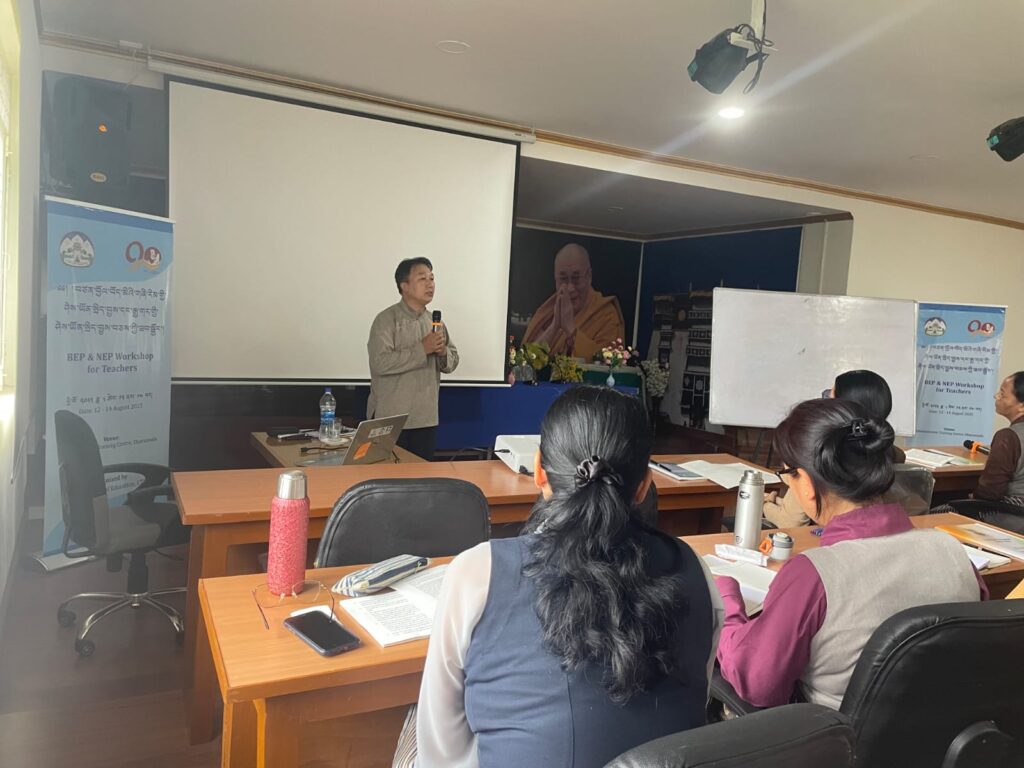
The Department of Education recently organised a three-day workshop aimed at strengthening teachers’ understanding of the Basic Education Policy (BEP) and the National Education Policy (NEP). The event focused on improving classroom practices, aligning teaching with policy goals, and helping educators better serve their students through informed methods.
I wanted to write about this because teacher training is often discussed in theory but rarely connected with specific, on-ground initiatives. Policies like the BEP and NEP sound good on paper, but unless teachers are equipped to put them into action, the benefits may never reach the students. Workshops like this give educators the opportunity to clarify doubts, share best practices, and adapt to new approaches in a practical way. This matters because well-trained teachers can bridge the gap between policy and real learning, and that’s something every parent, student, and community member should care about.
Focus and Structure of the Workshop
The workshop was designed to help teachers deepen their understanding of how educational policies translate into everyday teaching. Sessions included an overview of the guiding principles of the BEP, which emphasises holistic development and cultural preservation, as well as detailed discussions on the NEP, which focuses on modernisation, skill development, and inclusive learning.
Experienced trainers led interactive sessions where teachers could ask questions, discuss challenges, and explore solutions together. Role-play activities and group discussions were used to make the sessions more engaging and relevant to real classroom situations.
Key Topics Covered
- Understanding the Basic Education Policy and its role in community-focused learning
- Detailed review of the National Education Policy and its core objectives
- Integrating policy guidelines into lesson planning and teaching methods
- Using local culture and language as strengths in the classroom
- Strategies for inclusive education to support diverse learners
Why Such Workshops Are Important
Workshops like these ensure that teachers are not just aware of policies but also confident in implementing them. Many educators face constraints such as lack of resources or outdated materials, and such training provides them with practical tools and techniques they can use immediately.
It also creates a platform for teachers from different regions to share their experiences. This exchange of ideas often sparks new approaches that can be adapted to fit local needs, making the policies more effective on the ground.
Moving Forward
The Department of Education’s initiative shows that policy change and teacher development must go hand in hand. Teachers who are well-versed in policy guidelines can make better decisions in the classroom, ensuring that students receive an education that is both relevant and inspiring. Continuous training, follow-up sessions, and peer networks can help sustain the momentum created by such workshops.