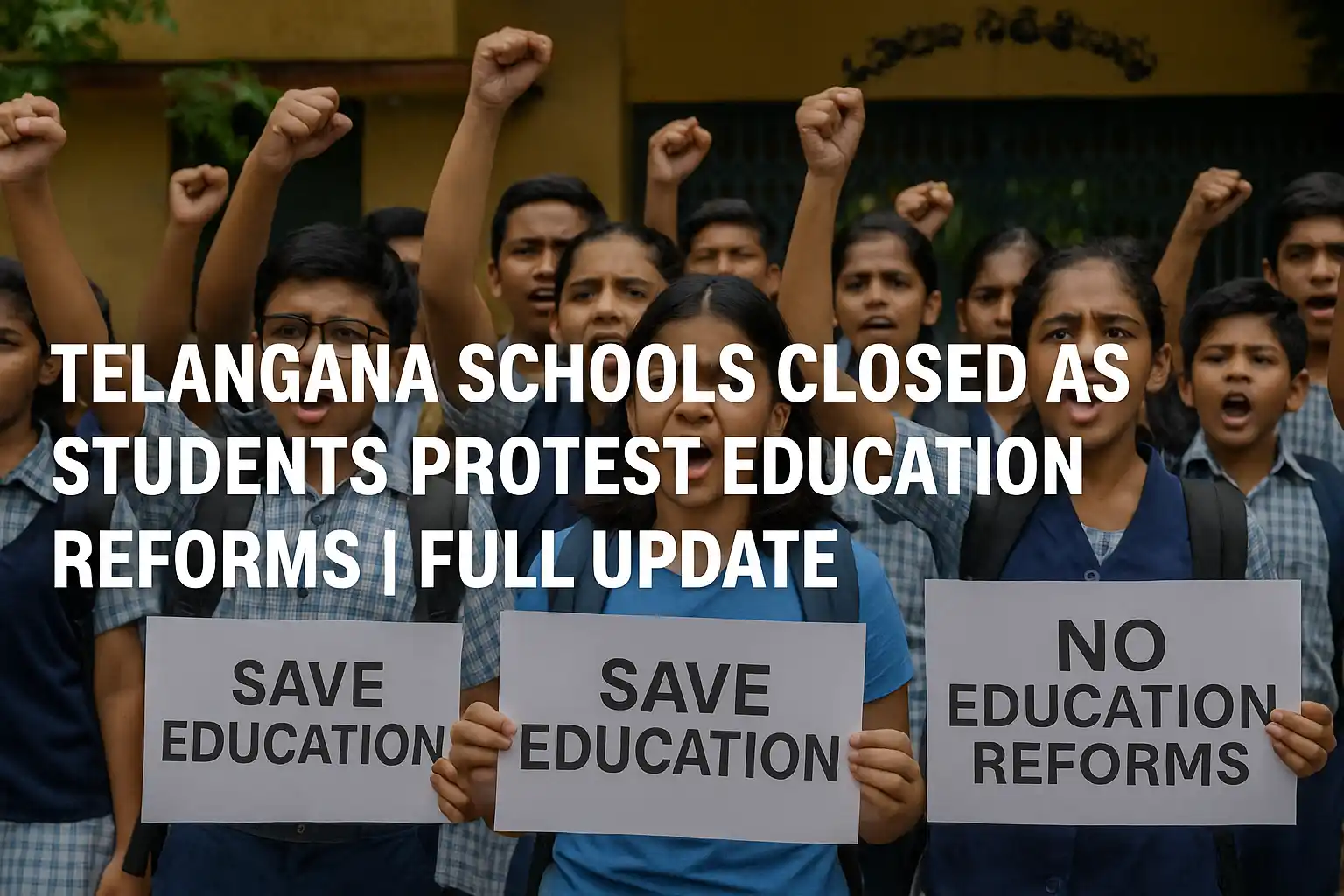
Hundreds of schools across Telangana remained shut recently after students from various government colleges and universities called for a state-wide bandh. The protest was organised in response to the government’s recent education policy changes, especially around fee reimbursement and the delay in releasing scholarships. Many colleges, especially in Hyderabad, Nalgonda, and Warangal, witnessed students taking to the streets, demanding answers from the authorities.
I’m writing about this because student protests over education reforms are not just about one policy—they reflect deeper issues in our education system. When the students themselves are forced to boycott classes and demand reforms, it shows that something is seriously broken. This issue is important for students, parents, educators, and policymakers alike. If left ignored, it can lead to long-term damage to our academic environment. Whether you’re a student affected by the bandh or someone trying to understand why it’s happening, this article will break down the situation and explain what’s really going on.
Why Are Telangana Students Protesting?
The student-led bandh was primarily driven by three major concerns:
- Delay in Fee Reimbursement: Many students from economically weaker sections depend on the state’s fee reimbursement scheme. With delays stretching for months, students are struggling to pay college dues, buy study materials, or even appear for exams.
- Pending Scholarships: Scholarship money that helps lakhs of students with basic expenses like books, travel, and hostels has not been credited in time. Some say they haven’t received payments for over a year.
- Uncertainty Around New Education Policies: The state government’s new education policy, including changes in syllabus structure and internship guidelines for degree students, has caused confusion. Students claim they were not consulted before these reforms were implemented.
Student unions like PDSU (Progressive Democratic Students Union), AISF (All India Students Federation), and SFI (Students Federation of India) were at the forefront of the protests. They blocked roads in several districts and held dharnas in front of college campuses, demanding an immediate response from the government.
Schools and Colleges Affected
Due to safety concerns and the fear of unrest, several schools and colleges declared a holiday on the day of the bandh. Hyderabad, Karimnagar, Nalgonda, and Mahbubnagar reported widespread closures.
- In Hyderabad, major institutions like Osmania University and several private colleges suspended regular classes.
- In Warangal, buses were stopped by protestors in front of government colleges.
- In Nizamabad and Khammam, students staged sit-ins in front of district collector offices.
The state transport system was also partially disrupted in some places as students blocked roads, particularly around educational hubs.
What Students Are Demanding
Here are the key demands raised by protesting students:
- Immediate clearance of pending scholarship dues
- On-time fee reimbursement for all eligible students
- Greater transparency in the implementation of education reforms
- Regular dialogue with student unions before making policy changes
Many student leaders also criticised the state for focusing more on infrastructure than academic welfare. They argue that building new colleges is not enough if existing students can’t afford to attend or complete their studies due to delayed funds.
Government Response So Far
The state education department has acknowledged the issue but has not given a clear deadline for the pending fee reimbursements or scholarships. While some officials claimed that the funds would be disbursed “soon”, no official notification has been released at the time of writing.
A few ministers also appealed to the students to maintain peace and resume classes, but the protestors have warned of more agitation if their demands are not met in the coming weeks.