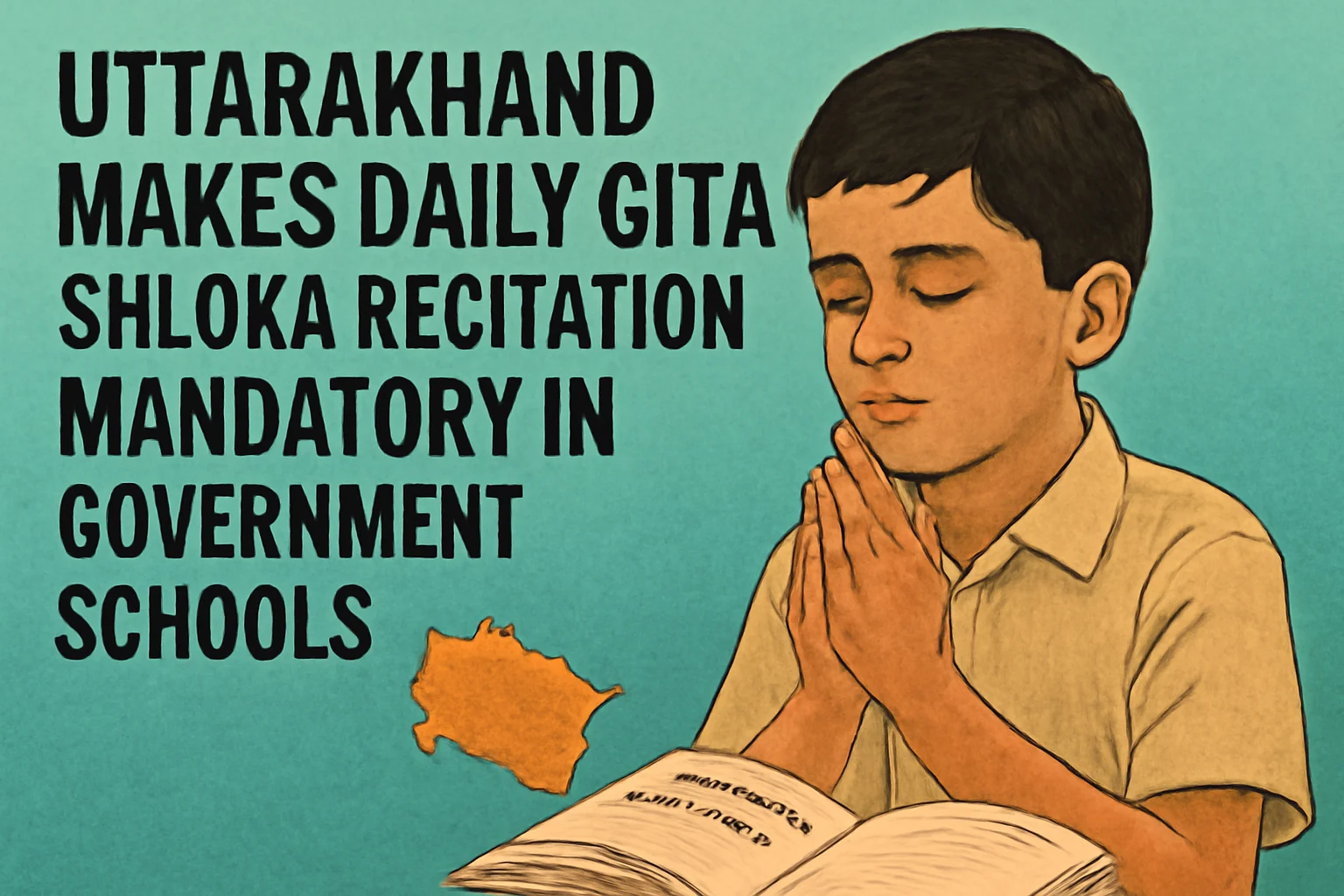
The Uttarakhand government has made it compulsory for all government schools in the state to include the daily recitation of shlokas from the Bhagavad Gita. This announcement was made by Chief Minister Pushkar Singh Dhami during a public address on July 16, 2025. The new rule is expected to be implemented across primary and secondary government schools starting this academic session. According to the government, the move aims to build moral character and instil Indian cultural values among students from a young age.
I am writing about this topic because education is not just about textbooks and exams—it’s also about values, ethics, and identity. The state’s decision to incorporate Gita shlokas in the school routine has sparked discussions across the country. Some see it as a step towards cultural education, while others are questioning the secular nature of government institutions. It’s important to unpack the government’s intent, how this decision may affect students and teachers, and how parents are reacting to it. This article aims to give you a full picture so you can decide for yourself where you stand on the issue.
What the Government Has Announced
Chief Minister Pushkar Dhami said that reading the Bhagavad Gita is not just about religion but about understanding India’s ancient wisdom and ethical teachings. He added that students will benefit from learning life lessons, discipline, and clarity of thought from Gita shlokas.
According to the government’s directive:
- Gita shloka recitation will happen during the morning assembly in all government schools
- Teachers will be trained to guide students through proper pronunciation and understanding
- The education department will issue a standard list of selected shlokas suitable for various age groups
Purpose Behind the Initiative
The state government has framed the move as part of a larger effort to promote value-based education. Officials argue that just like yoga and meditation are now globally accepted for their mental health benefits, the Gita too offers universal values that are relevant even today.
Some key objectives of the decision:
- Promote ethical thinking and self-discipline among students
- Help young minds reflect on larger questions of life and responsibility
- Strengthen emotional well-being through ancient Indian philosophy
- Reconnect children with India’s spiritual and literary heritage
Concerns from Some Quarters
However, the move hasn’t gone unchallenged. Critics, including education rights groups and opposition parties, have raised a few concerns:
- Whether making Gita recitation compulsory violates the secular principles of government schools
- How students from non-Hindu backgrounds will be accommodated
- If there will be an option for parents to opt their children out of this practice
- Whether the focus on religious texts will take time and attention away from core subjects like math, science, and language
There are also debates on whether other religious or philosophical texts will be included for students of different backgrounds, or if this initiative will remain exclusive to Hindu scriptures.
What Schools and Teachers Are Saying
Some school teachers welcomed the decision, saying it adds variety to morning assemblies and brings in a layer of moral discussion that often gets missed in daily curriculum. Others are unsure about how to balance this with time constraints and syllabus pressure.
A primary school teacher in Dehradun shared that while she personally appreciates the teachings of the Gita, she’s waiting for proper training and clear instructions from the education department on how to implement this in a balanced way.
Parental Reactions
Parents too are divided. While some are happy that their children will now be exposed to Indian philosophy and traditional values, others feel it should have been made optional. A few parents have also raised the issue of inclusivity, especially in schools where the student population is diverse.
Will This Set a Precedent for Other States?
Uttarakhand’s move could influence similar decisions in other states, especially those ruled by the BJP. However, it also puts a spotlight on the larger national debate around how much cultural or religious content should be included in public education.