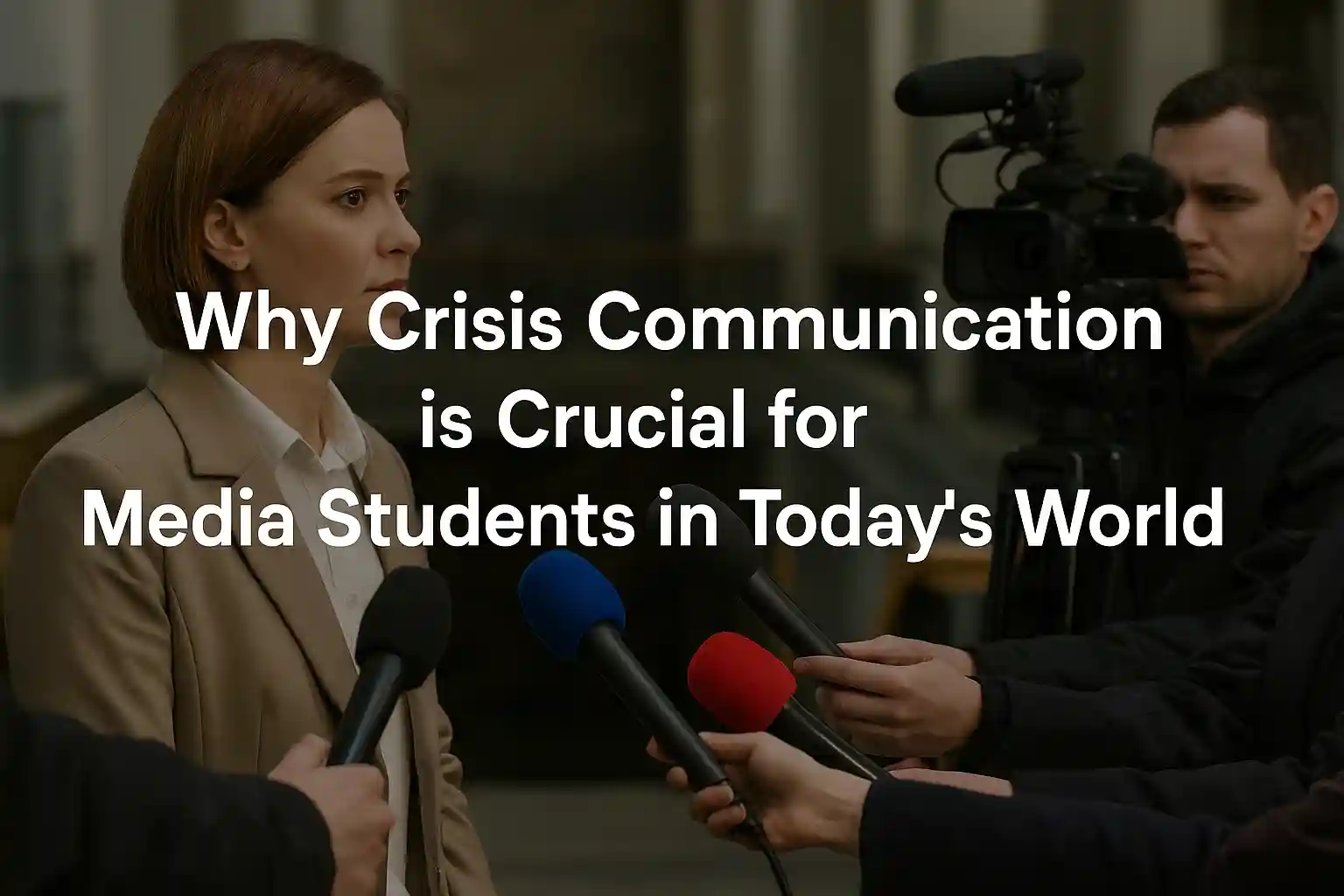
When a crisis strikes—be it a natural disaster, political turmoil, a corporate scandal or even a social media backlash—the first thing people look for is clear and reliable communication. This is where trained media professionals step in. Crisis communication is not just about reporting the facts; it is about ensuring accuracy, empathy and responsibility while delivering timely information. For students pursuing media studies, learning this skill is no longer optional. It prepares them to handle real-world challenges with professionalism and integrity.
I chose to write about this because media students often focus on technical skills like reporting, editing or digital content creation, but crisis communication tends to be overlooked. In reality, the ability to respond to emergencies, manage information flow and avoid misinformation is what separates a good journalist or PR professional from a great one. At a time when news spreads faster than ever through social media, even a small misstep can create panic or damage reputations. By mastering crisis communication, students can build credibility, trust and resilience, all of which are essential for their careers and for society at large.
What is crisis communication
Crisis communication refers to the strategies and practices used to share accurate and timely information during emergencies. It involves anticipating risks, preparing communication plans, and ensuring that the public, stakeholders and authorities receive clear updates. For media professionals, it is about balancing speed with responsibility and making sure that facts are verified before being shared.
Why it matters for media students
- Misinformation spreads quickly: A single false post can reach millions within minutes. Students trained in crisis communication know how to verify and cross-check before publishing.
- High-pressure environments: Disasters and emergencies often come without warning. Media students must learn how to remain calm, prioritise facts and avoid sensationalism.
- Public trust depends on it: Once credibility is lost, it is difficult to regain. Proper crisis reporting helps build long-term trust with audiences.
- Career advantage: Employers in journalism, public relations, corporate communications and even government agencies value candidates who can handle crises effectively.
Skills media students should develop
- Fact-checking and verification techniques to avoid spreading rumours
- Empathy in storytelling, ensuring sensitivity while covering victims and affected communities
- Clarity in communication, using simple language to avoid confusion
- Understanding of digital platforms, including how to counter fake news on social media
- Preparedness for diverse scenarios, from health crises like pandemics to political unrest or environmental disasters
Real-world examples
The COVID-19 pandemic showed how crucial responsible reporting is. Journalists and communication professionals who provided verified health updates helped reduce panic, while misinformation caused confusion. Similarly, during natural disasters like floods or cyclones, timely updates from trained communicators have helped save lives by guiding people to safety. These examples underline why crisis communication training should be integrated into media education.
How institutions can support students
Media schools and universities can play a major role by:
- Introducing specialised courses on crisis reporting and communication ethics
- Conducting simulation exercises where students practice handling mock crisis scenarios
- Encouraging collaboration with disaster management authorities for real-world exposure
- Training students in social media monitoring and fact-checking tools