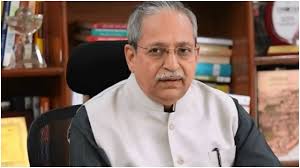
At the 36th Foundation Day of the Association of Indian Management Schools (AIMS), Dr. H. Chaturvedi stressed that higher education will be the driving force if India wants to become a developed nation by 2047. He highlighted that universities and management institutes need to go beyond routine teaching and focus on innovation, research, and global competitiveness.
I chose to write about this because the vision of India at 2047 is not just a government slogan but a collective mission. Education plays the most crucial role in shaping the country’s growth trajectory. As someone deeply invested in education-related developments, I see Dr. Chaturvedi’s message as a reminder that higher education cannot be treated as a secondary priority. It is important to discuss this now because the next 20 years will define whether India can truly transform into a developed economy. Highlighting these views will also make students, educators, and policymakers reflect on their role in this national journey.
The Role of Higher Education in India’s Growth
Dr. Chaturvedi pointed out that higher education is not just about creating employable graduates. It must focus on building leaders, innovators, and entrepreneurs who can contribute to the economy in a bigger way. According to him, management education in particular must prepare students for global challenges, rather than limiting them to classroom theories.
Key Points Shared at AIMS 36th Foundation Day
- Higher education must drive exponential growth to make India a developed nation by 2047
- Institutes should prioritise innovation, research, and global collaborations
- Management education should produce leaders who can handle global-scale challenges
- The focus should be on quality, not just quantity of graduates
- Collaboration between academia, industry, and government is crucial for growth
Why Innovation and Research Matter
Dr. Chaturvedi reminded that countries that progressed rapidly—like South Korea and Singapore—invested heavily in research and innovation. India too must take the same route. He urged management schools to integrate skill-based training and encourage entrepreneurship, so that graduates do not only seek jobs but also create them.
A Call for Collective Action
Education experts, faculty members, and policymakers present at the event agreed that India’s demographic advantage will only be meaningful if the youth are given world-class higher education. This is the time to bridge the gap between what is taught in classrooms and what the industry and society actually need.