The Government of India has approved financial support of Rs 432 crore to strengthen the Andhra Pradesh model of education, which focuses on school transformation, digital learning, and skill-based education. This decision highlights how the state’s reforms are now being seen as an example for other regions, especially for their focus on quality infrastructure and student-friendly initiatives.
I chose to write about this because education reforms often sound like policy decisions on paper, but their impact on children, teachers, and parents is very real. Andhra Pradesh has been experimenting with different ideas like Nadu-Nedu for school infrastructure, bilingual textbooks, digital classrooms, and skill training for students from an early age. Now, with the Centre’s recognition and funding, it shows that these efforts are being taken seriously at the national level. It is important to understand this because when a model like this gets support, it has the potential to influence educational policies in other states as well. For parents and educators, it signals a possible change in the way schooling could look in the future—more modern, inclusive, and aligned with real-world skills.
What is the Andhra Pradesh Education Model?
The state has been working on transforming its schools through:
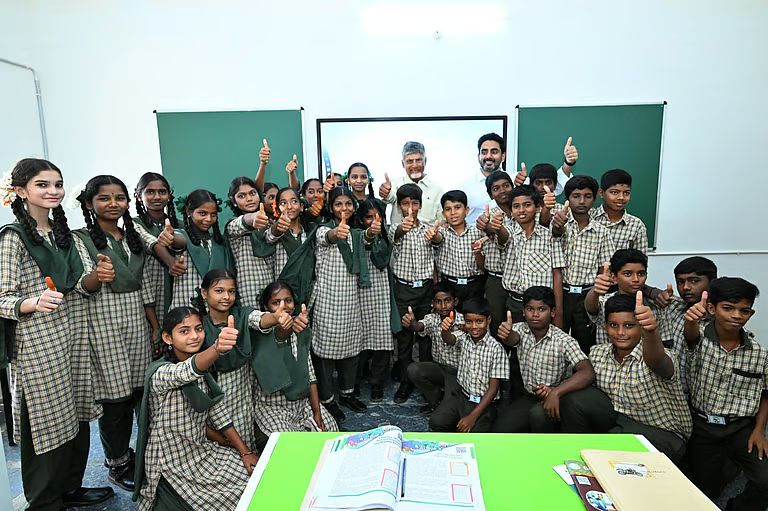
- Nadu-Nedu Programme: Modernising schools with new classrooms, labs, toilets, and better infrastructure.
- Digital Learning Tools: Smart TVs, tablets, and e-content for students.
- Bilingual Education: Textbooks and teaching in both English and Telugu to improve comprehension.
- Skill Development: Focus on practical skills along with academic subjects.
This multi-layered approach aims to reduce the urban-rural gap in education and give every child equal access to quality learning.
Why the Centre’s Funding Matters
The allocation of Rs 432 crore is significant because it is not just for infrastructure but also for scaling up digital learning and vocational training. This means more government schools will be able to set up digital classrooms, improve lab facilities, and provide training that helps students prepare for higher education and jobs.
Such funding also sets an example for other states to adopt similar reforms. If Andhra Pradesh can successfully implement and show measurable results, it can inspire states like Telangana, Tamil Nadu, or Odisha to replicate the model.
Impact on Students and Teachers
- Students from rural areas will have access to modern classrooms and better facilities.
- Teachers will get training to adapt to digital tools and bilingual teaching methods.
- Students will be better prepared for competitive exams and higher studies.
- Parents will feel more confident in sending their children to government schools instead of shifting to private institutions.
Challenges Ahead
While the funding and recognition are positive, challenges remain. Implementing reforms across thousands of schools requires strong monitoring. Training teachers in digital learning and ensuring content is accessible to all children, including those from disadvantaged backgrounds, will be key. Another challenge is sustaining these changes beyond the initial phase of funding.