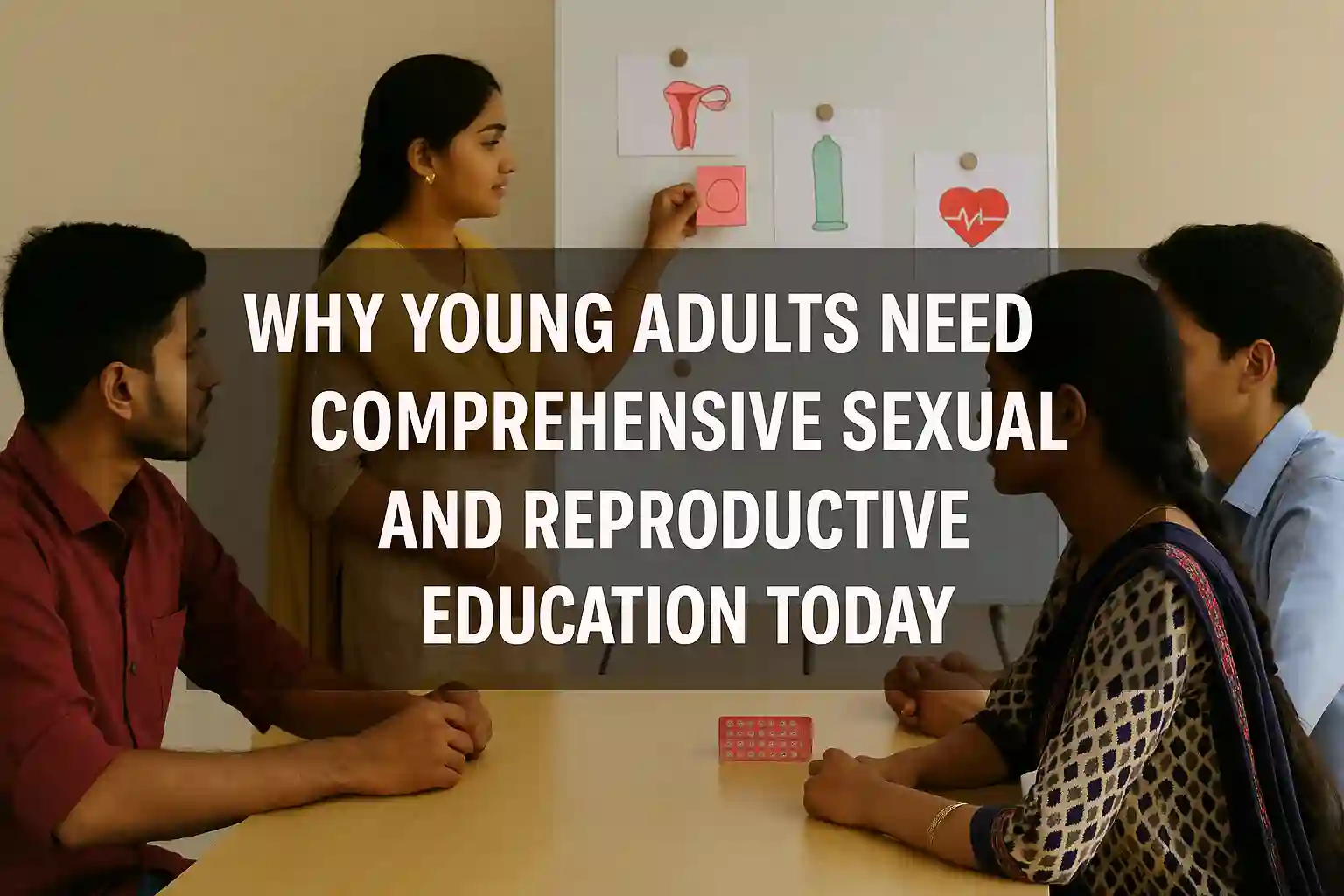
Comprehensive sexual and reproductive education (CSRE) is not just about learning biology or basic health facts. It covers a wider understanding of consent, relationships, safe practices, and reproductive rights. For young adults, this knowledge is crucial because it helps them make informed decisions, avoid risky behaviour, and respect both their own health and that of others.
I am writing about this topic because in India and many other countries, open discussion on sexual and reproductive health is still treated as taboo. This lack of awareness leaves young people vulnerable to misinformation, unsafe practices, and social pressures. As someone who has seen how myths and half-knowledge create confusion among students, I believe that CSRE is not only about education but also about empowerment. It gives young adults the confidence to speak up, ask questions, and take responsibility for their health. In a time where social media often spreads misleading content, structured and fact-based education is more important than ever. This is not just a matter for schools but also for families and communities that want to see their children grow into responsible and confident adults.
What Comprehensive Sexual and Reproductive Education Covers
CSRE goes beyond textbook knowledge and includes:
- Understanding puberty, menstruation, and reproductive health
- Learning about consent and healthy relationships
- Awareness about contraception and preventing sexually transmitted infections (STIs)
- Addressing myths and cultural taboos around sex
- Promoting gender equality and respect for diversity
By covering these areas, students learn not only about physical health but also about mental and emotional well-being.
Why It Matters for Young Adults
Young adulthood is a stage where people face pressure from peers, society, and media. Without the right information, they may fall into unsafe practices or carry harmful stereotypes. Comprehensive education helps in:
- Reducing unwanted pregnancies among teenagers
- Preventing the spread of STIs
- Building respect in relationships
- Breaking myths about sexuality and gender roles
- Boosting self-confidence in making personal choices
According to UNESCO, countries that have introduced CSRE have reported lower rates of adolescent pregnancy and better awareness about consent.
Challenges in Implementing CSRE
In India, the biggest challenge is the hesitation to talk about sexual health openly. Many schools avoid the subject, fearing backlash from parents or communities. Teachers themselves may not feel comfortable teaching it. This gap pushes young adults to turn to unreliable sources such as social media or peers, where misinformation is common.
Another challenge is cultural stigma. In many households, sex is a forbidden topic, making it difficult for young people to seek guidance from parents. This silence creates shame and guilt, which further harms their mental health.
How We Can Move Forward
To make CSRE effective, several steps are necessary:
- Training teachers to handle the subject sensitively and factually
- Involving parents and community leaders to reduce resistance
- Using interactive workshops and discussions instead of rote learning
- Including mental health, consent, and relationship skills as core elements
- Ensuring gender-sensitive and inclusive language in education material
If schools, families, and policymakers work together, CSRE can become a strong foundation for healthier and more responsible generations.