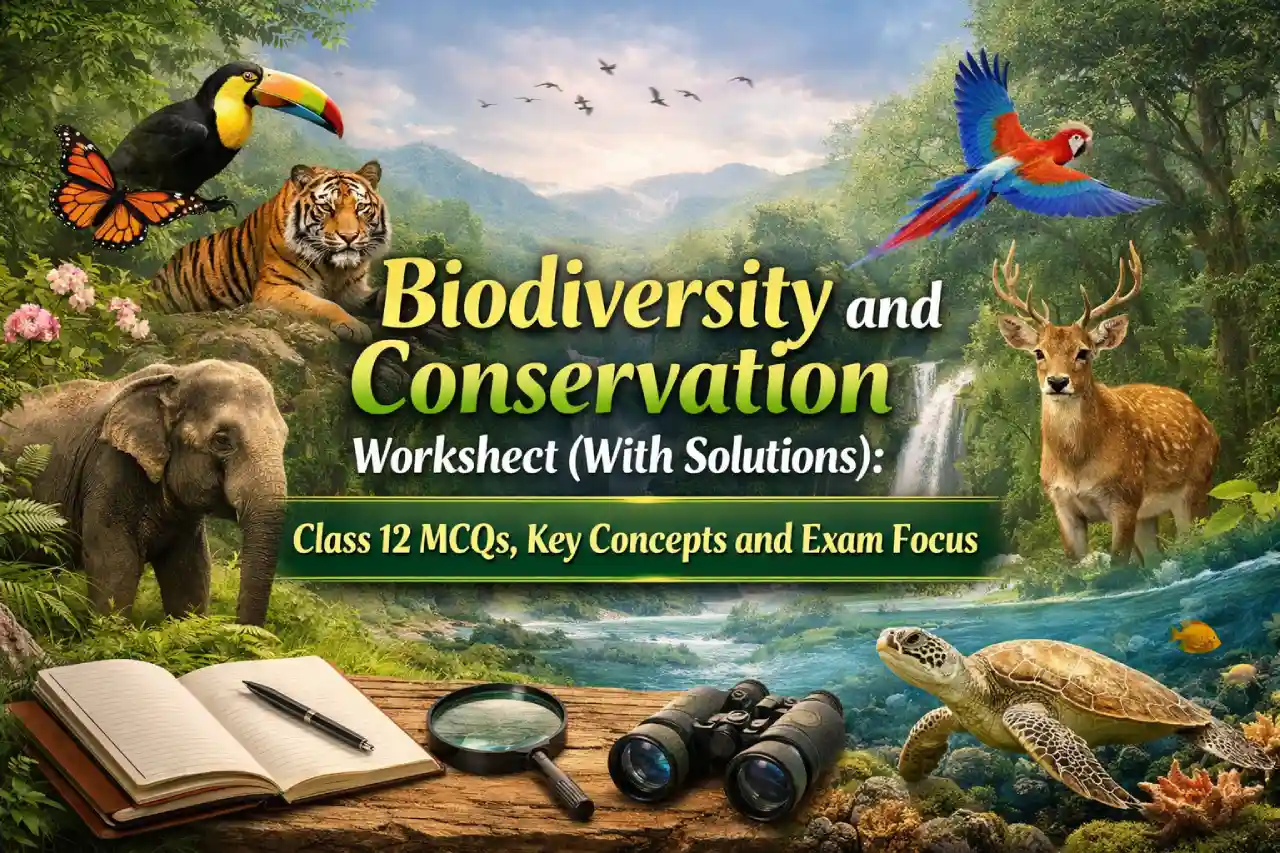
This Biology worksheet on Biodiversity and Conservation, prepared for Class 12 CBSE students, is mainly designed for board exam and NEET-oriented preparation. It contains 75 multiple-choice questions, all framed directly from NCERT concepts. The worksheet covers biodiversity levels, biodiversity hotspots, endemic and invasive species, conservation strategies, wildlife protection laws, biosphere reserves, extinction categories, ecosystem services, and important national and international conservation programmes. Overall, the worksheet reflects the kind of factual, concept-based, and application-oriented questions students regularly face in Class 12 board exams and competitive entrance tests Biodiversity and Conservation W….
I am writing about this worksheet because Biodiversity and Conservation is a chapter that looks theory-heavy but is actually very scoring if studied correctly. Students often struggle due to the large number of terms, examples, years, locations, and conservation categories involved. A well-structured worksheet like this helps convert NCERT text into exam-ready MCQs. By analysing the questions carefully, one can clearly identify which facts are repeatedly tested and how NCERT lines are converted into direct one-mark questions.
Structure of the Biodiversity and Conservation Worksheet
The worksheet consists of 75 MCQs, with each question carrying one mark. The questions are largely direct, but the options are closely framed, which tests accuracy and careful reading. The difficulty level ranges from easy to moderate, making it suitable for both revision and self-assessment before exams.
Most questions are fact-based, but many also test conceptual understanding, especially in areas like conservation strategies, extinction categories, and biodiversity patterns.
Biodiversity Levels and Species Diversity
Several questions focus on basic biodiversity concepts, including:
- Genetic, species, and ecosystem diversity
- Species richness and species evenness
- Regions showing maximum and minimum biodiversity
- Groups with highest species diversity such as insects and plants
These questions test whether students understand biodiversity as a measurable concept rather than just a definition.
Biodiversity Hotspots and Indian Regions
A significant part of the worksheet is dedicated to biodiversity hotspots and Indian geography. Questions include:
- Identification of biodiversity hotspots in India
- Western Ghats and Eastern Himalayas as hotspot regions
- Endemism in restricted geographical areas
- Regions with maximum biodiversity in the Indian subcontinent
Such questions are very common in board exams and NEET.
Endemic, Invasive and Keystone Species
The worksheet includes multiple questions on species classification, such as:
- Meaning of endemism
- Invasive alien species like Lantana, Eichhornia, and African catfish
- Keystone species and their ecological importance
- Species with high ecological impact despite low biomass
These questions test conceptual clarity and understanding of ecological balance.
Extinction, Threat Categories and Red Data Book
Several MCQs focus on extinction and conservation status. Topics covered include:
- Extinct, endangered, vulnerable, and critically endangered species
- Criteria used for classifying threatened species
- Role of the Red Data Book
- Examples of threatened and extinct animals like dodo and passenger pigeon
These questions require clear understanding of definitions and examples.
Download this Biodiversity and Conservation PDF File: Click Here
In Situ and Ex Situ Conservation Methods
Conservation strategies form a major section of the worksheet. Students are tested on:
- In situ conservation through national parks, sanctuaries, and biosphere reserves
- Ex situ conservation methods such as seed banks, cryopreservation, botanical gardens, and zoos
- Differences between in situ and ex situ conservation
- Zones of biosphere reserves including core, buffer, and transition zones
This is a high-weight area in exams.
National Parks, Sanctuaries and Conservation Projects
Many questions are based on Indian conservation efforts, including:
- Kaziranga National Park and Indian rhinoceros
- Periyar Wildlife Sanctuary
- Dudhwa National Park
- Project Tiger and Wildlife Protection Act
- Sacred groves and protected areas
These questions test awareness of Indian biodiversity and conservation initiatives.
Ecosystem Services and Human Impact
The worksheet also includes questions on ecosystem services and human activities. Topics include:
- Role of forests as lungs of the planet
- Economic importance of biodiversity
- Habitat loss, fragmentation, and overexploitation
- Major causes of biodiversity loss in tropical regions
Such questions connect biology with environmental awareness.
International Conventions and Biodiversity Laws
Some MCQs test knowledge of global conservation efforts, such as:
- Earth Summit held in Rio de Janeiro in 1992
- Convention on Biological Diversity
- Wildlife Protection Act amendments
- Global biodiversity distribution across countries
These questions are frequently asked in competitive exams.
What Students Can Learn from This Worksheet
From analysing this worksheet, a few clear points emerge:
- NCERT facts and examples are the backbone of questions
- Years, locations, and species names must be revised carefully
- Biodiversity hotspots and conservation methods are high-scoring areas
- Understanding definitions prevents confusion between similar terms
- Regular MCQ practice improves speed and accuracy
Overall, this Class 12 Biodiversity and Conservation worksheet is a strong revision resource for board exams and NEET preparation. It helps students organise NCERT content into exam-friendly questions and builds confidence in handling one-mark MCQs from this chapter.