
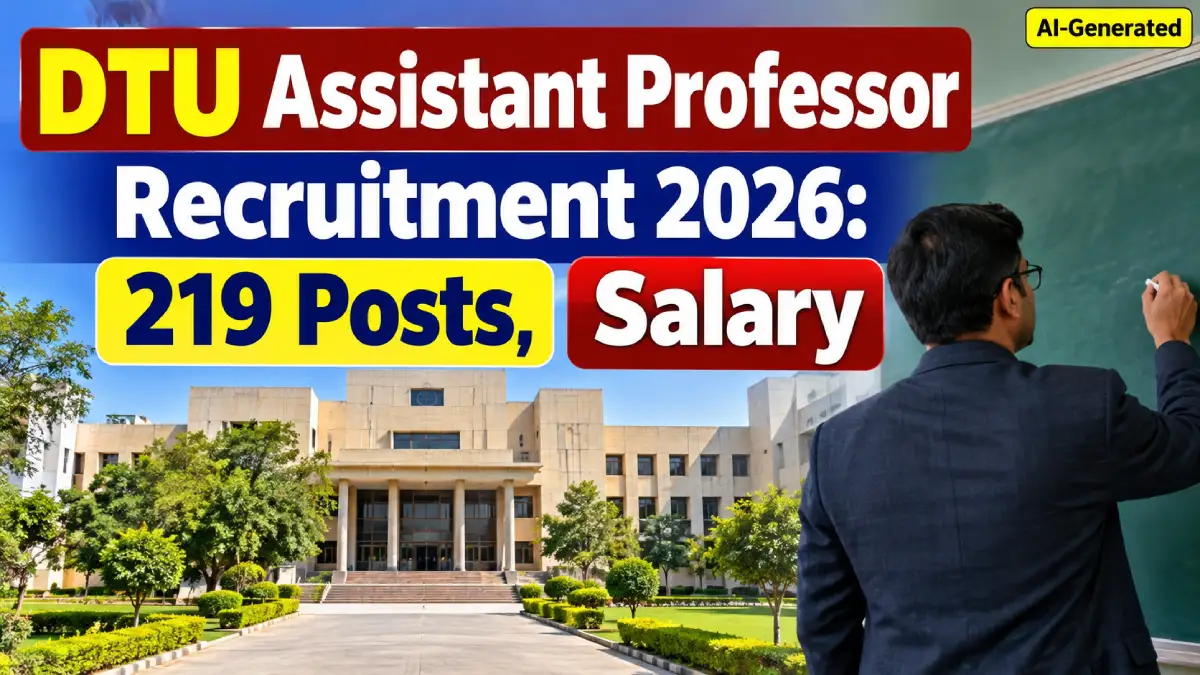
Delhi Technological University (DTU) has announced a major recruitment drive for candidates interested in academic careers. According to the recruitment notice published on the university's official website, 219 Assistant Professor vacancies are available across various academic departments.
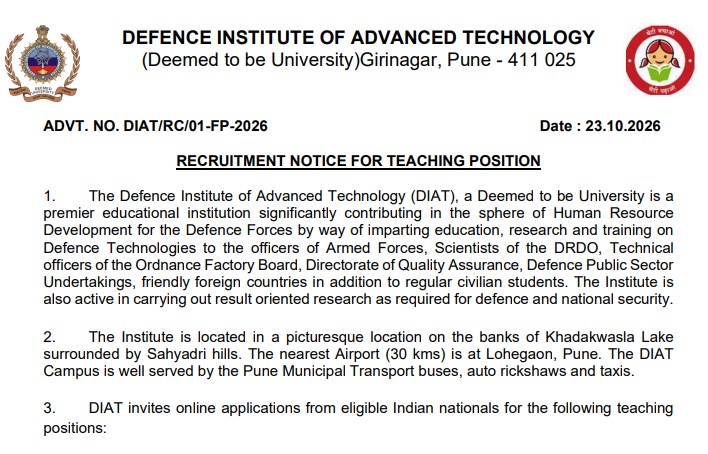
The opportunities cover subjects such as Computer Science, Civil Engineering, Mechanical Engineering, Applied Physics, Chemical Engineering, Mathematics and several other disciplines. The application process began on 23 October 2026, and eligible candidates can apply online until 7 December 2026 at 5 PM. The advertised pay scale is ₹56,100 to ₹1,77,500 under Level 10.
For candidates with strong academic backgrounds who want to work in higher education, this recruitment deserves attention. Teaching at a technical university can offer opportunities to contribute to classroom learning, research activities and the development of future engineers and professionals.
Applicants must understand that the eligibility requirements may differ between departments, particularly regarding educational qualifications and other academic criteria. In this article, I will explain the vacancy details, salary, age limit, application fee and selection process to help prospective applicants understand the recruitment. Before submitting a form, candidates should also read the official DTU advertisement carefully.
DTU Assistant Professor Eligibility Criteria 2026
The eligibility criteria for Assistant Professor positions depend on the relevant department and the applicable recruitment rules.
Candidates should not assume that a degree in any engineering or science discipline will automatically qualify them for every advertised post.
Educational Qualifications
Applicants must satisfy the educational requirements specified for their chosen department.
Depending on the discipline, the prescribed criteria may involve relevant undergraduate and postgraduate qualifications, a PhD or other academic credentials required under the applicable recruitment rules.
Candidates should carefully examine the detailed advertisement and the relevant annexure to understand the exact qualifications accepted for their preferred subject.
The university may also specify requirements relating to the minimum marks obtained in qualifying examinations, recognised institutions or other academic conditions.
Research and Academic Requirements
Academic recruitment may involve additional criteria relating to research, publications and other professional achievements, depending on the applicable rules and the position.
Candidates should check whether the relevant department requires research experience, published work, a particular qualification or any other academic credential.
Applicants who meet the basic educational requirements should still review these conditions before submitting their forms.
DTU Assistant Professor Application Fee
The newspaper report provides the following application fee details.
| Category | Fee |
|---|---|
| General | ₹2,000 |
| OBC | ₹2,000 |
| EWS | ₹1,000 |
| SC | ₹1,000 |
| ST | ₹1,000 |
| PwBD | Exempt, as reported |
How to Apply for DTU Assistant Professor Recruitment 2026
The application process is online. Candidates should use the recruitment link provided through the university's official website rather than relying on unofficial application portals.
Follow these steps to complete the application:
-
Visit the official DTU website.
-
Open the recruitment or advertisement section.
-
Find the Assistant Professor recruitment notice, Advertisement No. 04/2026.
-
Download and read the detailed advertisement and relevant annexures.
-
Identify the department and post that match your qualifications.
-
Open the official online application portal linked by DTU.
-
Complete the registration process and enter your personal, educational and professional details.
-
Upload the required documents in the prescribed format.
-
Pay the applicable application fee, if required.
-
Review the application carefully before submitting it.
-
Save the confirmation page and application details for future reference.

Comments ( 0)
Leave a Comment
No comments yet. Be the first to comment!