



In today's times, one of the biggest sources of confusion regarding careers is this: is it better to opt for a stable career, or to chase after a high-paying job? Many students and young professionals are currently seeking an answer to this simple question. On one hand, there is the security offered by government jobs or long-term stable professions; on the other, the attraction of high salary packages in the private sector, startups, and the tech industry is growing rapidly.
Particularly due to the growth of AI, data science, finance, and the digital industry, many individuals are now earning substantial salaries at a very young age. Making career decisions has become far more challenging than it was in the past.
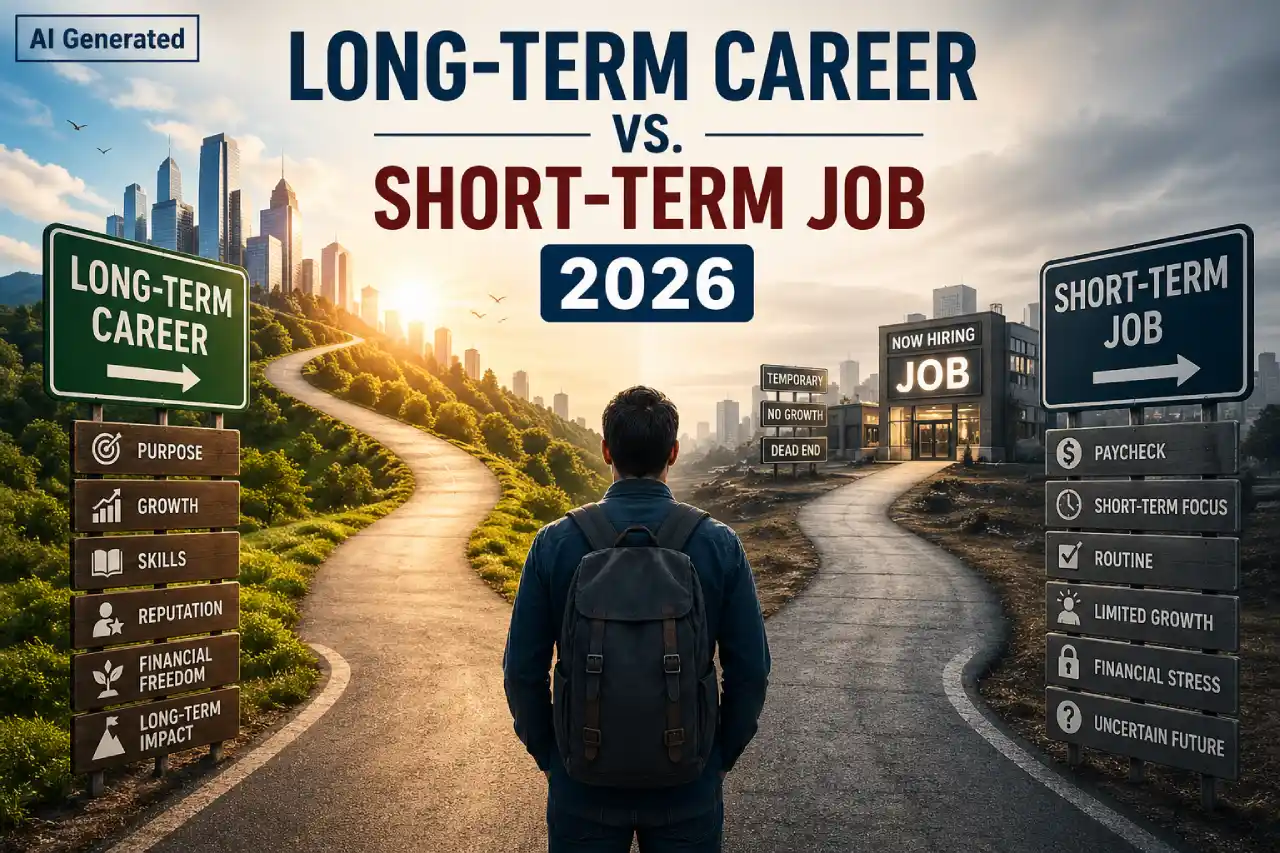
A stable career typically refers to a profession characterized by high job security, a regular income, a low risk of sudden discharge, and predictable long-term growth.
Government jobs, the teaching profession, the banking sector, and certain established corporate roles fall into this category. Many experts believe that a stable career contributes to greater peace of mind, particularly for those with family responsibilities; stability often becomes even more important than the salary itself.
Currently, driven by social media and startup culture, the attraction of high-paying jobs has surged rapidly, particularly within the IT sector, AI industry, investment banking, consulting, digital marketing, and international remote work. In these sectors, substantial salary packages are easy to understand at a comparatively young age. Many young professionals believe that securing a high-paying job plays a pivotal role in achieving financial freedom quickly.
According to career experts, both a stable career and a high-paying job come with their own distinct advantages and challenges. In their view, one should not choose a career based solely on salary; long-term skill development is of primary importance, work-life balance should not be overlooked, and job satisfaction constitutes a significant component of career success. Furthermore, some experts suggest that during the initial stages of a career, learning opportunities can be even more critical than the salary itself.
There are some major benefits of a stable career, which we have mentioned in brief form below:
- Lower Stress: Many stable jobs involve comparatively lower work pressure.
- Financial Predictability: Regular income makes future planning easier.
- Family Stability: Managing family planning and long-term commitments becomes easier.
- Long-Term Security: The risk of layoffs or sudden loss of income is lower.
On the other hand, high-paying jobs also offer some significant advantages. We have briefly discussed these below:
- Better Lifestyle: Travel, a luxury lifestyle, and financial independence can be achieved rapidly.
- Faster Wealth Creation: Savings and investments can be initiated at a young age.
- Faster Career Exposure: Working in high-paying sectors accelerates industry exposure.
- Networking Opportunities: A top-tier professional network is established.
People often accept a job only based on an attractive salary package, only to experience dissatisfaction later on.
Experts suggest that before making a career decision, it is crucial to consider the following factors: What is the work environment like? Are there opportunities for growth? What will be the impact on mental health? How much future stability does it offer? And does it facilitate skill development? It is not just the initial salary that matters; long-term career value is equally important.
Experts suggest that, currently, opportunities for both stable careers and high salaries are emerging, including government tech roles, PSU management positions, long-term corporate leadership roles, and specialised IT fields. In these types of careers, it is possible to attain both stability and a good salary. Therefore, smart upskilling and constant learning are now of main importance.
When choosing a career, students and young professionals should take the time to identify their personal interests, build relevant skills, and analyse market trends. Do not simply follow social media influencers; instead, focus on what brings you long-term happiness. Not everyone shares the same career goals; therefore, rather than making comparisons, the most important thing is to understand your own priorities and make decisions accordingly.



Comments ( 0)
Leave a Comment
No comments yet. Be the first to comment!