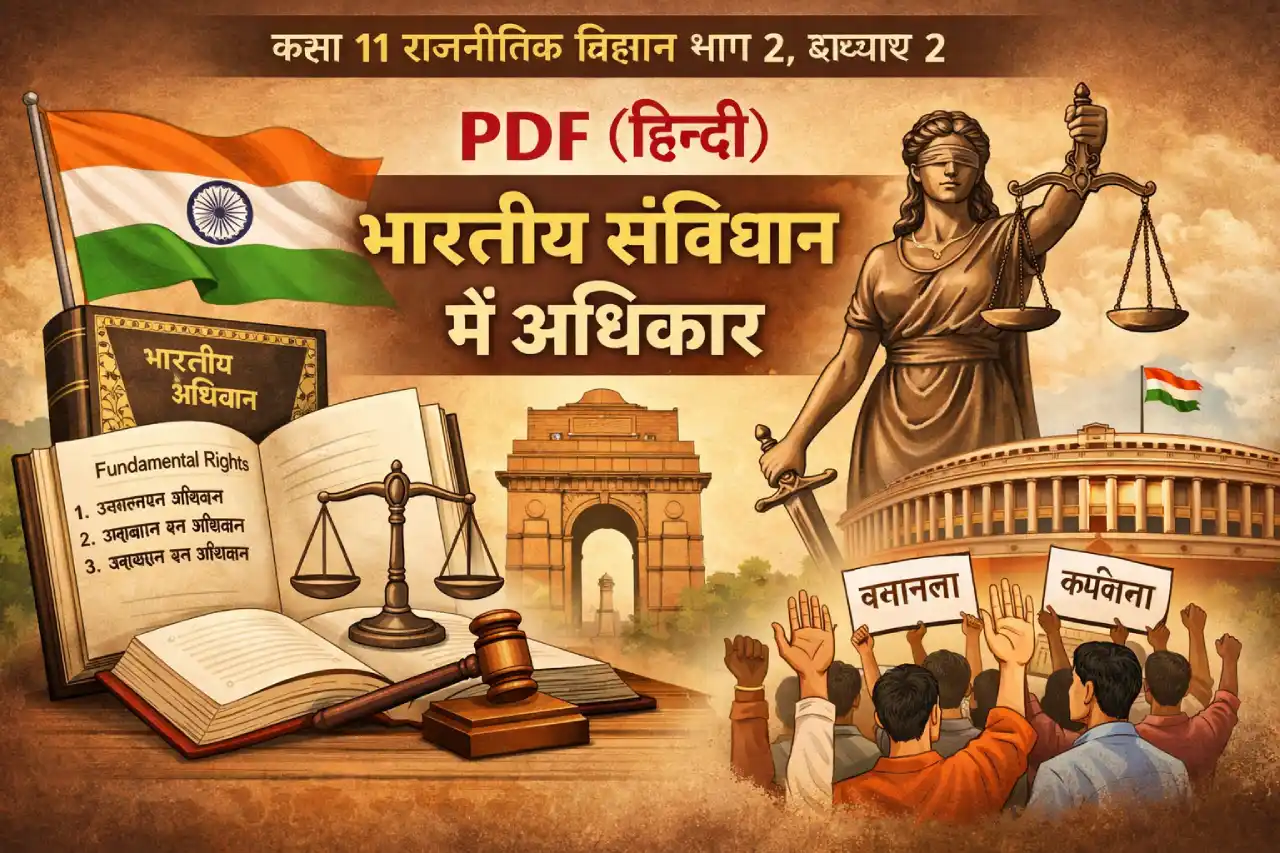
Chapter 2 of Class 11 Political Science Part 2 (Hindi Medium), titled भारतीय संविधान में अधिकार, explains the idea of Fundamental Rights guaranteed by the Indian Constitution. This chapter helps students understand what rights citizens enjoy, why these rights are essential in a democracy, and how they protect individuals from misuse of power. It clearly shows that rights are not just written promises but enforceable guarantees that ensure dignity, freedom, and equality for every citizen.
I decided to write about this chapter because Fundamental Rights affect our daily lives more than we often realise. Whether it is freedom of speech, equality before law, or protection against discrimination, these rights shape how we live, study, work, and express ourselves. Many students memorise the list of rights for exams but fail to understand their real purpose. This chapter bridges that gap by explaining why these rights were included in the Constitution and how courts protect them. In today’s time, when discussions around free speech, privacy, and equality are common, understanding this chapter helps students form informed opinions and become responsible citizens.
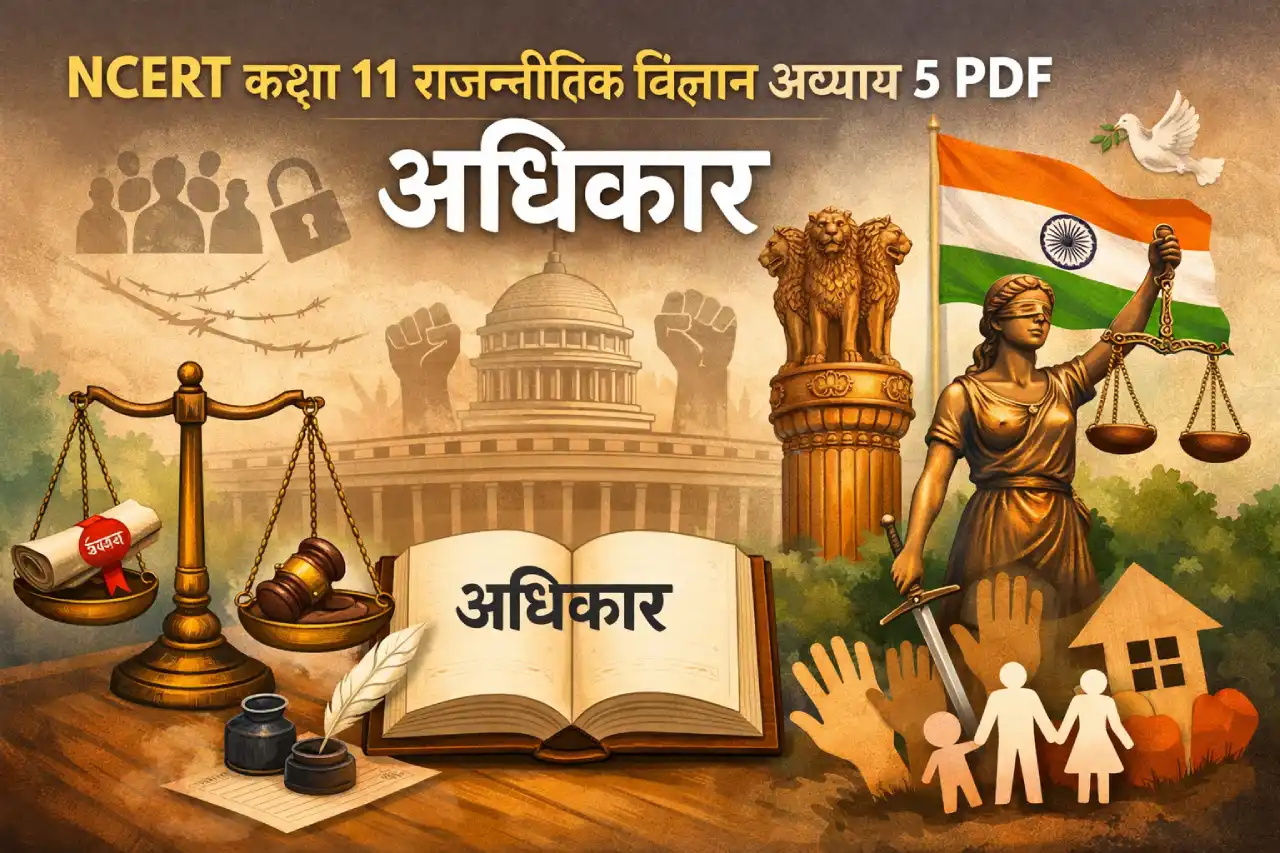
About Chapter 2: भारतीय संविधान में अधिकार
This chapter focuses on the meaning, scope, and importance of Fundamental Rights in India.
What Are Fundamental Rights?
Fundamental Rights are basic rights guaranteed by the Constitution to protect individuals against unfair treatment and abuse of power. They ensure that every citizen can live with freedom and self-respect.
These rights:
- Are legally enforceable
- Apply to all citizens
- Limit the power of the state
- Protect minorities and weaker sections
Types of Fundamental Rights
The chapter explains the six main categories of Fundamental Rights in India.
| Category | Description |
|---|---|
| Right to Equality | Equal treatment before law and protection from discrimination |
| Right to Freedom | Freedom of speech, movement, assembly, and profession |
| Right against Exploitation | Prohibition of forced labour and child labour |
| Right to Freedom of Religion | Freedom to practise, profess, and propagate religion |
| Cultural and Educational Rights | Protection of language, culture, and education of minorities |
| Right to Constitutional Remedies | Right to approach courts for protection of rights |
Why Fundamental Rights Are Important
The chapter explains that democracy cannot function properly without rights. Fundamental Rights:
- Protect individuals from arbitrary government actions
- Encourage participation in political and social life
- Promote equality and justice
- Strengthen democratic values
Dr B.R. Ambedkar described the Right to Constitutional Remedies as the “heart and soul” of the Constitution.
Reasonable Restrictions on Rights
Rights are not absolute. The Constitution allows reasonable restrictions to maintain public order, security, and morality. For example, freedom of speech does not allow hate speech or violence. This balance protects both individual liberty and social harmony.
Role of Judiciary in Protecting Rights
Courts play a crucial role in protecting Fundamental Rights. Citizens can approach the High Courts or Supreme Court if their rights are violated. Judicial review ensures that laws and government actions remain within constitutional limits.
NCERT Class 11 Political Science Part 2 Chapter 2 PDF Download (Hindi Medium)
Students can download the official NCERT PDF by following these steps:
- Visit the official NCERT website
- Click on E-Books
- Select Class 11
- Choose Political Science
- Open Part 2 – Indian Constitution at Work (Hindi Medium)
- Click on Chapter 2: भारतीय संविधान में अधिकार
- Download the PDF for study and revision
Always rely on the official NCERT website for accurate and updated study material.