


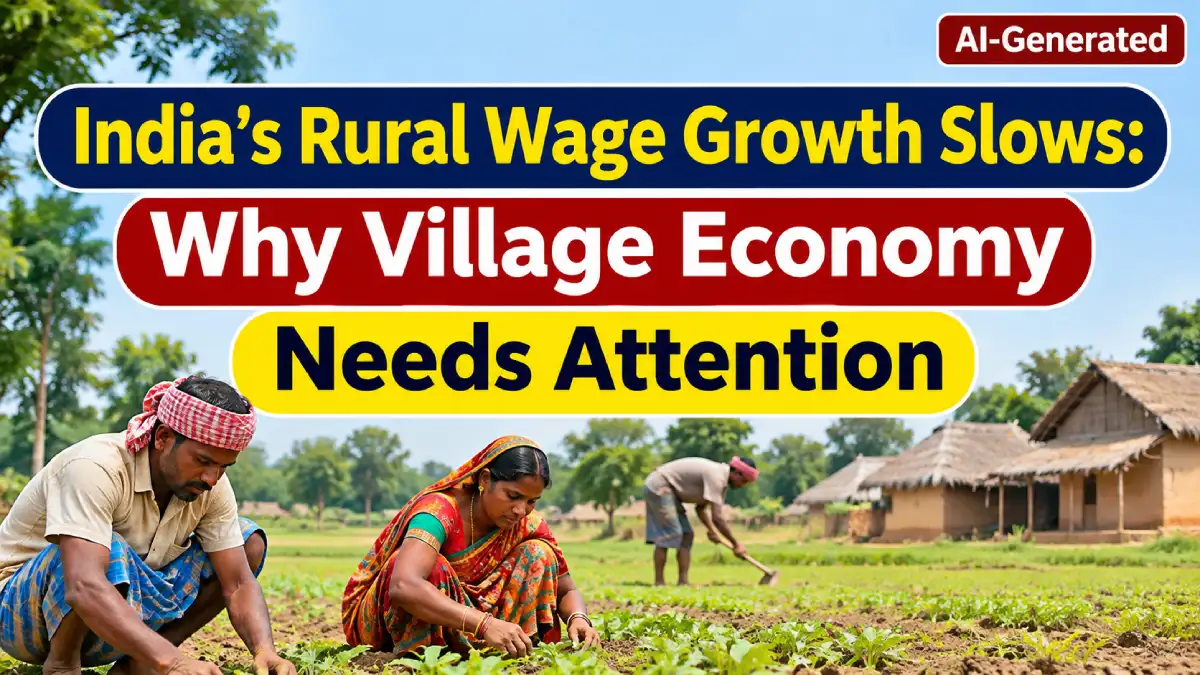
The condition of rural wages is becoming an important indicator of the challenges facing India's village economy. Agricultural and non-agricultural work support millions of rural households, but recent figures point to a worrying slowdown in wage growth.
Between July 2015 and June 2025, real agricultural wages increased by an average of just 1.3% annually, while non-agricultural wages grew by only 0.2%. These figures raise questions about rural purchasing power, employment opportunities and the overall strength of the rural economy.
The concern is not simply about how much workers earn. When wages fail to keep pace with rising living costs, families may find it harder to manage food, education, healthcare and other essential expenses.
The latest figures also suggest that the two major sources of rural livelihood-farming and non-farm activities-are not providing strong wage growth. Understanding this trend is important because rural demand plays a significant role in supporting businesses, consumption and economic activity across the country.
The Labour Bureau has been publishing wage data for 12 agricultural and 13 non-agricultural occupations every month since 1998. From July 2025, however, the system underwent significant changes. The Bureau revised its wage data collection and reporting methodology, expanded the number of villages covered and linked the figures with the revised Consumer Price Index for Agricultural Labourers (CPIAL).
The updated series now covers 34 states and Union Territories, compared with 20 major states under the earlier system. Since the coverage and methodology have changed, the new series cannot be directly compared with the old one. This is an important point when interpreting the latest rural wage figures.
The decade-long picture is particularly concerning. Between July 2015 and June 2025, real wages in agriculture grew at an annual rate of 1.3%, while non-agricultural wages recorded annual growth of only 0.2%. The report also highlights that wage growth has remained weak in the period following the COVID-19 pandemic. Between July 2019 and the subsequent period covered by the figures, agricultural wages increased by around 1.3% annually, while non-agricultural wages declined by 0.1%.
This difference matters because non-farm work is an important source of income for rural households that cannot depend entirely on agriculture. Construction, small businesses and other local occupations provide alternative employment, particularly when farming income is uncertain. If wages in these activities remain under pressure, workers may struggle to improve their financial position even when they find employment.
The figures also raise concerns about rural consumption. Lower real wage growth can restrict household spending and weaken demand for goods and services in village markets. If families have less money available after meeting essential expenses, local businesses may also feel the impact.
The situation calls for greater attention to both agricultural and non-agricultural employment. Improving rural job opportunities, supporting productive activities and ensuring better earnings for workers will be important for strengthening village incomes.
India's rural economy cannot depend on farming alone. The latest wage figures underline the need to pay closer attention to both sectors and understand why workers are seeing such limited improvement in their real earnings. A stronger rural economy will require more stable employment and better income opportunities for the people who keep it running.




Comments ( 0)
Leave a Comment
No comments yet. Be the first to comment!