If you’ve just completed your Class 12th with Physics, Chemistry, and Mathematics (PCM), you’re standing at one of the most important crossroads of your academic journey. Science with PCM opens up a wide range of career options—from traditional engineering courses to emerging fields like data science, architecture, and defence services. Whether you want to get into a professional course or explore creative and technical domains, there’s a path suited to your strengths and interests.
I’ve written this article because I know how overwhelming it can be to make career decisions after 12th, especially with so many options being thrown at you. Students are often pushed towards engineering without knowing the full spectrum of opportunities available to PCM students. It’s important to explore not just what’s popular, but what suits your aptitude and long-term goals. This guide is here to help students and parents understand the scope, demand, and outcomes of different career choices available after 12th PCM. The goal is to make sure you don’t pick a course just because everyone else is doing it, but because it genuinely aligns with what you see yourself doing in the future.
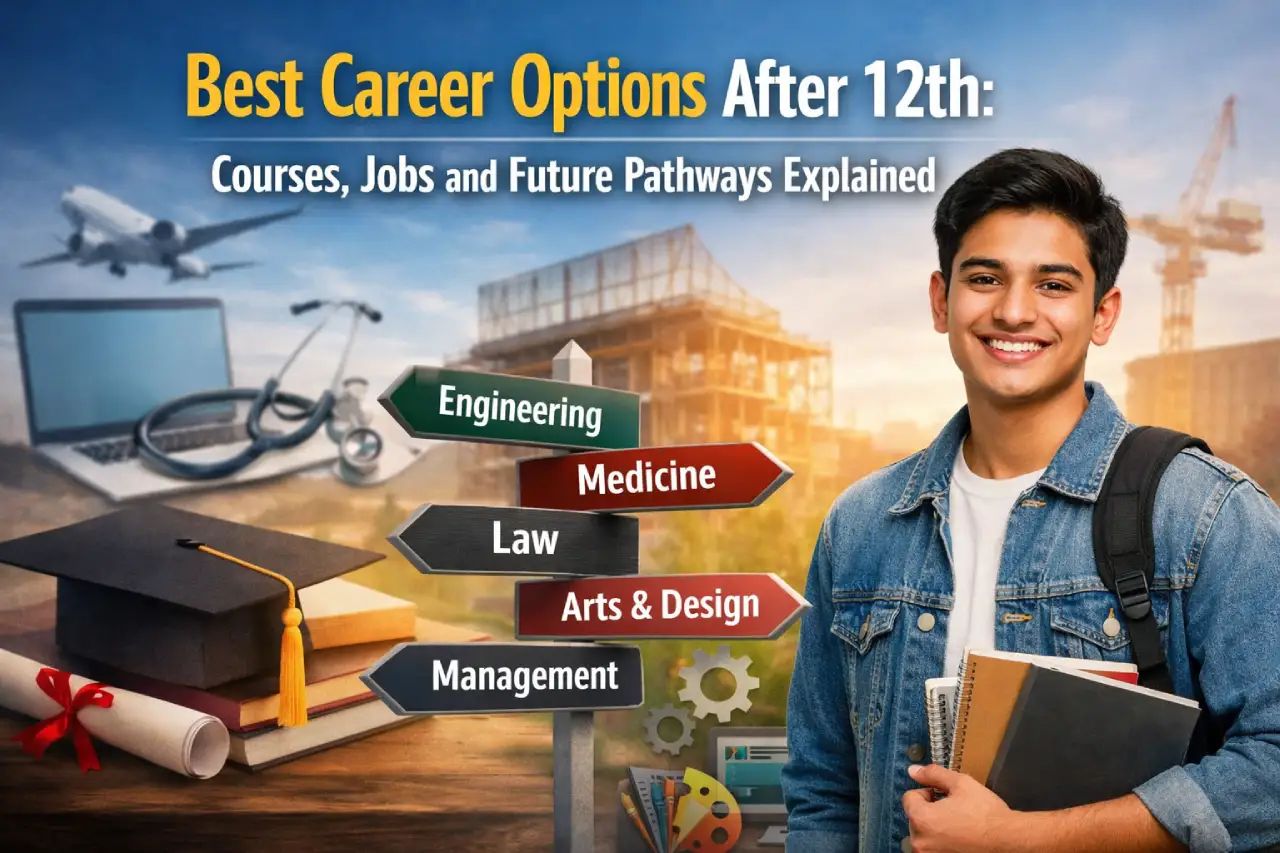
Top Courses and Career Options After 12th Science PCM
Choosing the right course depends on your interests, skills, and career goals. Here’s a detailed list of top options that PCM students can consider after Class 12.
1. Engineering (B.E. / B.Tech)
Engineering remains the most popular option among PCM students, and for good reason. There are various branches to choose from based on your interest.
Popular Engineering Streams:
- Computer Science Engineering
- Mechanical Engineering
- Civil Engineering
- Electrical and Electronics Engineering
- Aerospace Engineering
- Artificial Intelligence and Machine Learning
Entrance Exams: JEE Main, JEE Advanced, state-level exams like MHT CET, KCET, WBJEE
Why choose this path?
Engineering offers strong job prospects, a good salary range, and wide exposure. With India producing over 15 lakh engineers every year, the competition is high, but so are the opportunities in both private and government sectors.
2. Architecture (B.Arch)
If you have an interest in design, drawing, and creativity along with technical thinking, architecture could be a great fit.
Entrance Exam: NATA (National Aptitude Test in Architecture), JEE Main (Paper 2)
Course Duration: 5 years
Career Options: Architect, Urban Planner, Interior Designer, Landscape Architect
Architecture combines science with design. It’s for those who like to visualise spaces and build structures that are both functional and artistic.
3. Defence Services – NDA
For those interested in serving the nation, joining the Indian Armed Forces through NDA is a highly respected and adventurous career path.
Exam: NDA Entrance Exam conducted by UPSC
Eligibility: Only male candidates (girls can join later through other defence entries)
Fields: Army, Navy, Air Force
This career requires discipline, physical fitness, and leadership. It also offers job security, early promotions, and a unique lifestyle.
4. Data Science and Analytics
A rapidly growing field, data science is all about using numbers and software to make decisions and solve real-world problems.
Suggested Courses: B.Sc. in Data Science, B.Tech in Data Science, or certifications post a Computer Science degree
Skills Required: Maths, statistics, coding (Python, R), and problem-solving
Data scientists are in huge demand across sectors like finance, e-commerce, healthcare, and IT.
5. Commercial Pilot Training
If you dream of flying, this could be your calling. After 12th PCM, you can enrol in a commercial pilot training programme.
Eligibility: 10+2 with Physics and Maths, eyesight and fitness requirements
Institutes: Indira Gandhi Institute of Aeronautics, IGRUA, private flying schools
Cost: Training can cost ₹30–₹50 lakhs, but salaries in aviation are high
A pilot’s career offers both adventure and prestige, although it comes with a serious responsibility.
6. Merchant Navy
This field is for those who are looking for a career that combines travel with high income and technical roles.
Courses: B.Tech in Marine Engineering, Diploma in Nautical Science
Institutes: IMU (Indian Maritime University), Tolani Maritime Institute, etc.
Perks: Tax-free income (for most part), high salary, travel opportunities
It’s not for everyone—it requires staying at sea for long periods—but it’s rewarding for those who enjoy such a lifestyle.
7. Bachelor in Computer Applications (BCA)
While BCA is open to students from any stream, PCM students have a strong advantage due to their mathematical and logical reasoning background.
Duration: 3 years
Scope: Software development, web development, app development, cybersecurity
A BCA followed by MCA or other tech certifications can open up strong IT career options.
8. Bachelor of Science (B.Sc.) Courses
If you want to stick to core science, you can choose from specialised B.Sc. degrees.
Popular B.Sc. Courses:
- B.Sc. Mathematics
- B.Sc. Physics
- B.Sc. Statistics
- B.Sc. Aviation
- B.Sc. IT or Computer Science
You can go into teaching, research, or even prepare for exams like UPSC or banking alongside.
Comparison Table: PCM Career Paths
| Career Path | Duration | Entrance Required | Average Starting Salary |
|---|---|---|---|
| Engineering (B.Tech) | 4 Years | JEE, State CETs | ₹3–8 LPA |
| Architecture (B.Arch) | 5 Years | NATA, JEE Paper 2 | ₹3–6 LPA |
| NDA (Defence) | Depends | NDA Exam | ₹8–10 LPA (after training) |
| Data Science | 3–4 Years | Optional | ₹5–12 LPA |
| Pilot Training | 2–3 Years | Institute Tests | ₹10–20 LPA |
| Merchant Navy | 3–4 Years | IMU CET, others | ₹6–15 LPA |
| BCA | 3 Years | College-specific | ₹3–6 LPA |
| B.Sc. Courses | 3 Years | College-specific | ₹2–5 LPA |
Final Thoughts
The best career path after 12th PCM depends on what you want—not just marks or family pressure. Take time to research, attend career counselling if needed, and talk to seniors or professionals in those fields. There’s no single “best” course—it’s about what’s best for you.
Career decisions made after 12th often shape the next 10 to 15 years of your life, so it’s okay to take a few weeks or months to make a thoughtful choice. And remember, even if you take one path, you can always pivot later if you’re willing to work for it.