When you wake up for work every morning, do you feel excited about where you’re headed, or are you just counting days till the weekend? This is a question many working professionals face—am I just doing a job, or am I actually building a career? Understanding the difference between a job and a career is crucial because it impacts your satisfaction, income growth, learning curve, and even mental health in the long run.
I decided to write about this because I’ve seen too many people, especially fresh graduates, fall into the trap of chasing paycheques without thinking about long-term goals. There’s nothing wrong with doing a job to meet needs, but when people get stuck in that loop without any growth or purpose, frustration builds up. Knowing whether you’re in a job or on a career path can help you make smarter decisions, prepare better for the future, and ultimately do work that feels meaningful. So let’s break it down in the most practical way possible.
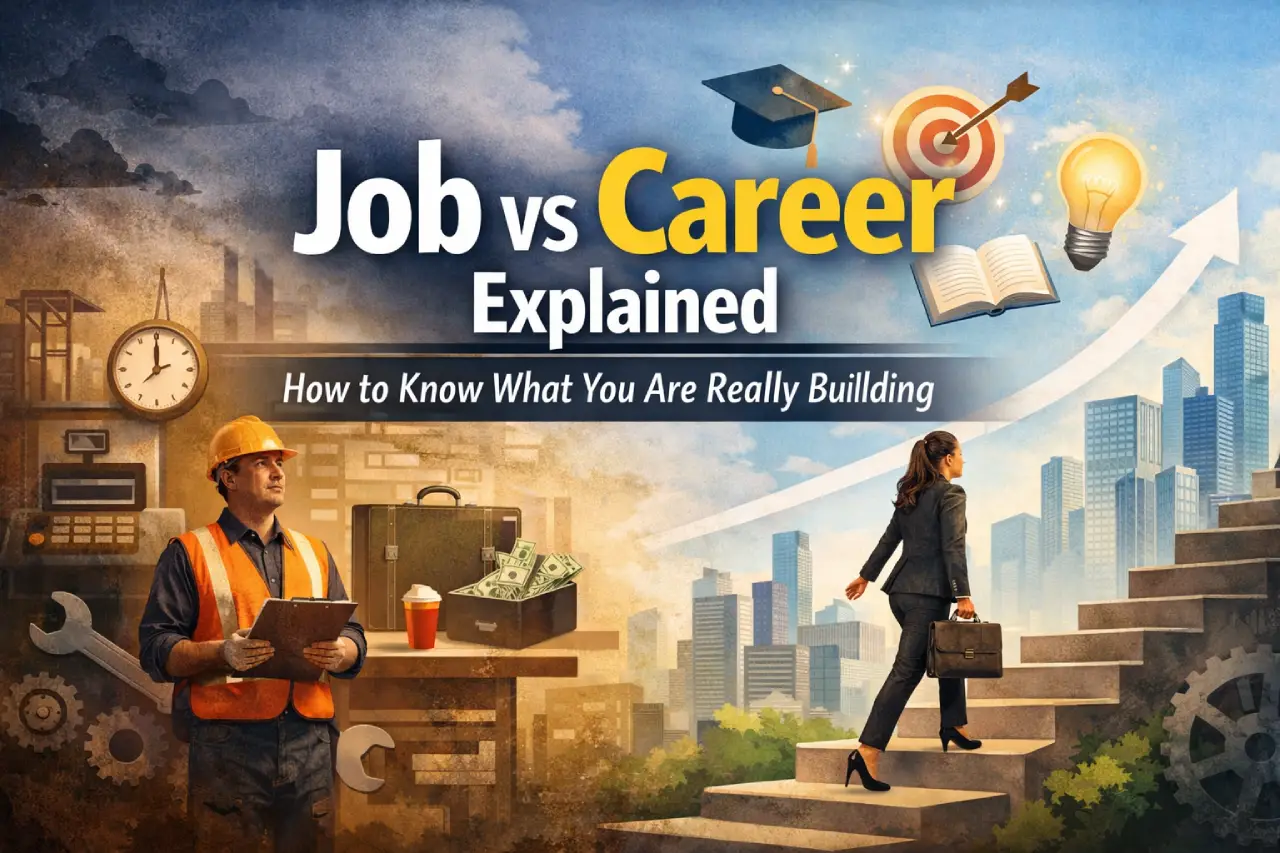
Job vs Career: What’s the Real Difference?
Though people often use the words interchangeably, they are not the same thing.
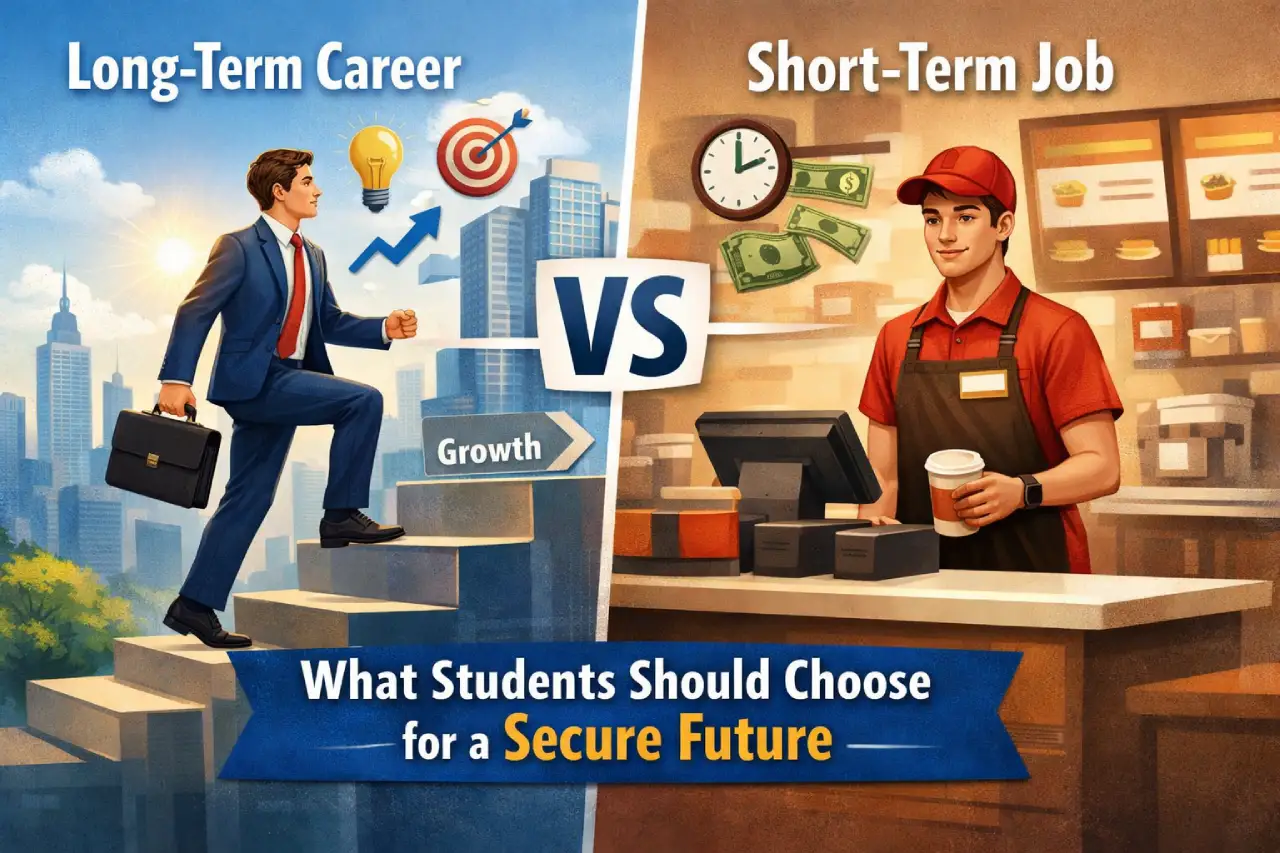
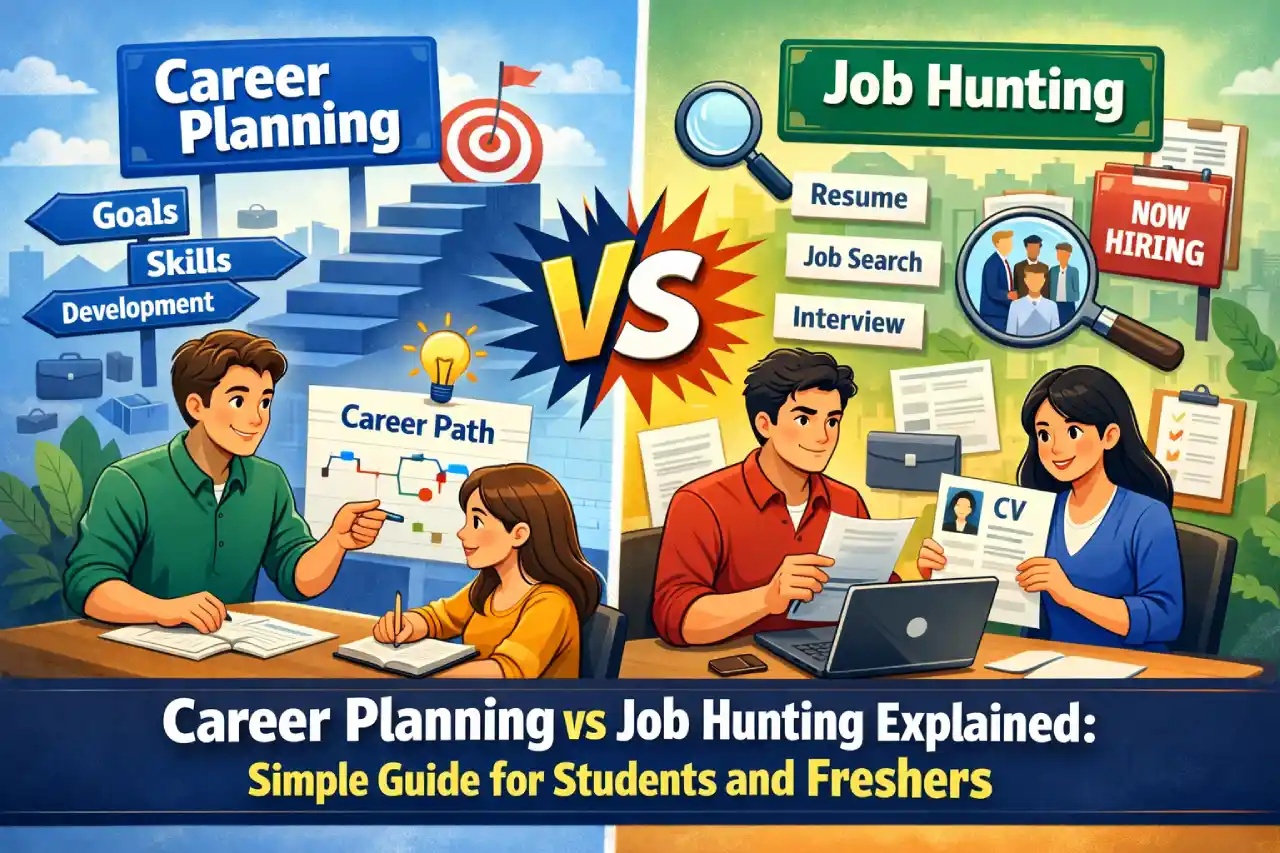
- A job is usually something you do to earn money. It may not always match your interests or long-term plans.
- A career is a series of connected employment opportunities, where you build skills, gain experience and grow in a specific direction.
For example, if you’re working in data entry because it pays the bills, it’s a job. But if you start as a junior data analyst and gradually move up to become a data scientist, you’re building a career.
Signs That It’s Just a Job
- You work only for salary, with no passion or interest in the work.
- There’s no scope for learning or skill growth.
- You don’t see yourself in the same field long-term.
- You switch jobs often just for better pay.
- You feel mentally disconnected from your work.
Signs That You’re Building a Career
- You enjoy the work and feel motivated to improve.
- You invest time in learning and development.
- You have long-term goals within the same field.
- Each role you take brings you closer to a larger goal.
- You care about your professional growth and industry trends.
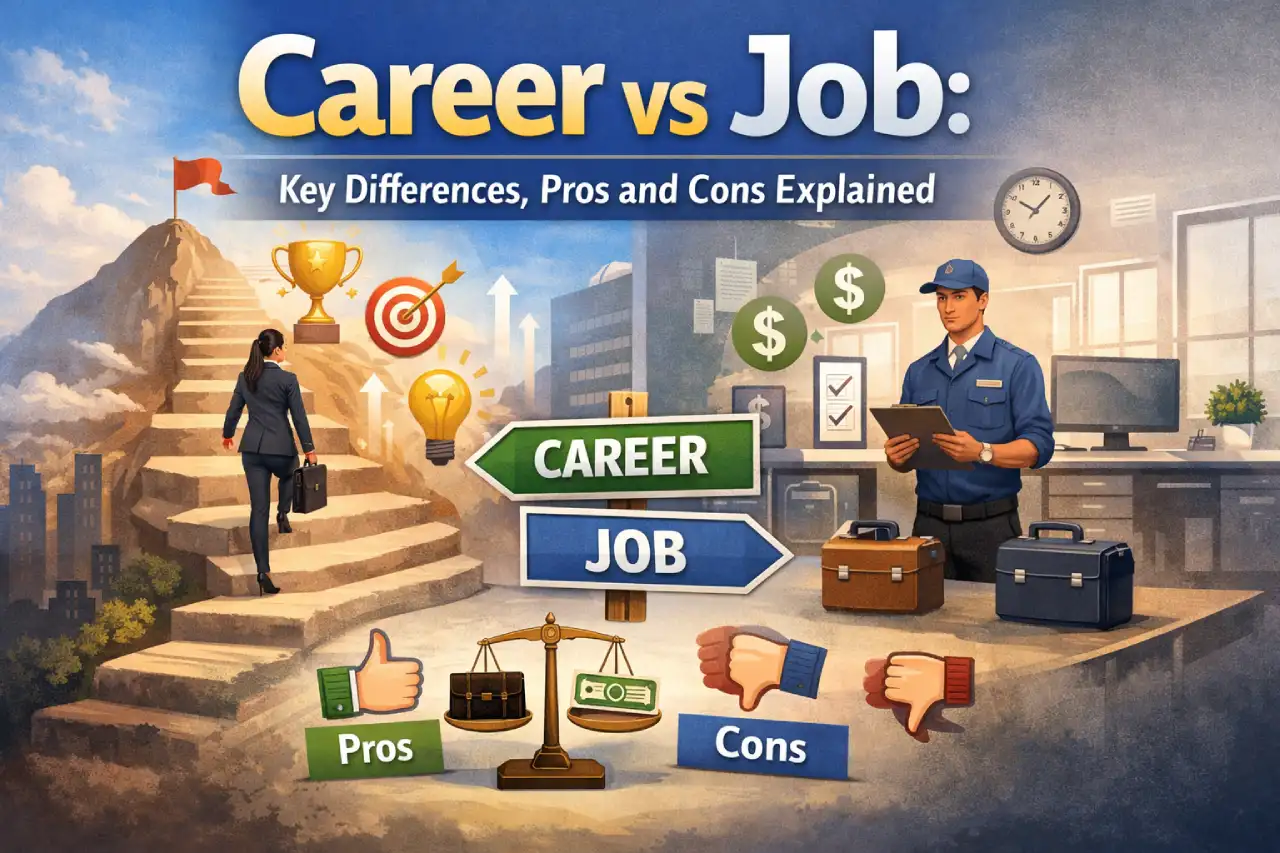
Pros and Cons of Each
| Aspect | Just a Job | Real Career |
|---|---|---|
| Pros | Steady income, lower responsibility, easier to switch | Growth, purpose, skill development, better pay over time |
| Cons | Limited growth, boredom, burnout, no long-term satisfaction | Higher stress at times, needs continuous learning, slower start |
| Flexibility | Easier to leave or switch | Requires commitment and planning |
| Job Security | Depends on company need | More stable with experience and expertise |
When Is It Okay to Just Have a Job?
Not everyone can or wants to chase a big career right away. Many people take up jobs to support their families, pay off loans, or figure out what they really want to do. This phase is normal and even necessary. But the problem begins when people stay stuck in jobs that don’t offer any scope for growth. That’s when planning becomes essential.
How to Turn a Job Into a Career
If you’re in a job right now and wondering how to shift into a career path, here’s what you can start doing:
- Set a long-term goal: Think about where you want to be in 5–10 years.
- Learn new skills: Enrol in online courses or certification programmes relevant to your interest.
- Look for growth inside your current company: Ask for new responsibilities or team changes.
- Network within the industry: Attend events, webinars, and connect on LinkedIn.
- Track your progress: Keep a record of your skill growth and milestones.
Final Words
Whether you’re working just for the money or building a long-term professional path, both situations are valid depending on where you are in life. But it’s important to know the difference. If you’re satisfied with your job and it fits your lifestyle, that’s great. But if you want more from your work—meaning, recognition, growth—it might be time to start thinking career-wise. The earlier you start planning, the better your chances of reaching where you actually want to go.