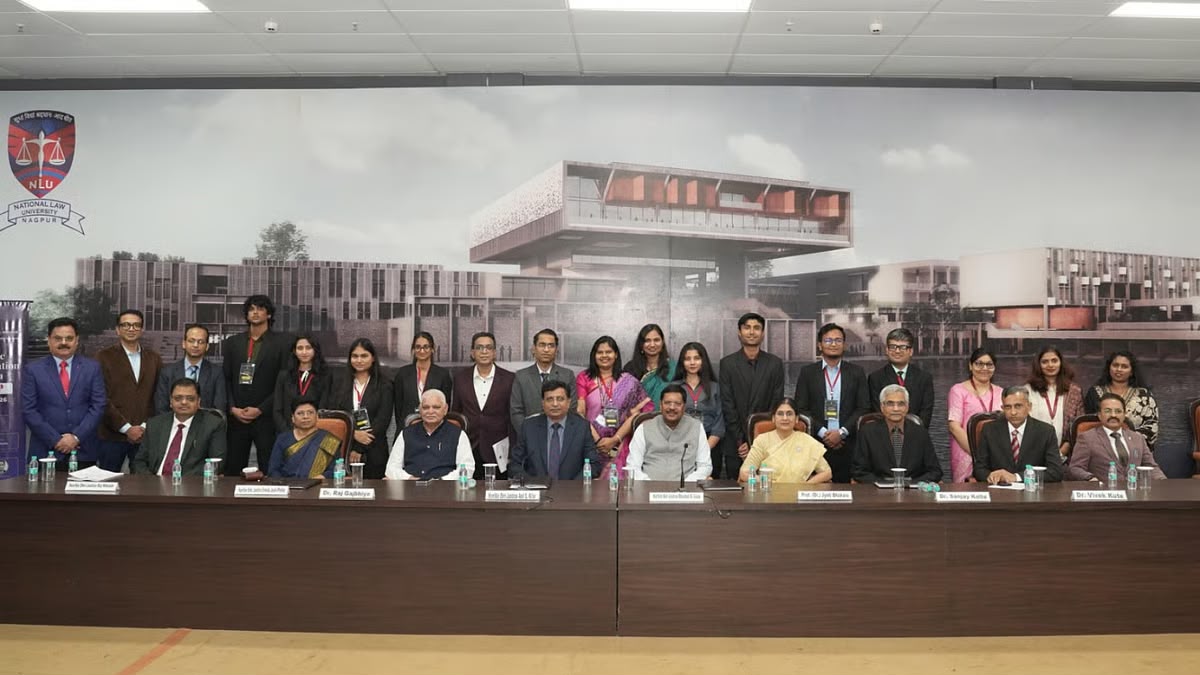
Nagpur: Maharashtra National Law University (MNLU), Nagpur, hosted a two-day national conference on October 29 and 30, 2026, focusing on the need to strengthen India's legal, medical and institutional framework for organ transplantation. The conference brought together senior judicial figures, medical professionals, academics and students to examine the challenges affecting organ donation and transplantation in the country.
Organised by the university's Centre for Criminology, Criminal Justice and Forensic Science (CCCJFS), the conference explored issues including illegal organ trade, delays in transplantation approvals, unequal access to medical treatment and the need for better coordination between regulatory authorities and healthcare institutions.
Justice BR Gavai highlights constitutional responsibility
Former Chief Justice of India Justice BR Gavai attended the inaugural programme as Chief Guest. Justice Anil S Kilor, Administrative Judge of the Bombay High Court's Nagpur Bench, was the Distinguished Guest.
Justice Urmila Joshi Phalke and Justice Raj Wakode of the Bombay High Court's Nagpur Bench also participated in the conference.
Addressing the gathering, Justice Gavai stressed that India's organ transplantation framework must evolve to respond to changing social and medical realities. Referring to Articles 21 and 47 of the Constitution, he highlighted the connection between the right to life with dignity and the State's responsibility to improve public health.
He emphasised that financial limitations should not prevent individuals from receiving life-saving medical treatment.
Justice Gavai also called for reducing administrative delays in transplantation approvals, improving coordination among concerned authorities and establishing more systematic mechanisms for recording transplantation data.
He expressed hope that the recommendations emerging from the discussions would receive consideration at the parliamentary level.
Medical experts discuss gaps in organ donation
The medical community was represented by Dr Sanjay Kolte, Dr Raj Gajbhiye, Dr Vivek Kute and Dr Manish Balwani.
During the keynote session, Dr Sanjay Kolte discussed the potential of deceased-donor transplantation in addressing the shortage of available organs. He highlighted the importance of structured training programmes, dedicated academic departments, stronger research infrastructure and effective monitoring mechanisms.
Dr Vivek Kute focused on kidney paired donation, a process that can help address situations in which a donor and intended recipient are medically incompatible. He emphasised the importance of clear national guidelines and coordination through the National Organ and Tissue Transplant Organisation (NOTTO).
Dr Manish Balwani highlighted the difficulties patients may face in finding compatible donors within nuclear families and underlined the importance of expanding deceased-donor transplantation programmes.
Gender equality and transparency in transplantation
The discussions also examined the social and ethical dimensions of organ donation.
Justice Gavai drew attention to gender disparities in organ donation and transplantation, emphasising the importance of protecting the interests of both donors and recipients.
He also highlighted the need for fairness, transparency and public confidence in the transplantation system.
The role of legal institutions in improving regulatory accountability was another important area of discussion. Justice Gavai referred to the importance of constructive criticism of judicial decisions as a means of strengthening the development of law.
Book on India's transplantation framework unveiled
The inaugural programme also featured the release of a book titled Organ Transplantation Regime in India.
The publication brings together legal provisions, regulatory mechanisms and judicial decisions concerning organ transplantation, contributing to the academic examination of the subject.
In her welcome address, Dr Karishma B Gavai, Centre In-charge of CCCJFS, highlighted the importance of interdisciplinary cooperation in addressing illegal organ trade, procedural obstacles and unequal access to transplantation.
MNLU Nagpur Vice-Chancellor Prof. (Dr.) Jyoti Bhakare emphasised that an effective transplantation system requires coordinated efforts across law, medicine, ethics and public policy.
Organ donation pledges mark the conference
The conference also included a commitment to promote awareness about organ donation. Justice BR Gavai encouraged participants to consider pledging their organs for donation and shared his own commitment to the cause.
Justice Anil S Kilor, Vice-Chancellor Prof. (Dr.) Jyoti Bhakare and Head of the Department of Law Prof. (Dr.) Vijay Pratap Tiwari also pledged to donate their organs.
The programme concluded with a vote of thanks delivered by Registrar Deepak L Bhagwat, who acknowledged the contributions of the judicial dignitaries, medical professionals, university administration, faculty members, staff and students.
Through its discussions, the conference brought legal and medical perspectives together on an issue that involves constitutional rights, healthcare access, ethical safeguards and institutional accountability. The deliberations highlighted the importance of a more coordinated and transparent approach to organ transplantation in India.
Comments ( 0)
Leave a Comment
No comments yet. Be the first to comment!