


India Amends Census Rules to Broaden Eligibility for Enumerators
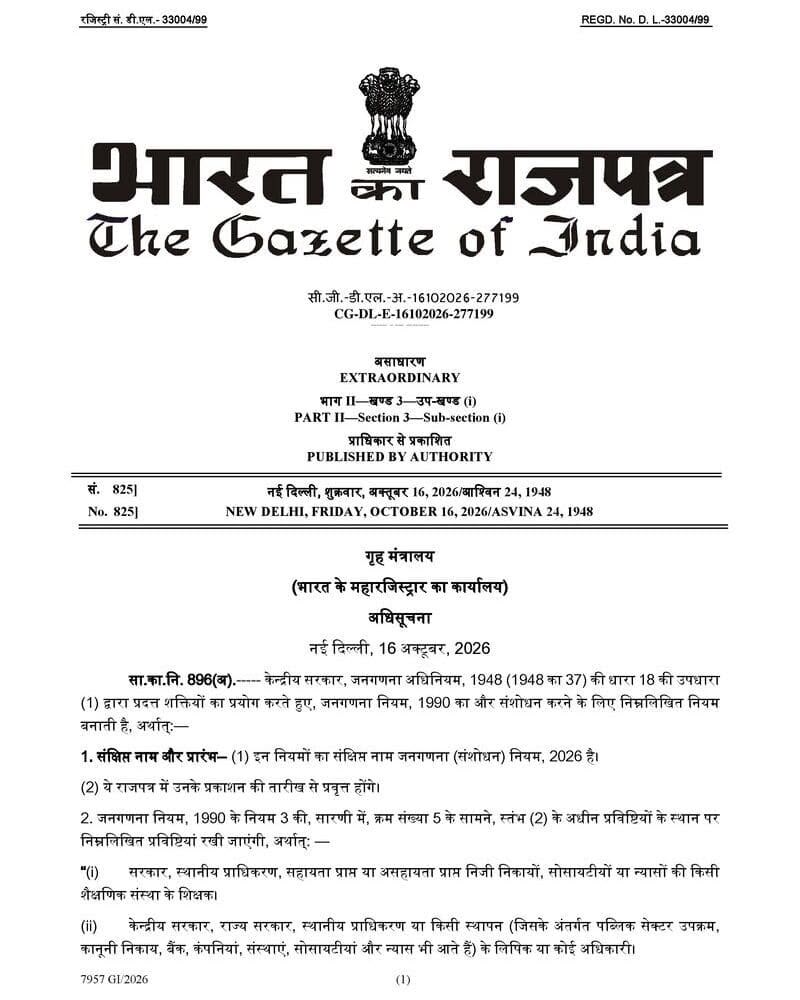
The Central Government has amended the Census Rules, 1990, to broaden the categories of individuals who may be appointed to carry out census enumeration duties. The changes, notified on October 16, 2026, include provisions covering educational institutions, government departments, public sector establishments and other organisations.
The amendment was issued by the Ministry of Home Affairs under the powers provided by Section 18 of the Census Act, 1948. It is titled the Census (Amendment) Rules, 2026, and came into force on the date of its publication in the Official Gazette.
Who Can Be Appointed as a Census Enumerator?
The revised provisions identify three broad categories of individuals who may be considered for census work.
These include:
* Teachers: Teachers working in educational institutions run by the government, local authorities or aided and unaided private bodies, societies and trusts.
* Clerical staff and officials: Clerks and other officials serving in Central and State Government departments, local authorities and establishments, including public sector undertakings, statutory bodies, banks, companies, institutions, societies and trusts.
* Other eligible individuals: Individuals whom a State Government or Union Territory Administration considers suitable to perform the duties of an enumerator.
The inclusion of these categories provides a broader framework for identifying personnel who can undertake census-related responsibilities.
Changes to the Census Rules, 1990
The amendment replaces specified entries in the table under Rule 3 of the Census Rules, 1990. The changes concern the categories of individuals eligible for consideration for enumeration work.
The revised framework covers personnel from a wider range of educational, administrative and institutional settings. It also allows State Governments and Union Territory Administrations to consider other suitable individuals for the role.
However, the notification does not establish that every person within these categories will automatically be appointed. Eligibility for consideration should not be confused with an actual appointment to census duty.

Role of the Ministry of Home Affairs
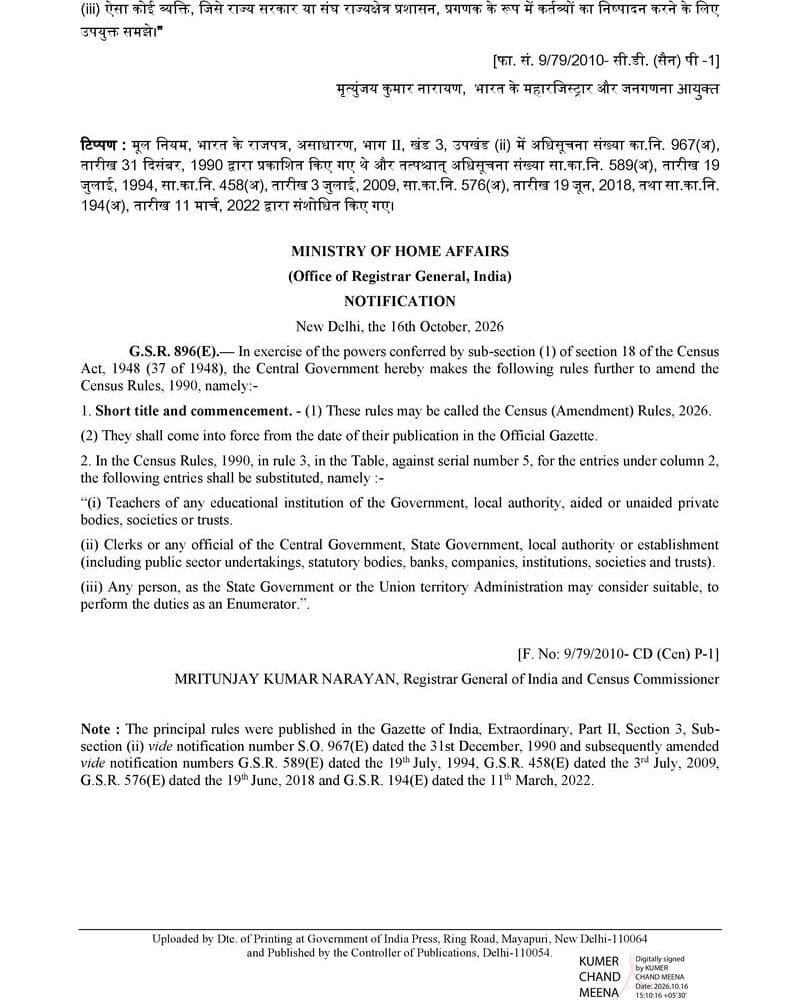
The Ministry of Home Affairs issued the notification through the Office of the Registrar General and Census Commissioner of India.
The amendment was made under the Census Act, 1948, which provides the legal framework for census administration in India. The revised rules modify the existing provisions governing the selection of personnel for enumeration duties.
The notification was signed by Mritunjay Kumar Narayan, Registrar General and Census Commissioner of India.
What the Amendment Means
The revised rules expand the range of personnel who may be considered for census enumeration, including teachers, clerical staff and officials from public and private institutional settings.
The provision allowing State Governments and Union Territory Administrations to identify other suitable individuals also offers flexibility in selecting personnel for the task.
The amendment changes the eligibility framework under the existing rules. It does not, by itself, announce individual appointments, recruitment vacancies, remuneration, application procedures or a specific census schedule. Any such details would need to be established through separate official announcements.


Comments ( 0)
Leave a Comment
No comments yet. Be the first to comment!