


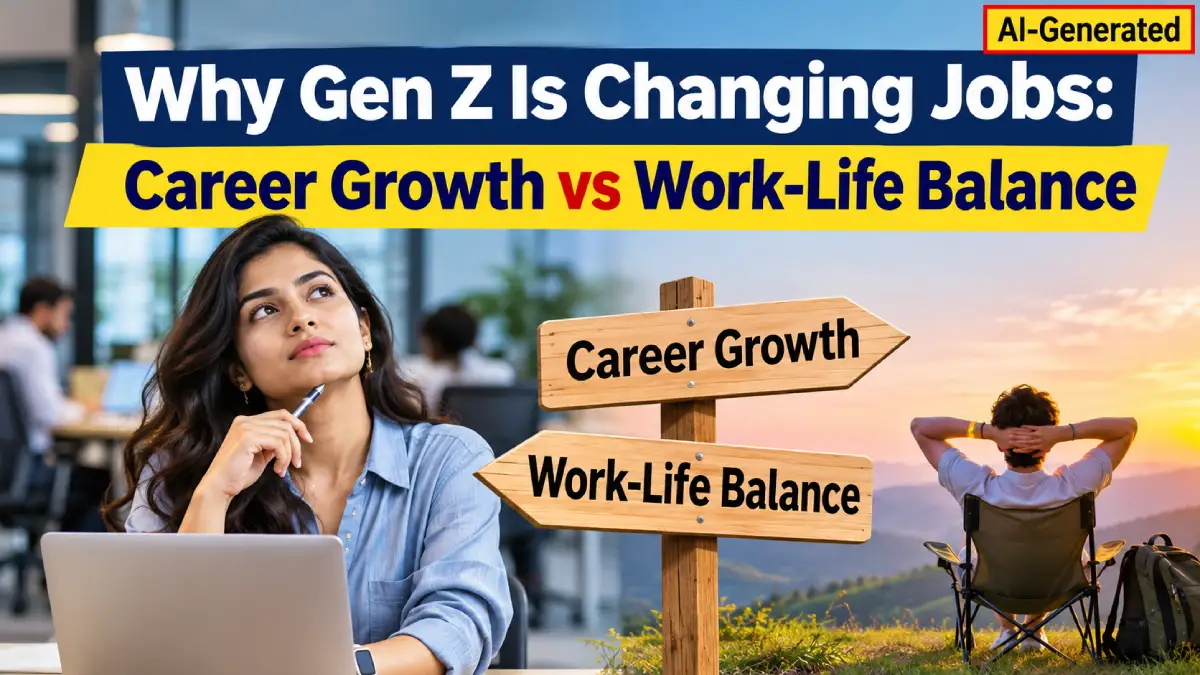
Getting a job is often considered a major achievement, especially after years of education and preparation. But for many young professionals from Generation Z, finding employment is only the beginning of the journey. Staying with the same company for several years is becoming less important when the work offers limited learning, slow career progression or an unsatisfactory work environment. A newspaper report highlights this changing attitude, suggesting that young employees are increasingly looking beyond monthly salaries when deciding whether to continue in a job.
The trend does not necessarily mean that Gen Z lacks commitment or patience. Instead, it points to a shift in what younger workers expect from employers. Career development, opportunities to learn new skills, promotion prospects and a healthy balance between professional and personal life are becoming important factors. The report also highlights survey findings on job-switching habits and workplace expectations, offering a glimpse into why long-term employee retention is becoming a challenge for companies.
According to the report, a 2026 survey found that 23% of respondents did not want to spend more than two to three years working at a single company. The survey covered employees across more than 80 countries, indicating that changing jobs is no longer an unusual career decision for many workers.
One of the strongest reasons behind this shift is the desire for career growth. The findings suggest that 57% of young people consider career development more important than job stability. For them, professional progress is not limited to receiving a higher salary. Learning new skills, taking on greater responsibilities and getting opportunities to move forward also matter.
The survey further indicates that 21% of young employees associate career growth with salary increases, while around 12% give greater importance to promotions. These figures suggest that employers may need to offer more than routine annual increments if they want to retain younger talent.
Work-life balance is another major factor influencing job decisions. Around 50% of respondents reportedly identified it as an important reason for considering a job change. Young professionals want enough time for their families, friendships, personal interests and rest, rather than allowing work to dominate every part of their lives.
This does not mean that Gen Z wants to avoid hard work. Many are willing to take on demanding responsibilities when they see a clear purpose and a chance to develop. However, when long working hours, limited recognition or a lack of growth become regular features of a job, they may start looking elsewhere.
For employers, the message is worth taking seriously. Competitive salaries remain important, but they are only one part of employee satisfaction. Companies that provide learning opportunities, transparent promotion policies, supportive managers and reasonable working arrangements may find it easier to retain young professionals.
The changing approach to employment also reflects a wider shift in career planning. Instead of staying in one organisation simply for the sake of stability, many young workers want each job to contribute something meaningful to their professional journey. For Gen Z, a good career is increasingly about growth, flexibility and quality of life, not just the name of the company on a payslip.




Comments ( 0)
Leave a Comment
No comments yet. Be the first to comment!