


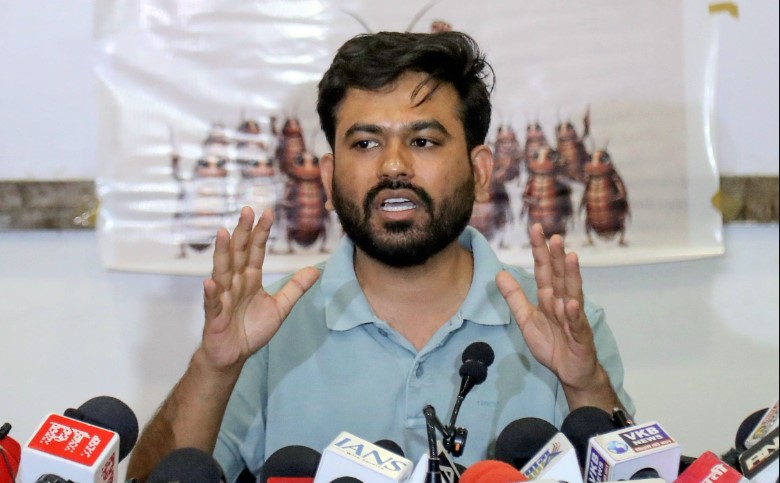
The 'Cockroach Janta Party' (CJP) is set to launch a new campaign titled 'School Thik Karo' to raise awareness about the infrastructure and basic comforts for students in rural government schools across Maharashtra. The campaign will kick off at 7:30 AM on Independence Day from Santuk Pimpri in Hingoli district—the local village of the party's founder, Abhijit Deepak.
In addition to inspecting whether schools have benches, drinking water, and other essential facilities, the campaign will urge local residents and "Sarpanchs" to step forward and contribute to the development of these schools.
As announced by the CJP, the ‘School Thik Karo’ campaign will launch on Independence Day, August 15, from Santuk Pimpri village in Hingoli district. The programme is scheduled to begin at 7:30 AM.
Abhijit informed Deep that he wishes to start this effort from the government school in his own village. According to him, local Sarpanchs must also play an active role in ensuring the necessary facilities for the school.
The primary objective of this campaign is to raise awareness regarding the basic infrastructure of government schools, with a particular focus on essential comforts for students.
These include enough benches and seating arrangements, safe drinking water facilities, necessary repairs to school buildings, basic infrastructure for students, and the overall school environment and services. CJP plans to carry out this initiative in collaboration with local residents and "Sarpanchs".
According to Abhijit Deepak, the CJP does not aim for this initiative to remain only a political party-led effort; there are plans to involve local residents as well.
He said that teams formed by the party will visit various villages to engage with local people and "Sarpanchs", urging them to take the plan to improve the condition of government schools. The message being shared is that if a school faces problems, the community should not only look to the government but also attempt to find solutions at the local level.
Guardians have also been invited to visit their children's schools. They have been asked to report any observed lack of essential services or infrastructure to the CJP.
Such local-level monitoring can help bring the actual situation in schools to light. However, once an issue is identified, it is also important to report it to the relevant education department or local administration.
Abhijit Dipak has informed that rural students face various challenges not only within the school areas but also in reaching the school.
He mentioned videos in which some female students complained that they have to walk nearly 7 kilometres to reach school and that there are no proper roads for the commute.
In his view, alongside events like the 'Tiranga Yatra' on Independence Day, equal importance needs to be given to fundamental issues such as education.
The core message of this CJP campaign is that students in rural schools should not have to repeatedly demand basic comforts.
Abhijit had previously said on social media that, even so many years after independence, rural children should not face difficulties regarding school benches, drinking water, or other essential facilities. Through this action, he aims to raise public awareness about the condition of government schools while also highlighting the responsibilities of the local administration and society.

Comments ( 0)
Leave a Comment
No comments yet. Be the first to comment!