


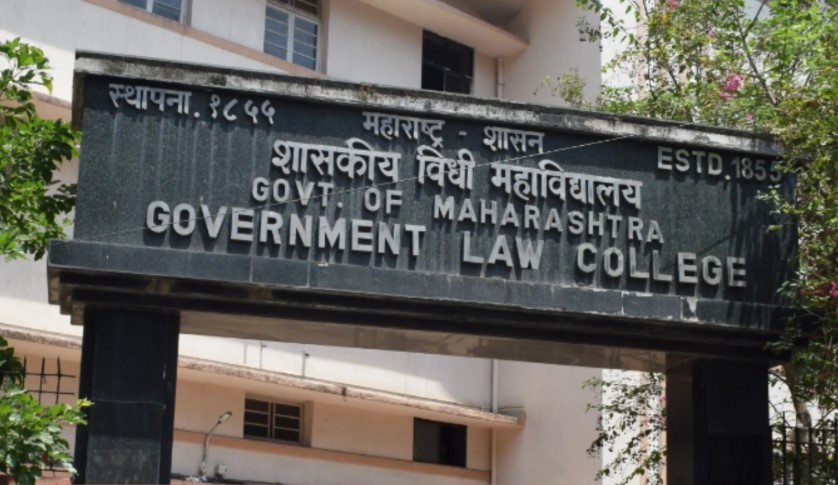
Many students are facing difficulties as several law colleges affiliated with the University of Mumbai—including the Government Law College (GLC), Mumbai—were excluded from the first Centralised Admission Process (CAP) round for the 2026 law admission cycle. As of August 5, approval had been granted for 10,105 seats across 102 colleges for the three-year LLB course and 5,955 seats across 66 colleges for the five-year integrated LLB course.
However, the number of applicants for these two courses stands at approximately 54,000 and 20,000, respectively. Many students are anxious about selecting their preferred colleges and making the right decisions during the first round.
As of August 5, 102 colleges were approved for the three-year LLB course under Maharashtra's 2026 CAP process, offering a total of 10,105 seats. Meanwhile, 66 colleges and 5,955 seats were approved for the five-year integrated LLB course.
Approximately 54,000 candidates applied for the three-year LLB course, and about 20,000 applied for the five-year course; therefore, the number of applicants far exceeds the number of approved seats.
Government Law College, Mumbai, is one of the most well-known law schools in Maharashtra. However, the college could not participate in the first CAP round because the necessary approval process was not completed on time.
According to reports, GLC was excluded from the CAP process because it failed to pay the requisite fees on time to secure approval from the Bar Council of India (BCI).
However, the college authorities have paid the required fees. It is expected that GLC will be able to participate in the second counselling round after receiving the remaining clearances.
It is not just GLC; several other law colleges affiliated with Mumbai University are also awaiting approval from the BCI. The university has highlighted the issue of poor staffing in some of these colleges. In some instances, there is no designated Principal, while in others, there is a shortage of full-time faculty.
Colleges must fulfil these mandatory requirements before starting admissions. The colleges concerned cannot participate in the CAP until the approval process is concluded.
Issues regarding students' preference lists have arisen because the list of colleges included in the first round was incomplete. Under current rules, if a candidate is allotted their first-choice college, they are required to accept that seat; failure to do so could result in their exclusion from the later admission process.
The problem now is that, since certain colleges—including GLC—were not included in the first round, students who would naturally have listed them as their top choice were forced to select a different college as their first preference.
In a centralised admission system like CAP, the order of preference is crucial. If a college is not included in the list, students cannot select it as a preference.
Even if the college is added to the CAP at a later stage, many candidates might face difficulties due to the preferences submitted in the first round. This issue could be somewhat reduced if there were an opportunity to modify the option form. In particular, if a popular institution like GLC Mumbai were to be added in the second round, many students would likely want to rearrange their list of preferences.
In this situation, candidates hopeful to study law should keep an eye out for further instructions from the State CET Cell. It is particularly important to find out whether an opportunity will be provided to edit the option form before to the second CAP round.
Additionally, it is advisable to verify the names of colleges currently awaiting approval and check the status of their BCI clearance. Rather than relying only on previous preferences, it is safer to make decisions based on official updates regarding the upcoming CAP round.


Comments ( 0)
Leave a Comment
No comments yet. Be the first to comment!