
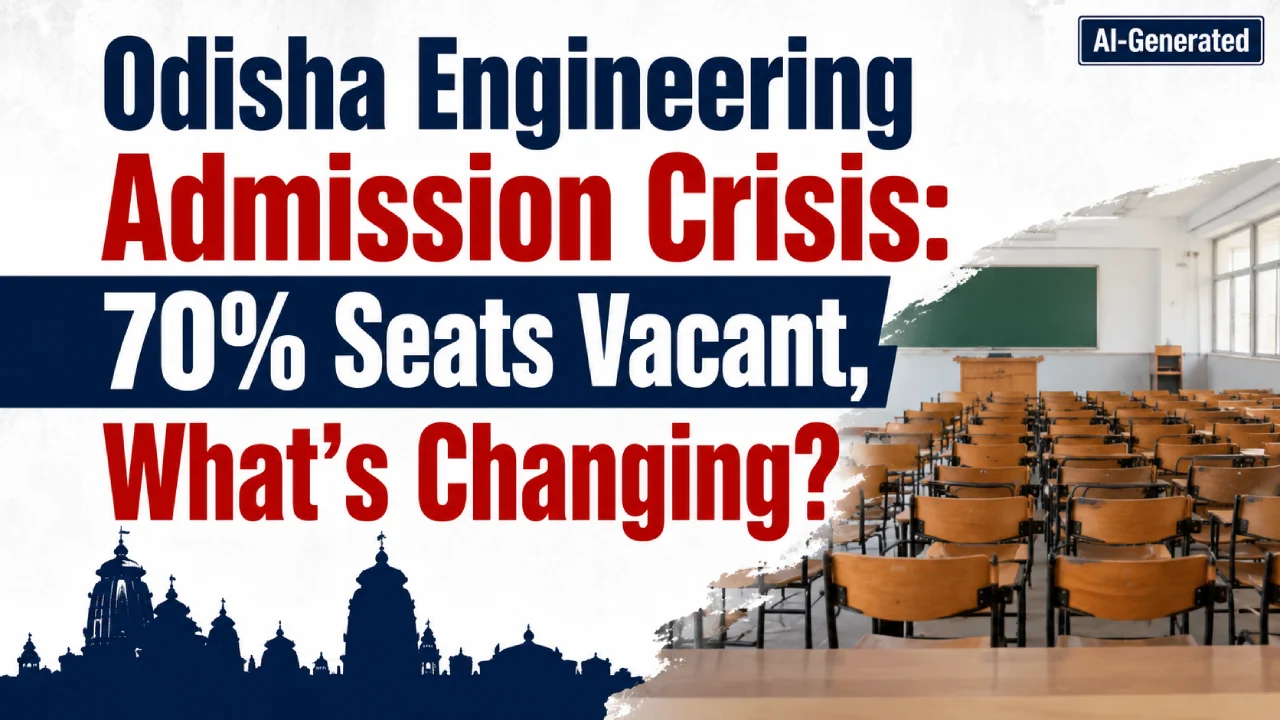
Odisha's engineering education system is currently facing a major challenge regarding admissions. Reports indicate that approximately 70% of seats in various government engineering colleges and technical institutes remain vacant. Even after phases over nearly two months, a huge number of seats have not been filled.
Experts link this to waning student interest in certain traditional engineering courses, particularly Civil Engineering. Due to concerns regarding job prospects and shifting career preferences, many students are now opting for alternatives to these traditional branches of engineering.
Approximately 70% of seats remain vacant across several government engineering colleges and technical institutes in Odisha. Despite the registration and admission process spanning three phases over nearly two months, the situation has not changed significantly.
This makes it clear that simply extending the admission period is not enough to boost student interest. The questions of where and in which courses students wish to enrol have now become crucial.
According to education experts, student interest in traditional engineering courses such as Civil Engineering has declined.
Concerns regarding limited employment opportunities have come out as a key reason for this shift. Many students now prefer courses that offer better career prospects upon graduation and are directly matched with industry demand.
However, it is difficult to attribute this change to a single factor; this trend is driven by a combination of factors, including students' career preferences, the state of the job market, and the appeal of emerging technical fields.
The current situation makes it clear that it would be incorrect to say interest in engineering is completely fading away; rather, students' preferences regarding the specific engineering courses they wish to pursue are shifting.
Previously, when considering engineering, many students would think of traditional branches like Civil, Mechanical, or Electrical engineering. Now, however, they place greater emphasis on the future scope and employment opportunities associated with a course when planning their careers.
So, while admissions to certain traditional courses may be declining, demand could well come out in other areas of technical education.
The engineering admission process in Odisha was conducted over approximately 2 months across 3 phases. This means that despite students being given multiple opportunities, many seats remain unfilled.
This indicates that the issue is not only related to application deadlines or a lack of admission opportunities. The core issue likely lies in students' course preferences and their career expectations regarding those courses.
This situation raises several important questions for education authorities:
- Firstly, is there a need to re-evaluate the curriculum and industry relevance of engineering courses that are witnessing a consistent decline in admissions?
- Secondly, it is also worth considering whether the career opportunities associated with these courses need to be presented more clearly to students.
- Thirdly, it is crucial to determine whether technical institutes need to adapt more rapidly to the changing requirements of the industry.

Comments ( 0)
Leave a Comment
No comments yet. Be the first to comment!