
As the 2030 deadline for the Sustainable Development Goals (SDGs) approaches, UNESCO has begun to rethink the future of education. A key topic of discussion is how to align Education for Sustainable Development (ESD) with the global challenges of the future. The aim is to more tightly integrate issues such as the environment, social justice, the economy, peace, human rights, and well-being into education, thereby preparing future generations not only to understand change, but to play an active role in driving it.
This discussion is crucial because the world beyond 2030 will not be the same as it is today. Amidst climate change, social inequality, the rapid expansion of technology, and various global crises, the next generation must acquire skills that extend far beyond mere exam results or job preparation.
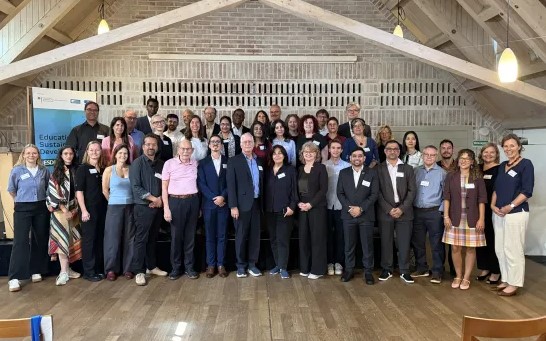
So, UNESCO is now looking to understand how 'Education for Sustainable Development' can be adapted to meet the needs of the future. As part of this initiative, the 'Global Expert Symposium on ESD Beyond 2030' was held in Munich, Germany, on September 1 and 2, 2026.
One cannot determine what education should look like after 2030 simply by examining current problems. That is why UNESCO focuses on the 'foresight' approach for analysing the future.
Simply put, foresight means anticipating potential future scenarios. It involves searching for answers to questions such as: what new challenges might arise, where opportunities might come out, and what decisions need to be made today to ensure the education system remains effective in the future.
UNESCO said that this forward-looking approach can help align the education system with the future, as solutions applicable today may not suffice for the challenges that lie ahead.
A significant milestone in this broader plan was the 'Global Expert Symposium on ESD Beyond 2030,' held in Munich, Germany, on September 1–2, 2026. Experts and practitioners from academia, government, civil society, youth groups, and international organisations participated in this consultation.
A key objective of the Munich consultation was to discuss how Education for Sustainable Development (ESD) could serve as a more effective catalyst for sustainability and how to strengthen its integration with education.
This plan was co-hosted by UNESCO, Germany’s Federal Ministry for Education, Family Affairs, Senior Citizens, Women and Youth, and the German Commission for UNESCO. So, the discussions incorporated not only the views of academics but also the experiences of government agencies, youth, civil society organisations, and international institutions.
One thing is clear from this UNESCO plan: education is viewed as a central force in building a sustainable future. The goal is not only to prepare students to adapt to a changing world, but also to enable them to play a role in making that world more peaceful, equitable, and sustainable.
According to UNESCO’s Christopher Castle, the question is no longer just about what ESD is today; we must also consider how it needs to evolve to meet future needs. This requires progress, creativity, and a mindset that questions conventional sense.
Comments ( 0)
Leave a Comment
No comments yet. Be the first to comment!