

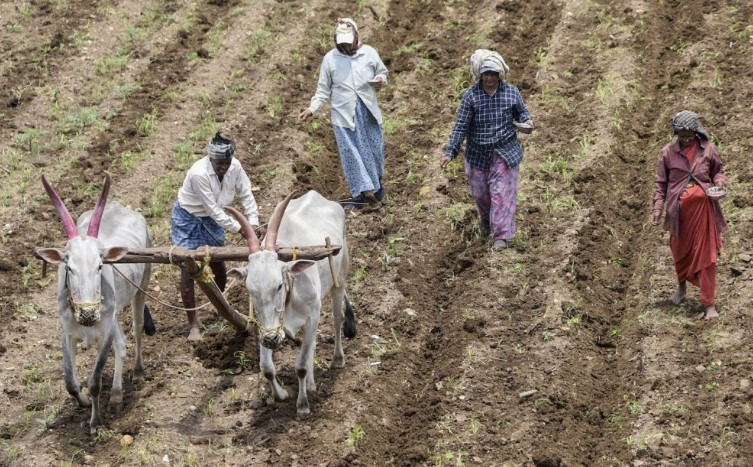
After a long wait, rain has finally arrived in Pune and various parts of Western Maharashtra, bringing relief and hope to the general public and farmers alike. However, among this relief, forecasts from the Meteorological Department and other agencies are raising new concerns.
There is fear that rainfall this year could be below normal due to the potential impact of 'El Nino'. Should this arise, the results would extend far beyond the agricultural sector, potentially affecting reservoir levels, groundwater, urban drinking water supplies, and the overall economy.
Over the past few years, Maharashtra's various reservoirs held fine water stocks. So, people in both urban and rural areas did not face significant water crises, creating a sense of security among many. However, the reality is that a good monsoon offers no permanent guarantee. Rainfall patterns are shifting rapidly due to climate change; therefore, it is risky to accept that a few years of good rainfall indicate the same conditions will carry on in the future.
When rainfall is below normal, the initial impact is felt by reservoirs and the agricultural sector. Insufficient rain leads to reduced water collection in dams and water bodies, thereby weakening drinking water supplies for both urban and rural areas.
Additionally, groundwater levels begin to decline. Farmers fail to secure good water for the water supply, and crop production in many areas can be negatively affected. This can have long-term results for food production and the local economy.
Water management cannot depend only on large dams; local-level water conservation measures are equally important. In the past, Maharashtra undertook various initiatives such as reservoir development, canal desilting, the construction of farm ponds, and other water conservation efforts through schemes like the ''Jalyukta Shivar Abhiyan''. Although questions were raised regarding execution in some instances, the initiative yielded positive results in many regions.
Nowadays, rainfall patterns no longer follow the usual norms; some areas experience excessive rain, while others face shortage-like conditions. This uncertainty has made future water management increasingly challenging. Therefore, planning must look beyond immediate needs and consider the coming decades. Water conservation should be viewed not only as a project-based activity, but as an integral part of long-term development policy.
A true measurement of water management is not made when water levels in reservoirs drop; the real test comes when reservoirs are full, and the administration determines what preparations to make for the future. Periods of good rainfall offered an opportunity for planning. If a weak monsoon follows now, it will become possible to see just how effectively that opportunity was utilised.
I am writing about this issue because the water crisis is a problem that usually comes up for discussion only when the situation becomes critical; however, actual planning should take place before the crisis strikes. Discussions regarding the water crisis in many parts of Maharashtra had decreased over the last few years due to good monsoons.
Now, if the monsoon turns out to be weak, it will become possible to see just how well the state and local administrations have prepared for the future. That is why it is crucial to understand and discuss this matter.


Comments ( 0)
Leave a Comment
No comments yet. Be the first to comment!