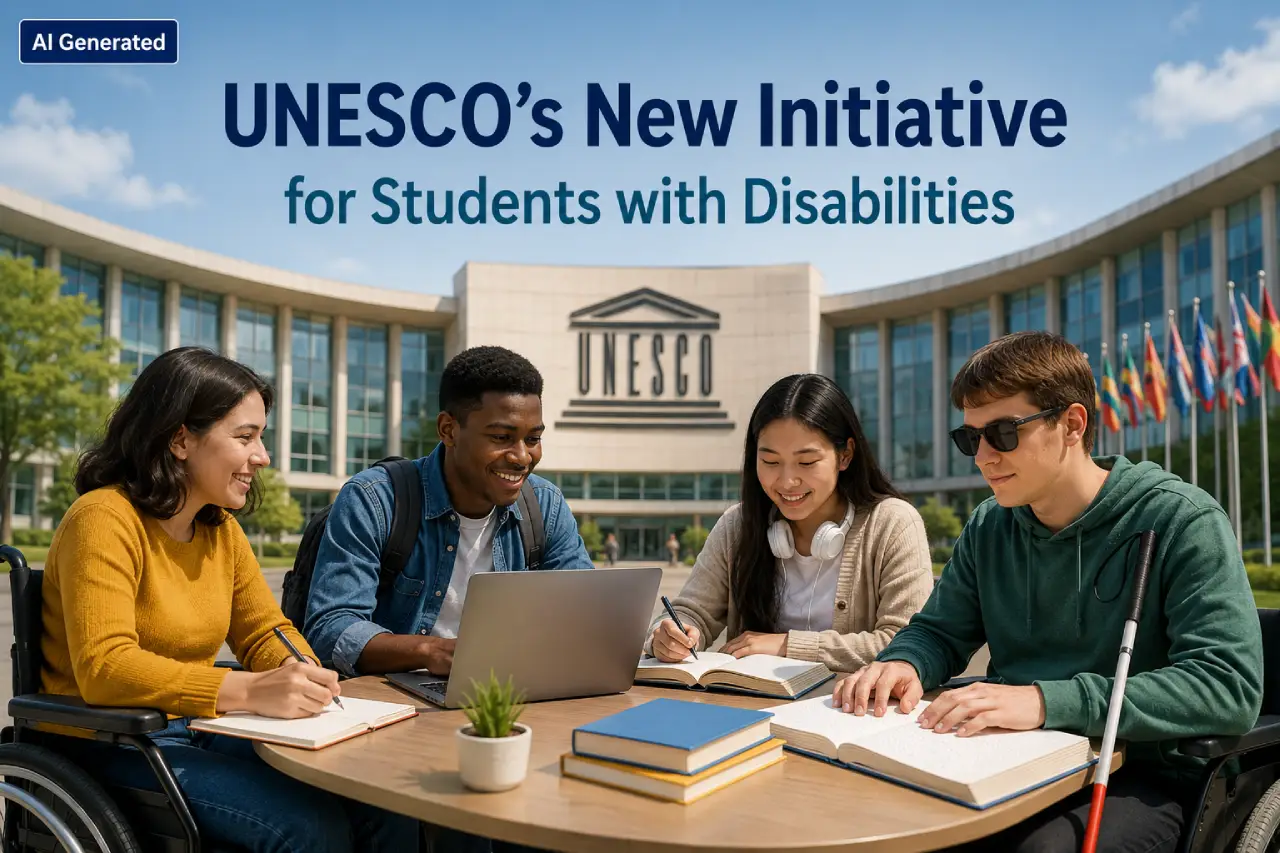
As discussions surrounding inclusive education gain momentum globally, a critical question increasingly comes to the fore: if thousands of students with disabilities remain unrecorded in official government data, how can their right to education possibly be ensured?
This very issue was highlighted with significant emphasis during the 12th Commission on Educational Data and Statistics, recently organised by the UNESCO Institute for Statistics and the Global Education Monitoring Report. During the meeting, particular concern was expressed regarding the collection of data on students with disabilities, simple analysis, and their actual status within the education system.
Held on April 22, 2026, this meeting primarily focused on how to better measure the education indicators of Sustainable Development Goal 4 (SDG 4). The meeting was organised by the UNESCO Institute for Statistics and the Global Education Monitoring Report.
A key focal point of this meeting was SIRIED, the Regional Educational Information System on Students with Disabilities. This UNESCO regional initiative was established to facilitate the collection of data on students with disabilities, as well as their simple analysis. Through SIRIED, administrative data from various countries has been agreed upon, 28 regionally comparable indicators have been developed, and technical agreements have been established among 16 nations.
According to the report, several major challenges still continue. These include mistakes in disability identification, difficulties in comparing data across countries, a lack of information on learning outcomes, and limitations in tracking retention and educational pathways.
The primary objective of Sustainable Development Goal 4 is to ensure inclusive and fair quality education. However, according to UNESCO, without accurate data, it is impossible to measure inclusion, difficult to grasp the reality of unseen students, and impossible to identify educational inequality. Therefore, data monitoring is being sorted in the post-2030 education agenda as well.
In his remarks, UNESCO representative Alejandro Vera stated, “Ensuring the right to education for persons with disabilities requires, first and foremost, better information, the proper utilisation of data, and greater cooperation among nations.”
This statement clearly indicates that UNESCO is now placing emphasis not only on access to education, but also on quality, data-driven monitoring.


Comments ( 0)
Leave a Comment
No comments yet. Be the first to comment!